
Pseudomugil halophilus
Mangrove Blue-eye
Species Summary
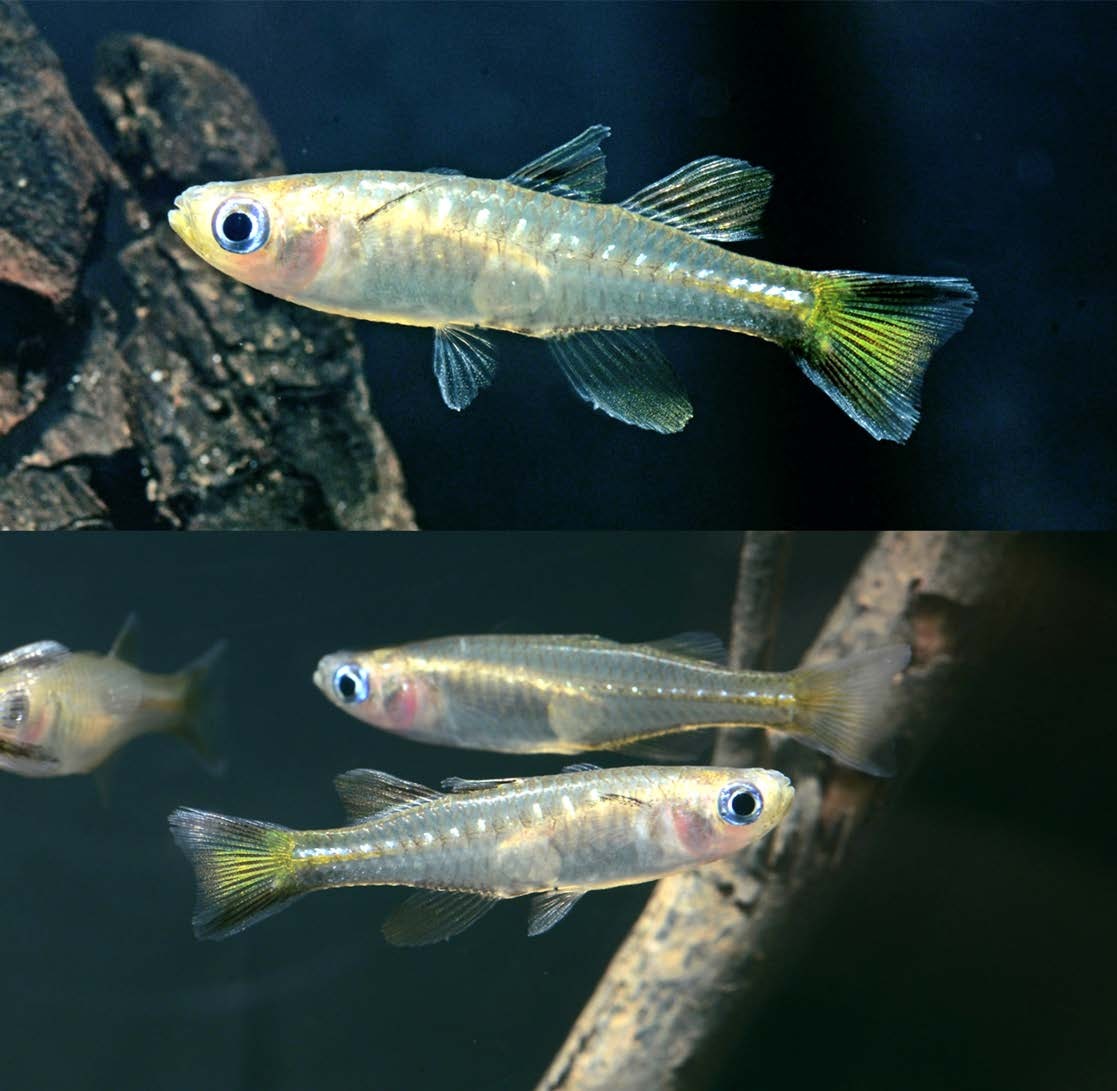
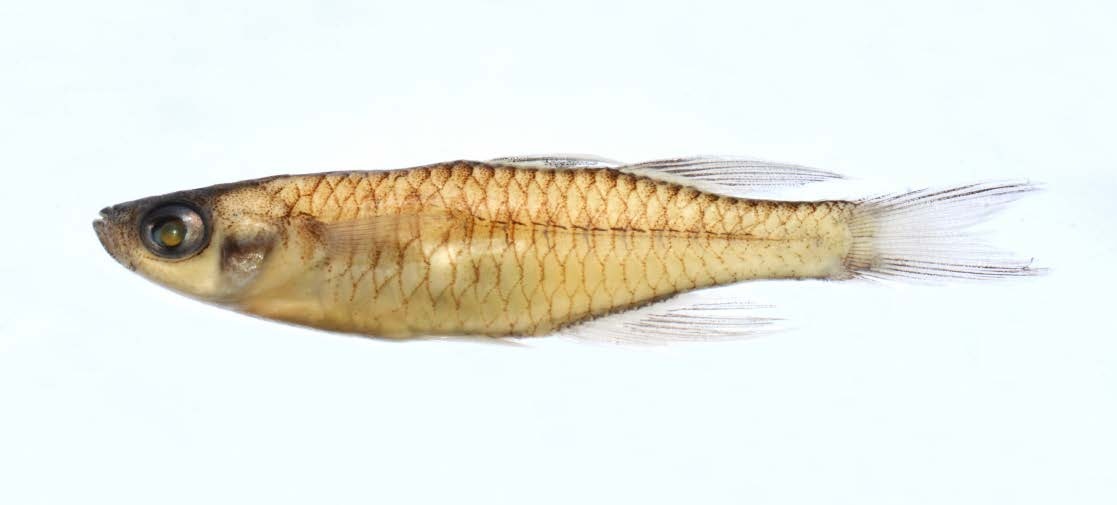
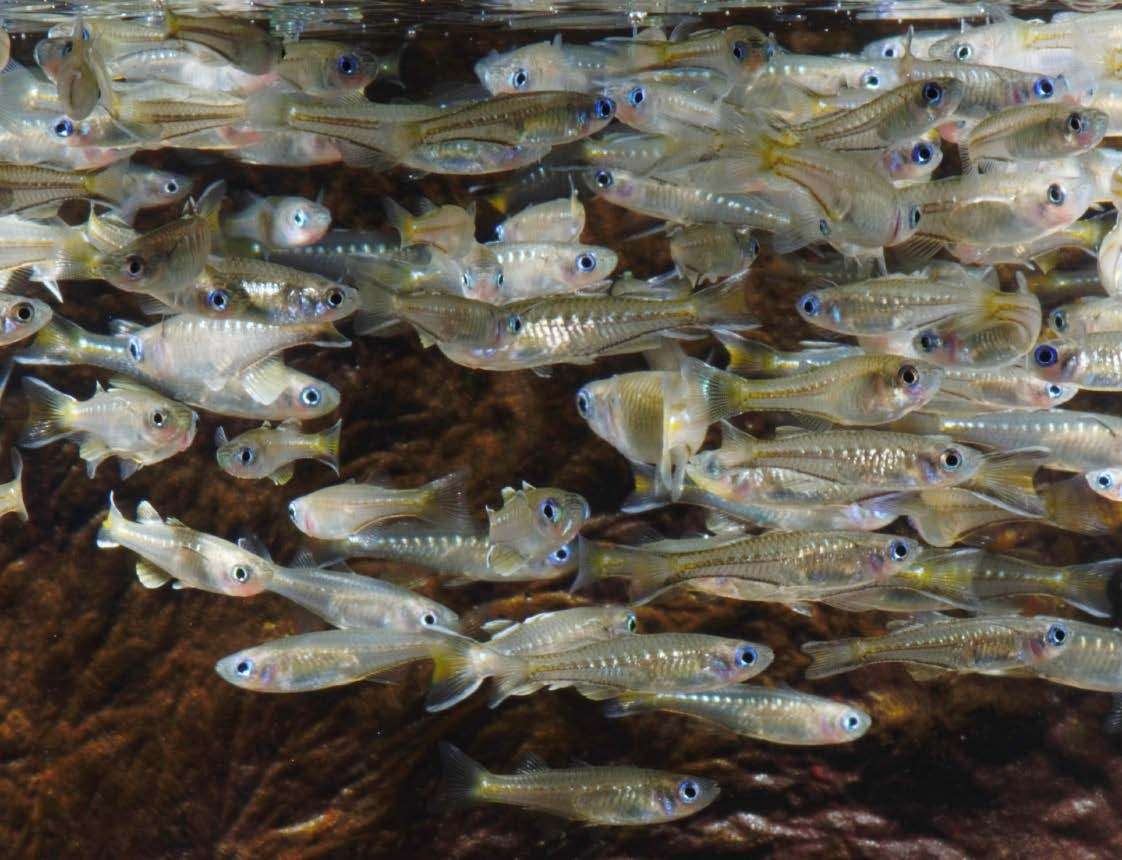
Pseudomugil halophilus, the Mangrove Blue-eye, is a small blue-eye described in 2024 from the mangrove-lined tidal creeks of coastal eastern Queensland, Australia. It is a lively, fast-swimming schooling fish reaching about 32 mm in standard length (around 5 cm in total length). In life it is largely semi-transparent and silvery to pale yellowish, with a row of about sixteen pearly hash-marks along the upper flank, a faint yellow midlateral stripe, and often a line of brilliant blue to purple reflective scales towards the tail. It closely resembles the widespread Pacific Blue-eye (Pseudomugil signifer) and was long overlooked as that species, but it is clearly separated by genetic data and by the males’ rounded (rather than pointed) second dorsal and anal fins and their darker fin markings.
Etymology
The species name combines the Greek halo, from halós, salt, and philus, from phílos, fond of, i.e. salt-loving, referring to its predilection for salt or brackish-water creeks.
Etymology compiled from C. Scharpf (2024), “Fishes of Sahul: an Etymological Survey (Part 7), Pseudomugilidae and Telmatherinidae”, Fishes of Sahul 38(2): 2176–2189, and etyfish.org.
Distribution & Habitat
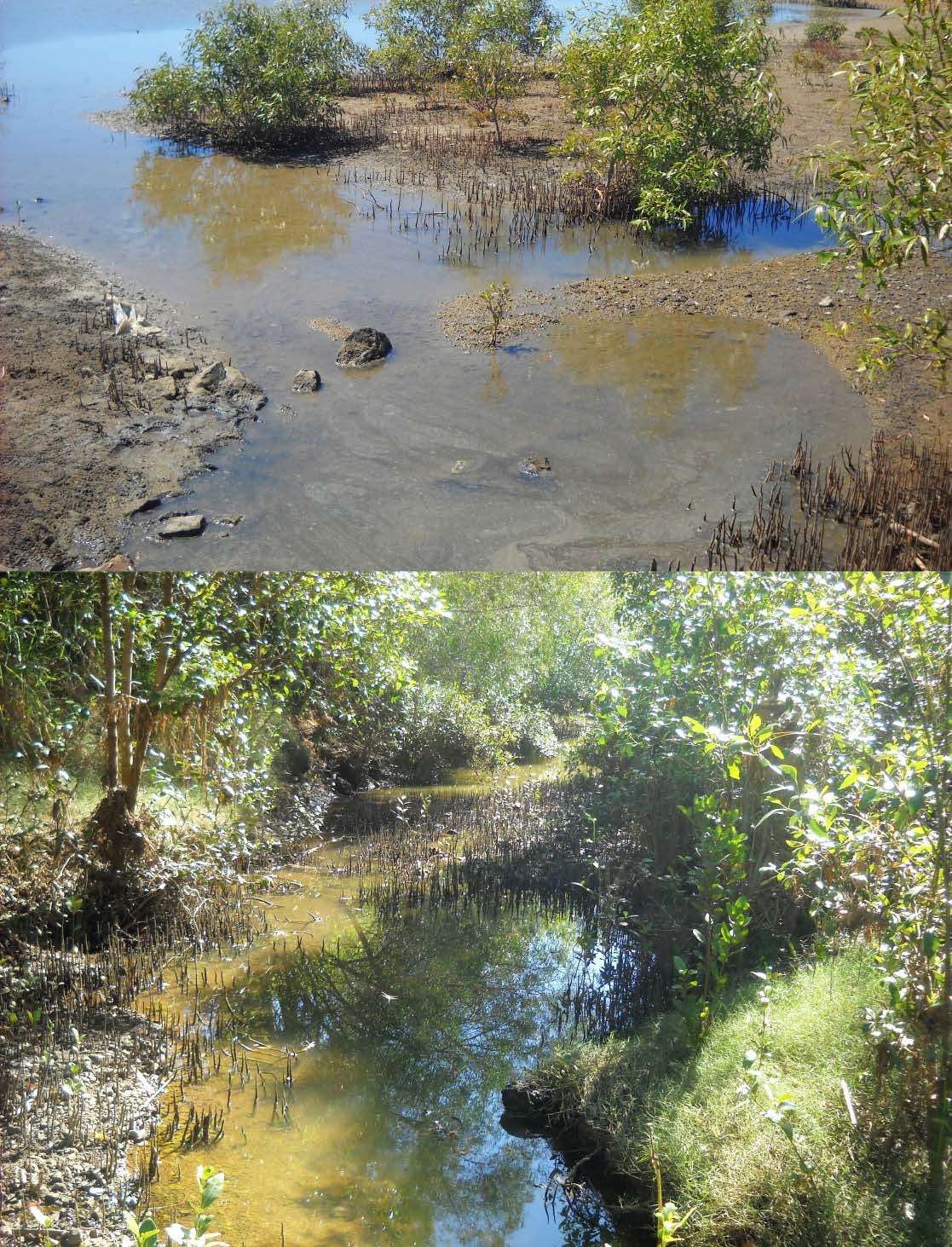
Pseudomugil halophilus occurs along the coast of eastern Queensland, recorded from around Gladstone north to the vicinity of Townsville, and probably ranging somewhat beyond at both ends. It lives in small tidal creeks and drains within a few kilometres of the sea, closely tied to mangroves, keeping to the margins of deeper channels or to extensive shallow, open sites. Its range overlaps that of the Pacific Blue-eye, which also enters these brackish mangrove habitats. Larger channels remain poorly surveyed, in part because of the presence of Saltwater Crocodiles (Crocodylus porosus). At one collection site the water was near neutral to slightly alkaline and fully marine in salinity (about pH 7.7, salinity 32 ppt, 26 °C).
Description
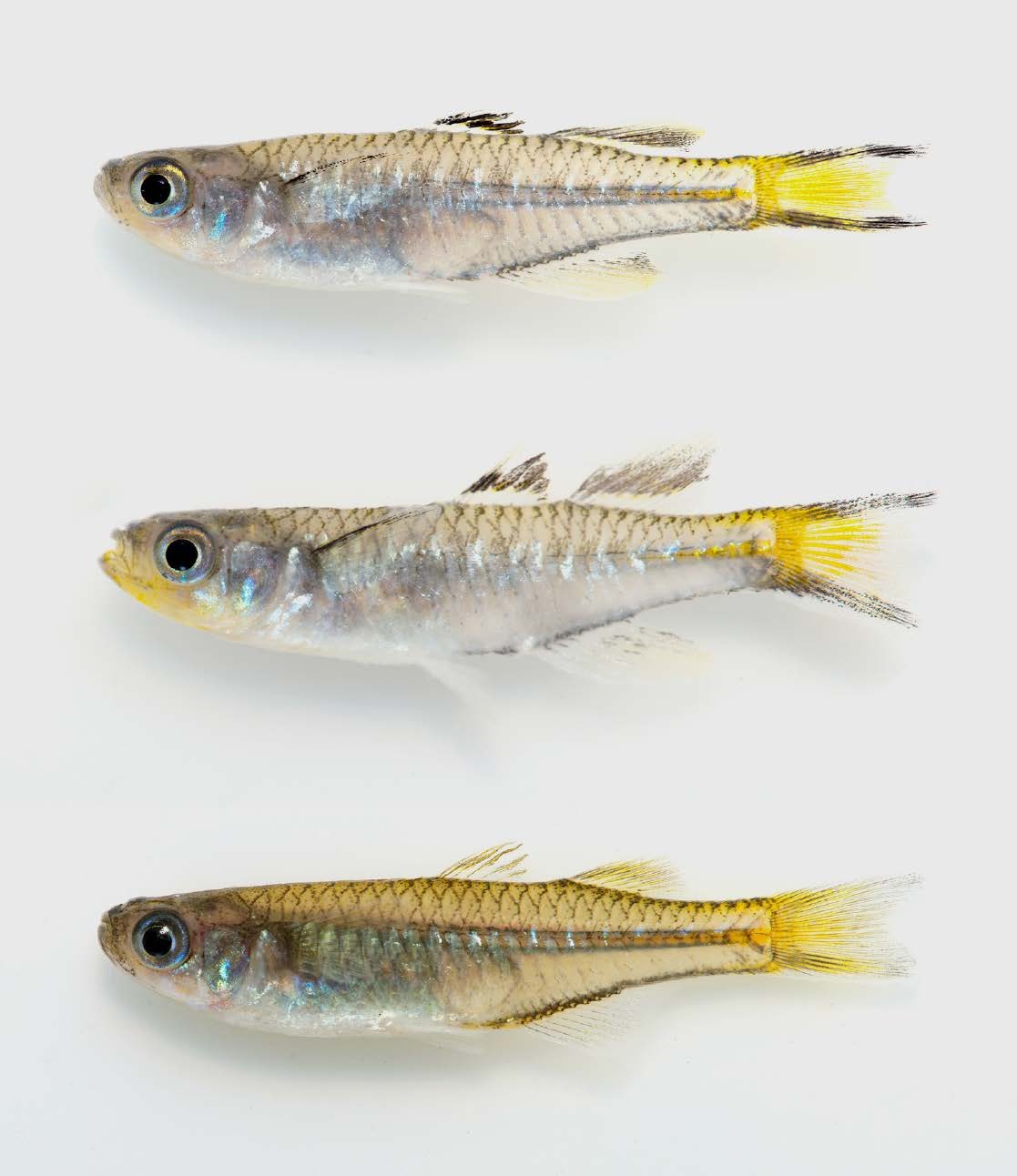
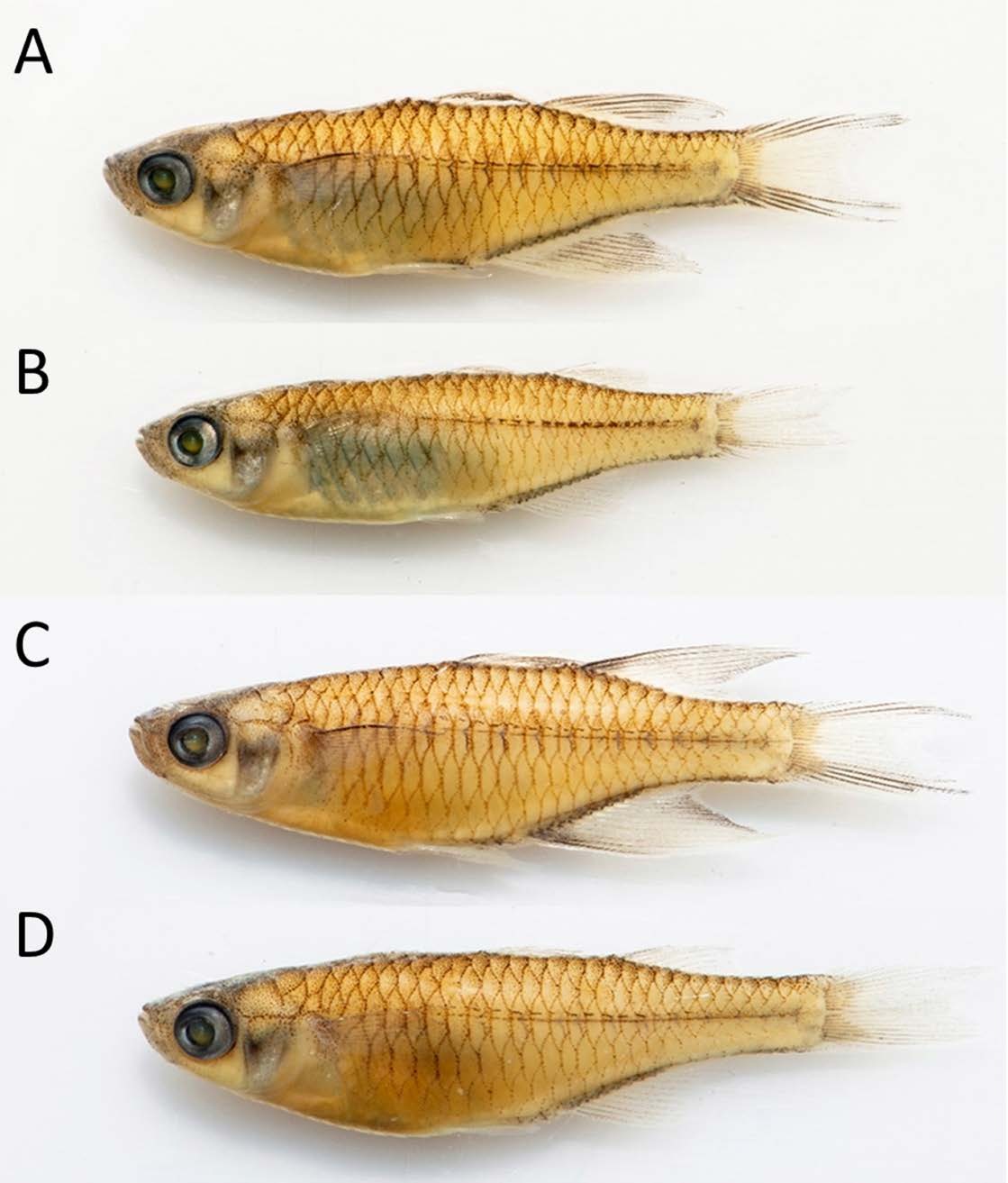
A small, moderately deep-bodied blue-eye, examined from specimens of 22–32 mm SL. The dorsal fin has IV–VI spines followed by 7–9 segmented rays (usually V + 7 or 8); the anal fin has 9–12 rays (mean about 11); there are 26–28 lateral scales, 6 transverse scales and 10–13 predorsal scales, and the greatest body depth averages about 26% of standard length. In males the second dorsal and anal fins are moderately tall with the middle rays longest and a rounded profile, and the folded-back second dorsal fin usually reaches the base of the tail.
Comparison with the Pacific Blue-eye
The only species Pseudomugil halophilus is likely to be confused with is the Pacific Blue-eye (P. signifer), which is widespread in coastal drainages of eastern Australia and shares the same mangrove habitats between roughly Gladstone and Townsville. Beyond the clear genetic separation between them, the two differ in the males: Pseudomugil halophilus has rounded second dorsal and anal fins and carries considerable black pigment through the central part of the second dorsal fin (and on the first dorsal and mid-anal fins), whereas P. signifer has pointed fins with an intense black spot at the base of the front dorsal rays and otherwise mostly pale fins. Telling the two apart reliably generally requires mature males.
Keeping & Caring
Pseudomugil halophilus is a newcomer to the aquarium, and until recently almost nothing was on record about keeping it — earlier aquarists most likely kept it in mistake for the Pacific Blue-eye. It is a fast, schooling fish that needs room to swim, and it is a brackish-water species that tolerates a range of salinities. In the first aquarium trials fish were held in water matched to the collection site (about pH 7.7, salinity 32 ppt, 26 °C) over a bed of sand mixed with shell grit, with gentle sponge filtration to provide a current. Good condition was maintained with frequent small water changes and a varied diet of frozen foods, quality flake or pellet, and live foods such as brine shrimp of all sizes, mosquito larvae and other small live prey.
Breeding
Pseudomugil halophilus had apparently never been bred in captivity before the description, and the first documented spawning showed it to be a true brackish-water breeder: it is unlikely to reproduce in either pure fresh or full sea water, with the best results obtained at a salinity of about 10–15 ppt. The fish spawn onto wool mops. The eggs are clear and about 2 mm across and take an unusually long time — roughly 18–21 days at 26 °C — to hatch; salinity within the tolerated range had no obvious effect on their development. The newly hatched fry are relatively large and can take newly hatched brine shrimp straight away, growing quickly to around 1.5 cm in about three months.
Remarks
The Mangrove Blue-eye came to scientific notice in 2016 by two paths at once: a citizen scientist noticed unusual blue-eyes in mangroves at Bowen and passed specimens on for study, while independent genetic screening of what were thought to be Pacific Blue-eyes flagged some individuals as clearly distinct. Because it is so similar to the Pacific Blue-eye and lives in muddy, densely vegetated, crocodile-inhabited creeks that are rarely sampled, it had been almost entirely overlooked, with only a couple of old museum specimens found in hindsight. As a mangrove specialist of limited known range, it is regarded as needing further study of its ecology and local conservation.
Account compiled for Home of the Rainbowfish from M. P. Hammer, G. R. Allen, M. Adams & P. J. Unmack (2024), “The Mangrove Blue-eye, a new species of Pseudomugil (Pisces: Pseudomugilidae) from eastern Queensland, Australia”, Fishes of Sahul 38(2): 2158–2171, and W. Heemskerk (2024), “Breeding the Mangrove Blue-eye”, Fishes of Sahul 38(2): 2172–2175.