
Introduction
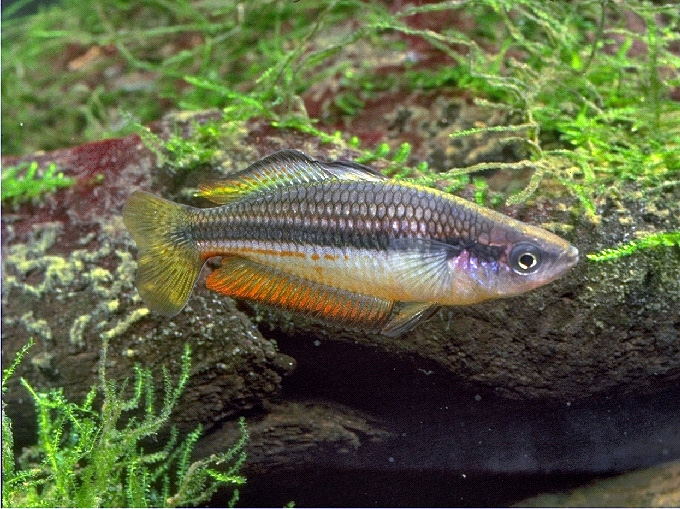
Melanotaeniidae and Pseudomugilidae are two closely related families of freshwater fishes restricted in distribution to Australia and New Guinea. They are commonly known as rainbowfishes and blue-eyes respectively. Ten genera are currently recognised: Cairnsichthys, Chilatherina, Glossolepis, Iriatherina, Kiunga, Melanotaenia, Pelangia, Pseudomugil, Rhadinocentrus, and Scaturiginichthys. Melanotaenia is by far the largest genus. The Pseudomugilidae family has been well studied in recent years but controversy still exists as to whether they should be regarded as a separate family or in a subfamily of Melanotaeniidae. No less controversial in recent years has been the position of their relationship to other atheriniformes, most notably to the Telmatherinidae and Bedotiidae families.
Australia and New Guinea are much more than just adjacent land masses as they have been connected throughout most of their history. The Sahul Shelf, beneath the shallow Arafura Sea and Torres Strait that now separate the two countries, was above sea level until as recently as about 6–8,000 years ago during the latest glacial lowering of the sea level, and southern New Guinea streams were confluent with those of the adjacent Australian coast. Indeed, about 50 species of freshwater fishes from southern New Guinea also occur in northern Australia, emphasising the historical link between the regions, and many of these are endemic to the two regions. The Olive and Jardine rivers of Cape York Peninsula show some of the strongest relationship, with 81% and 63% of the fish species found in these rivers being common between the two countries.
Australia and New Guinea are perhaps better known for their marine fish fauna rather than for their freshwater fauna. Nevertheless, the freshwater fishes of Australia and New Guinea are distinctive and have been the subject of significant discovery over the last 30 years. The amount of recent ichthyological activity in Australia and New Guinea can be gauged conservatively from the number of recently described species or subspecies. Since 1970 about 70 Australian and about 130 New Guinea freshwater fish species or subspecies were described or are awaiting description. New species have been found and described at rates as high as any in the history of Australian and New Guinea ichthyological exploration.
Australian rainbowfishes have been reasonably well studied, in terms of their systematics, but new species continue to be described based mainly on genetic taxonomic research of known species. In contrast to the Australian species, very little is known about the New Guinea rainbowfishes and collecting has mainly focused on the major river systems.
New Guinea has been the focal point for a host of natural history studies involving diverse groups such as reptiles, birds, and mammals. However, relatively few collections of the freshwater fish fauna have been undertaken. There still remains an incredible number of yet undescribed or undiscovered rainbowfishes inhabiting the New Guinea wilderness. They are likely to remain undiscovered for many years due to the extremely rugged terrain, impenetrable jungle, and lack of basic infrastructure such as roads and airports.
Increased understanding of rainbowfish systematics and distribution in the region has largely stemmed from the application of collecting and systematic techniques by professional ichthyologists. However, no less significant has been the input from amateur ichthyologists and aquarists. In particularly, during the last three decades a profound increase in interest in keeping rainbowfishes has resulted in the formation of various specialty societies e.g., the Australia New Guinea Fishes Association (ANGFA) and the Internationale Gesellschaft für Regenbogenfische (IRG), and in numerous amateur collecting expeditions. Aquarist interest has particularly concentrated on the endemic rainbowfishes, and this, in combination with taxonomic and field studies, mainly by Gerald R. Allen, has resulted in a dramatic increase in the number of species recognised in this family; of the approximately 75 species and subspecies currently recognised, more than 60% have been described since 1978.
Other notable discoveries include Scaturiginichthys vermeilipinnis, a new genus and species of pseudomugilid from an artesian spring system in central Queensland (Ivantsoff et al., 1991); and numerous rainbowfish species endemic to various river and lake systems in New Guinea. There have also been significant advances in our understanding of the phylogenetic relationships and biogeography of melanotaeniid fishes in Australia and New Guinea (Zhu et al. 1994; McGuigan et al. 2000; Unmack 2001).
The first rainbowfish (Melanotaenia nigrans) was scientifically described in 1843 from a collection of freshwater fishes acquired in the Northern Territory. They were collected by John Gilbert in 1840, from the King River, near Victoria Settlement in the Northern Territory, Australia. A single specimen ended up in the British Museum in London where John Richardson described it as a new species of hardyhead named Atherina nigrans. The differences between A. nigrans and the real hardyheads were enough for the American, Thomas Gill, to create the genus Melanotaenia for this lone species in 1862, still within the family Atherinidae. The next step was the creation of a subfamily Melanotaeniinae by Gill in 1894 to stress the differences with the hardyheads even more.
Another 70 years were to pass before Ian Munro treated the rainbowfishes as an independent family for the first time in 1964. Although a greater variety of Australian rainbowfishes were by then scientifically identified, many New Guinea rainbowfishes were still undiscovered. Gerald Allen, whilst employed with the Western Australian Museum, undertook a full generic classification of the rainbowfish family in 1980.
Rainbowfishes form the most speciose group of fishes inhabiting freshwaters within the Australia-New Guinea region. Despite this, relatively little is known about the biology and ecology of the majority of rainbowfish species in their natural habitat.
A review of the literature currently available does highlight a number of gaps in our knowledge of many species. There are some species where there is a considerable amount of information available while there are other species where there is little or no information available. In addition, there are specific gaps in the information available in otherwise well documented species. As well as a number of species that are in need of additional research, information such as reproduction and natural habitat conditions, is limited. These include water quality requirements, spawning frequency and habitat preferences. Spawning information in the wild is particularly lacking for almost all species, as is general information on egg and larvae development, habitat preference and water quality tolerances.
Despite such a variety of species, research into their basic natural biology and ecology is lacking and most information that is available is mainly based on aquarium observations. Obviously, there is urgent need for such studies in order that species can be properly conserved and managed. Clearly, there is also need for much more survey work to be done in Australia and New Guinea, as some areas remain poorly collected. There is also a need for more careful study of the many widespread species, as it is highly likely that such study will lead to a significant increase in the number of recognised species. For example, variation in morphology within the Melanotaenia genus is high, with species differing from one another though small variations in colour, morphology and meristics. Indeed, one species, Melanotaenia splendida, has been divided into many geographic forms, each with highly restricted, allopatric distributions. Populations of almost every river system they occupy have their own distinctive body colour and pattern. At the same time, body form within species is relatively pliant and appears to be dependent upon streamflow and correlated habitat characteristics, which can sometimes make identification in the field difficult. Much could be gained from careful analysis of the many morphological characters already at hand, such as the colouration characters noted for many of the rainbowfish “varieties”. Colouration characters, however, when not supported by other characters, have generally been dismissed by ichthyologists working on rainbowfishes from Australia.
The recognition of taxonomic diversity is a key issue underlying the problems associated with assigning species status to this group of fishes. Can we be sure that a species is truly defined, or is it a species complex, or multiple species with distinct characteristics - sufficiently isolated to be recognised as a species. Where a single species might be seen as common, in reality there might be numerous species. Distinct geographic clades within species are regarded alternatively as ‘Evolutionarily Significant Units’ (Moritz 1994) and are not named. An evolutionarily significant unit is a population of organisms that is considered distinct for purposes of conservation.
This term can apply to any species, subspecies or geographic population. Subspecies are morphological variants distinguished at the level of the population – 75% or more of the individuals of the populations of one subspecies can be distinguished from those of other subspecies.
Existing data suggest that New Guinea is worthy of the highest conservation priority due to its extraordinary species diversity, significant endemism, and high degree of threat. It is not surprising that there are still many new rainbowfish species in New Guinea that await discovery. More than half the known species of rainbowfishes are endemic to New Guinea. There are several areas that have particular potential as reservoirs of undiscovered species. New Guinea is today less known than any other habitable area of equal size on the globe.
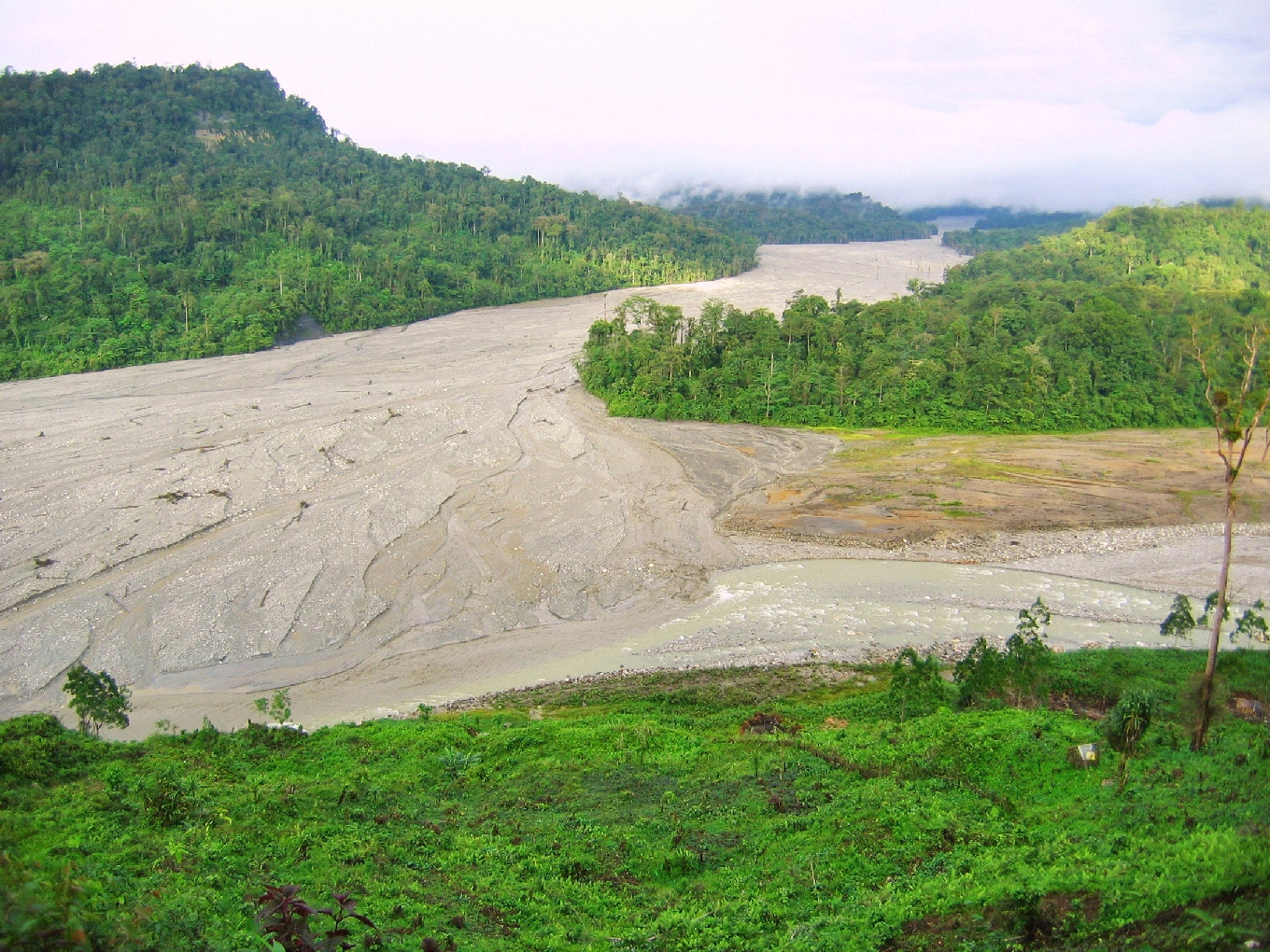
These are also times of serious concern for the present and future health of rainbowfish populations, and other aquatic organisms. New Guinea, particularly the Indonesian province of West Papua, is one of the most threatened biological hotspots, with its plants and animals facing possible extinction due to slash-and-burn subsistence farming, transmigration, rampant logging, illegal poaching, mining and other practices. Many human activities are increasingly disturbing and, in some cases, destroying freshwater habitats. Wherever human populations are expanding, so too are the harmful waste products of mining, industry, agriculture, and urban growth. These impacts have negative and sometimes devastating effects on aquatic habitats and life. Freshwater fish species and aquatic communities have also been placed in harm’s way by the introductions of non-native species.
The early settlement of Australia by Europeans was marked by a complete disregard of the value of native flora and fauna. Indiscriminate and unsustainable harvesting, massive habitat destruction, and the introduction of exotic plants, animals and diseases caused havoc amongst native populations. Introduced fish, such as European carp (Cyprinus carpio), mosquitofish (Gambusia holbrooki) and trout dominate ecosystems in many streams today at the expense of native species.
Specific rainbowfishes that are considered threatened are: Chilatherina axelrodi, C. bleheri, C. bulolo, C. sentaniensis, Glossolepis incisus, G. maculosus, G. pseudoincisus, G, ramuensis, G. wanamensis, Kiunga ballochi, K. bleheri, Melanotaenia ajamaruensis, M. angfa, M. arfakensis, M. boesemani, M. catherinae, M. corona, M. eachamensis, M. exquisita, M. gracilis, M. herbertaxelrodi, M. iris, M. lacustris, M. maylandi, M. misoolensis, M. monticola, M. ogilbyi, M. oktediensis, M. papuae, M. parva, M. pimaensis, M. praecox, M. pygmaea, M. sexlineata, M. vanheurni, Pseudomugil connieae, P. furcatus, P. majusculus, P. mellis, P. paskai, and Scaturiginichthys vermeilipinnis (Conservation International 2002; IUCN 2009).