

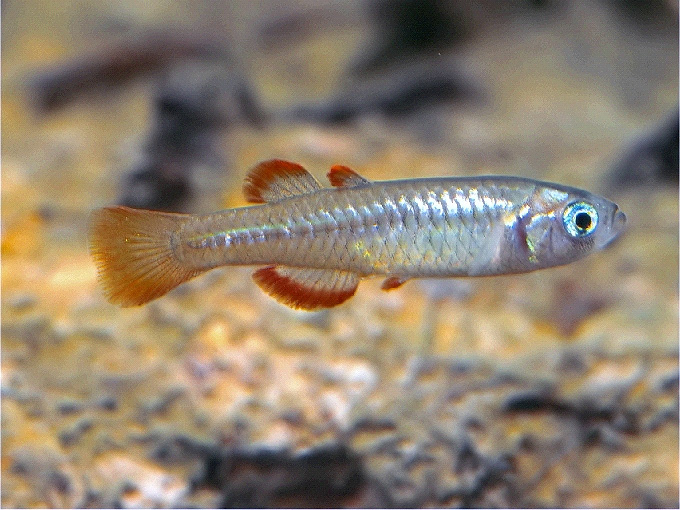
Scaturiginichthys vermeilipinnis
Redfin Blue Eye
Species Summary
Scaturiginichthys vermeilipinnis were originally collected from a number of artesian springs located on Edgbaston Station, a sheep and cattle property located 35 km north-east of Aramac in central-western Queensland in 1990, and were scientifically described in 1991. The scientific name is a reference to the unique habitat (scaturginis is Latin for spring; ichthys, pertaining to a fish) and the red colouration on the margins of the dorsal and anal fins (vermeil - old French red or vermilion; pinnis, Latin for fins).
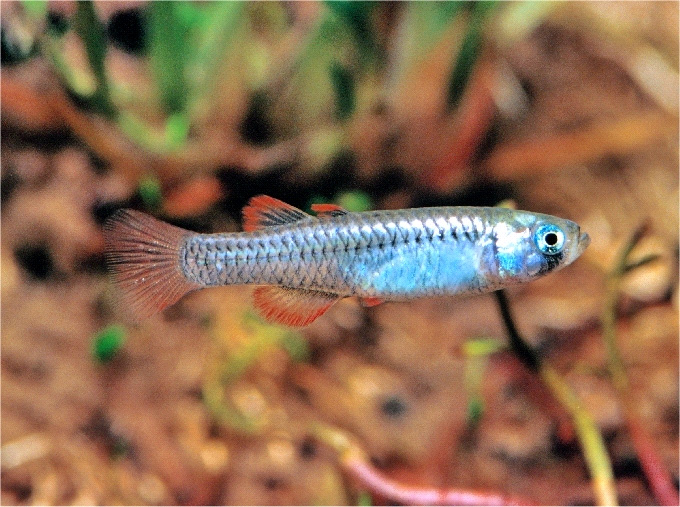
Scaturiginichthys vermeilipinnis is Australia's smallest freshwater fish reaching a maximum total length of around 28 mm. They have a translucent silvery to golden body that becomes darker dorsally and around the head region with a plainly visible swim bladder. Iridescent scales are visible above the anterior midlateral line. Opercles iridescent; eyes silvery-blue with a dark vertical stripe through the orbit. The males’ unpaired and pelvic fins are edged with red, hence their common name of Redfin Blue Eye. Fins are clear to faintly yellowish in juveniles and females. Juveniles have the posterior half of the body golden-yellow. Males are generally larger than females with larger fins. External morphology separating S. vermeilipinnis from other blue-eyes include a narrow rounded caudal fin, lower position of the pectoral fin and frequent absence of ventral fins which may be an adaptation to a very shallow habitat.
Scaturiginichthys vermeilipinnis is Australia's most endangered freshwater fish and share their habitat with another endangered species Chlamydogobius squamigenus, the Edgbaston Goby.
Although population numbers in individual springs have varied since their discovery, specific population trends are not well known and they have disappeared completely from a number of springs. It is estimated that their numbers may range from a few hundred to a few thousand individuals. Their continued existence is being threatened by the introduced mosquitofish Gambusia holbrooki and habitat destruction caused by harvesting water from the Great Artesian Basin; trampling and grazing by stock and feral animals, and modification of springs to provide for stock watering. The Great Artesian Basin Bore Rehabilitation Program may have some long-term benefits in terms of increased water flow to the springs. Bores are been capped and drainage canals are being replaced with pipes to reverse declining groundwater pressures and water levels; this has led to the restoration of some spring wetlands.
The fragile nature of the springs at Edgbaston implies that extinction of these truly unique features of the arid Australia landscape and the associated aquatic fauna is very real. A recent survey has found that sub-populations of this species are not healthy and potential threats are increasing.
Scaturiginichthys vermeilipinnis was originally recorded as naturally occurring in eight separate springs. Since its discovery in 1990, five populations have been lost and subsequent colonisation has occurred in two springs. In 1994 five naturally occurring populations were known, plus a translocated population (from one of the above springs). A ‘Species Recovery Plan’ was prepared for the Australian Nature Conservation Agency (now Environment Australia) in 1995, although it was generally not implemented. When the springs were visited in 1998 the five springs still contained existing populations. At the most recent survey in 2005, redfins were present in five relatively small shallow springs. They appear to have become extinct from three of the larger deeper springs. The cause of their demise has not been clearly established.
Etymology
The genus name Scaturiginichthys combines scaturiginis, genitive of the Latin scaturigo, a bubbling spring, referring to its habitat fed by inland aquifers, and the Greek ichthys, fish. The species name combines vermeil, old French for red or vermilion, and pinnis, a Neo-Latin adjective of the Latin pinna, fin, referring to the vermilion-edged fins of males.
Etymology compiled from C. Scharpf (2024), “Fishes of Sahul: an Etymological Survey (Part 7), Pseudomugilidae and Telmatherinidae”, Fishes of Sahul 38(2): 2176–2189, and etyfish.org.
Distribution & Habitat
Scaturiginichthys vermeilipinnis are endemic to the Edgbaston Springs complex near Aramac, which is located 67 km north of Barcaldine (about 930 km west-northwest of Brisbane). Aramac is one of those tiny little settlements in western Queensland which has outlived its original purpose and now stands forlornly in the middle of nowhere supporting the surrounding pastoral properties and sustaining the few people (approx. 300) who continue to live in this inhospitable, hot and dry environment. The area was first explored by Europeans and settled in the 1850s. The town was named after Robert Ramsay Mackenzie who, at the time, held land leases totalling 1536 square miles. Mackenzie, really nothing more than a land speculator, was Queensland’s first treasurer and future premier. He was of limited talent and left no great impression on the public life of the newly formed colony. William Landsborough explored the area in 1859 and called a nearby watercourse Aramac Creek. In a letter he explained “The Aramac, as many wrong reasons for the name have been given, I may say here I named, in honour of the late Sir R. R. Mackenzie, ‘Ar-Ar-Mac’, who was so well known in Queensland, and who had acted in a very friendly way to me”.
Edgbaston Springs are located in the upper reaches of Pelican Creek within the Thomson River system in the Lake Eyre drainage about 31 km north-east of Aramac. Pelican Creek is ephemeral although some waterholes may persist between rainfall events. Pelican Creek (35 km) merges with Aramac Creek. Aramac Creek flows through Boundary Waterhole and Middle Waterhole on its way to joining the Thomson River. The following creeks flow into the Aramac Creek: Curlew Creek, New Year Creek, Emu Hills Creek, Gum Creek, Sandy Creek, Pelican Creek, Politic Creek, Ibis Creek, Corinda Creek, Middle Creek, Willoughby Creek, Four Mile Creek, Langharne Creek, Mountain Creek, Tommlins Creek, Tuaburra Creek, Rodney Creek, Scarrbury Creek, Neil Creek and Gambling Creek.
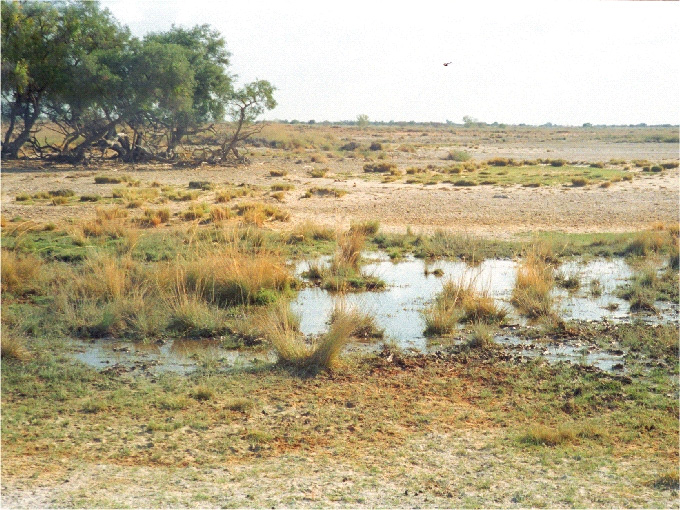
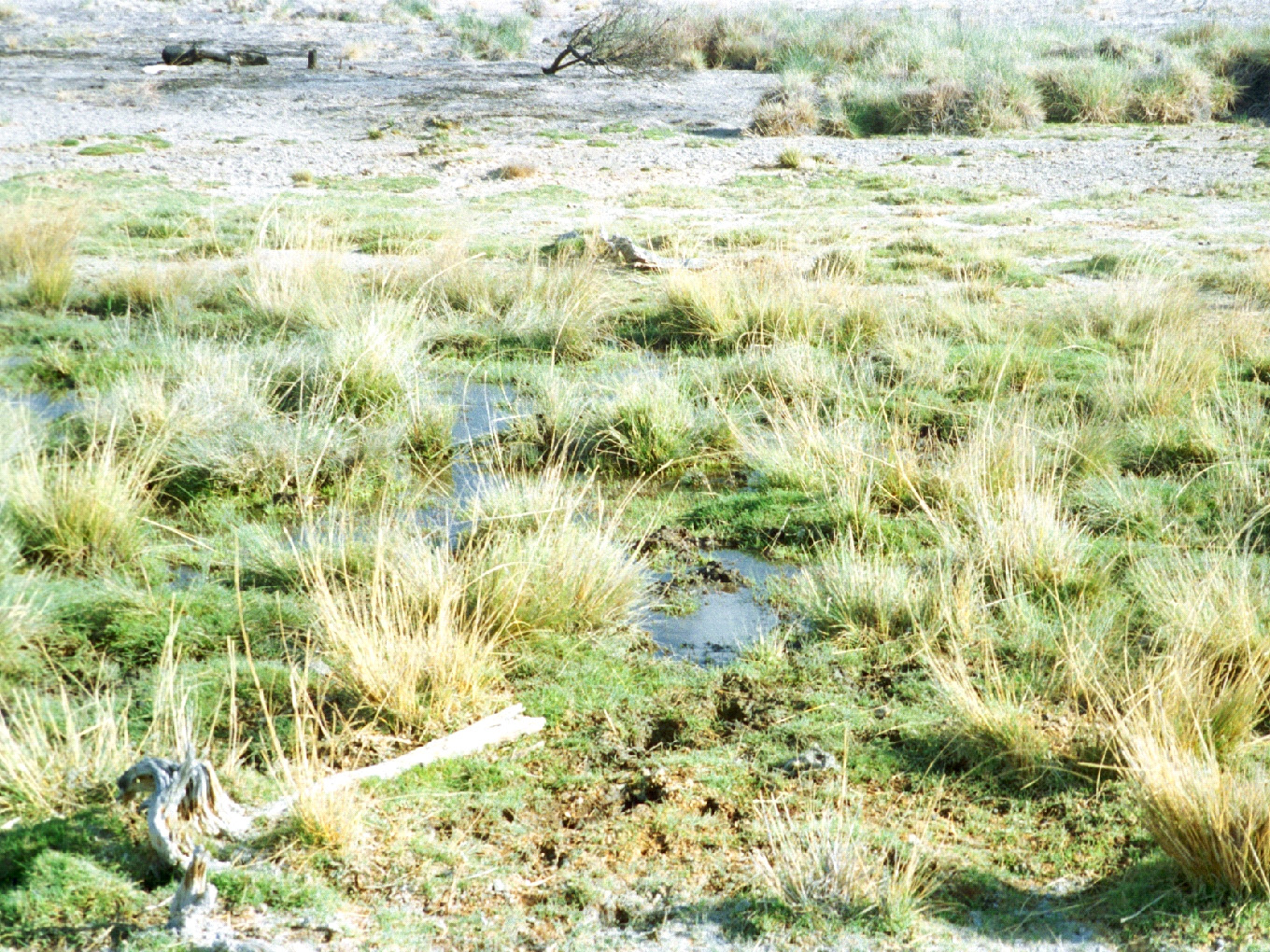
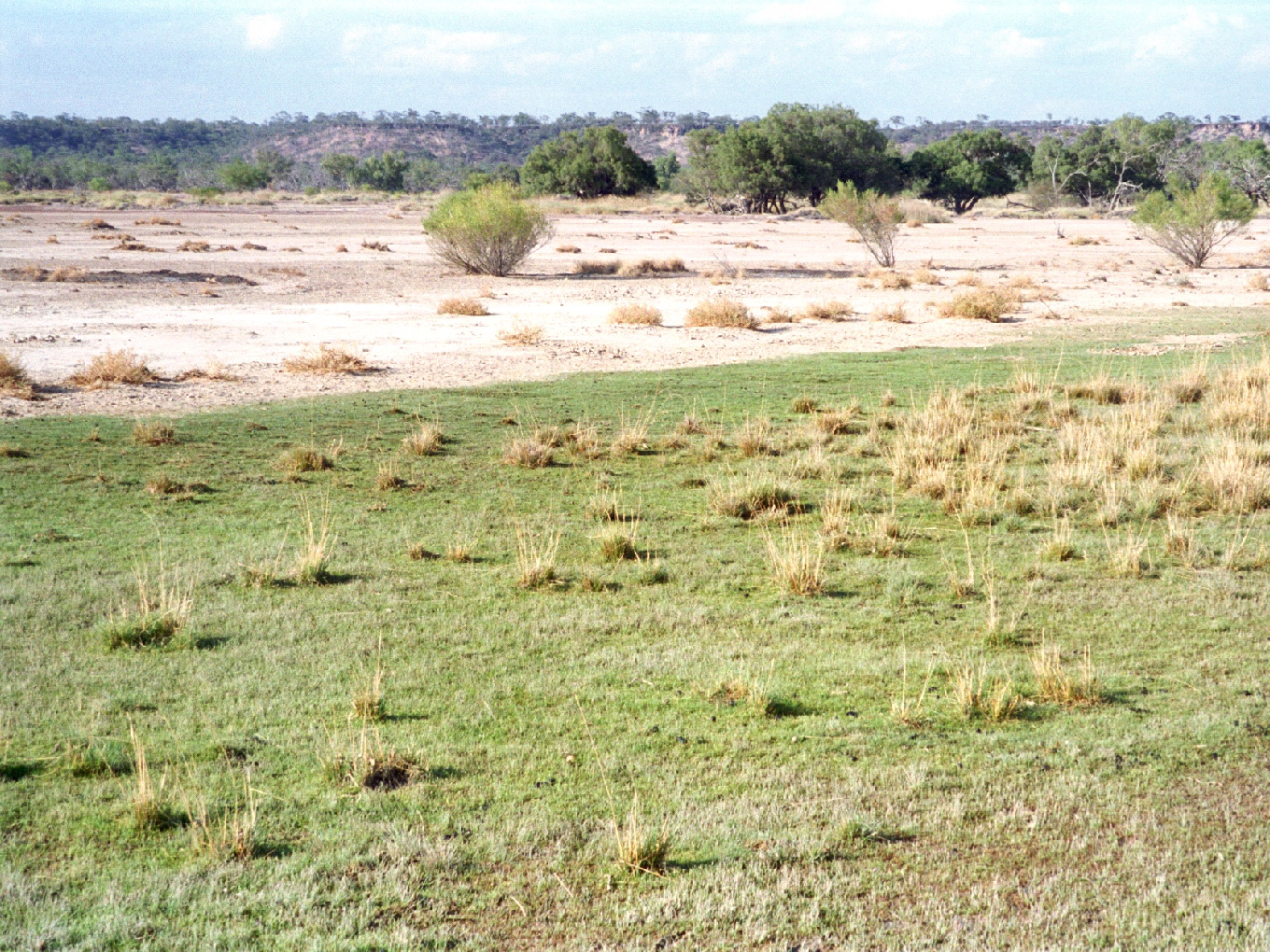
Edgbaston Springs are a complex of artesian springs scattered across an alluvial plain and supporting an unusual habitat type, which is distinct from the surrounding arid region. The actually wetland area is small; the total surface area of known habitat varies seasonally between approximately 6 to 8 km². At least 44 springs have been identified at Edgbaston Springs, but only about 30 have permanent water, some of which have become extinct. They are derived from faults allowing water to flow from thin confining beds of the Great Artesian Basin aquifer. They are permanent artesian springs, with some evaporation and associated reduction in extent during the summer months. Most of the springs are very small, shallow, and marshy. Some springs lower in the catchment are occasionally connected by floodwater.
Water depth varies throughout the springs with depths between 3 and 7 cm. Some springs have associated pools which are usually less than 20 cm deep but may be up to 50 cm. Temperatures recorded in the region show an average high of 29–30ºC, average low of 14–16°C. Temperature extremes have been recorded of -3°C and 51°C. Annual rainfall average is 117– 161 mm, with a recorded high extreme of 543 mm and a low of 30 mm. Water chemistry of the springs have been reported as follows: Conductivity 560–3270 mS/cm; TDS 478–2597 mg/L; pH 7.1–9.1; Alkalinity: 235–1380 mg/L.
The water of the springs that contain S. vermeilipinnis is generally clear with a pH 7.8 to 8.0 (average 7.93) and high alkalinity. Water temperatures are extremely variable from spring to spring and within each spring. In May 1990 the temperatures varied from 7 to 28° Celsius. During May 1991 at 7.00 am water temperatures of 7 to 20°C were recorded in different parts of the springs. While at other times of the year minimum and maximum water temperatures of 3 and 38.5°C have been recorded. Scaturiginichthys vermeilipinnis are usually located in areas of the springs where the temperature is above 16°C.
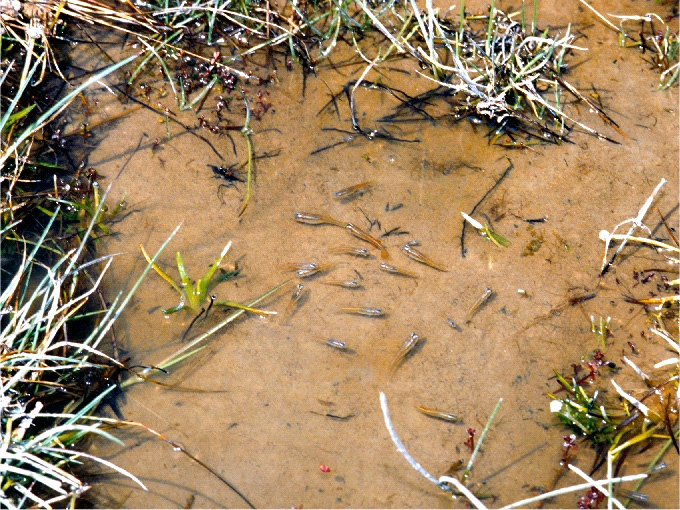
Scaturiginichthys vermeilipinnis may be found throughout all areas of a spring. Adults generally occur in the deeper areas of the springs, while newly hatched fry and juveniles are usually found in the shallower areas. When approached they form large schools, which is probably a predator avoidance response. If undisturbed the fish disperse into smaller groups, and begin feeding and displaying.
Edgbaston Springs contains a diverse endemic fauna (fishes, invertebrates) which rivals that of Dalhousie Springs. Increasing evidence of extraordinary endemism in some groups (especially molluscs and crustaceans) shows that many taxa are confined to single springs or groups of springs. Plant communities include Eryngium fontanum, Sporobolus pamelae, Fimbristylis dichotoma, Utricularia, and Eriocaulon carsonii. The spring's distinctive fauna suggests they have been isolated for a very long time.
Scaturiginichthys vermeilipinnis may have had a much wider distribution in other artesian springs throughout the Lake Eyre region at one time.
Biology
Not a lot is known about the biology of S. vermeilipinnis in their natural habitat. Most information has mainly been based on aquarium observations. They probably possess both eurythermal and euryhaline characteristics, which are acquired by many desert fishes in response to a changing environment. Males defend variable territories against other males, usually around emergent vegetation and will display to any female that enters their territory. During spawning the colouration of the male's fins intensifies to a bright red colour, the overall body colouration becomes much darker and the fish develops a dark stripe that runs vertically through the eye. The female undergoes only minor changes with her body becoming slightly darker. Eggs are released either onto the globular algae on the substrate or vegetation. Territorial males, eggs and juveniles have been found throughout the year but are more common in warmer months.
The natural diet of Scaturiginichthys vermeilipinnis is unknown. Individuals have been observed taking a mouthful of substrate, expelling matter from the mouth and then picking particles from the expelled cloud. They have also been observed picking particles directly from the substrate, from the surface of submerged vegetation and from the water column.
Keeping & Caring
I first obtained this species in April 1994, and although I encountered some difficulties, I managed to maintain a captive population of around 40–60 individuals. However, as I progressed through the numerous generations, the overall population was declining. The major problems encountered were reduced egg numbers and a large percentage of ‘soft’ eggs, resulting in a rather small number of young fish. Under normal aquarium conditions waterhardened eggs are firm and can be rolled between the fingers without any problems. The “soft” eggs however, would burst under slight pressure.
Forty years of experience as an aquarist and breeder has taught me that “natural” conditions are not necessarily the most favourable for maintaining captive specimens. Scaturiginichthys vermeilipinnis have probably experienced extreme changes of both water temperatures and chemistry during their evolution. This adaptability to different water conditions is presumably why they have survived in this uncharitable environment. Therefore, I experimented with various water conditions to see what conditions were most suitable for S. vermeilipinnis, and managed to breed and raised them under the following water chemistry ranges: Temperature 20–31° C, pH 6.8–9.0, Hardness 100–160 ppm, Alkalinity 20–200 ppm, and 415–975 µS Conductivity.
I was not happy with the results however, and continued to investigate other possible causes. I thought perhaps that inbreeding or something similar was causing the problem. Fortunately, I managed to obtain additional wild-caught specimens in October 1997. These were added to the population, but still no improvement was forthcoming.
During the period I maintained this species I had for the most part provided them with bottom substrate mops. I had thought that coming from such shallow water in their natural habitat they would be bottom spawners particularly when I was maintaining them in water around 30–35 cm deep. This belief was further enforced by the numerous observations of males displaying to each other and driving the females into depressions in the gravel or algae mat that covered much of the gravel substrate. More than one male would be involved in this behaviour and sometimes as many as three were observed with one female. Although no eggs were actually seen being spawned, I firmly believe that they were definitely spawning.
I used reasonably large bulky substrate mops and on a number of occasions had observed a couple of dead specimens among the strands of the mop. After testing the water quality, I really didn’t give it much thought, and had convince myself that it must just be old age, as this species doesn’t have a very long life span. However, something must have clicked in my mind and I thought perhaps that they were being entangled in the mops and subsequently died.
I decided to change the bottom substrate mops for smaller floating ones. The results were a surprise – not only did egg numbers increased, but also there was a major reduction in soft eggs. Although, this may have related to the existing water chemistry, which was as follows: temperature 25–30° C, pH 8.5, hardness 160 mg/L and alkalinity 150 mg/L. Almost all the eggs collected from the floating mops were laid in the upper extremities of the mop, just below the water surface, and often in small clusters of 2–4 eggs. In addition to the above results, I did not find any dead specimens in any of the floating mops.
I had also suspected that soft egg production may have been caused by a lack of environmental calcium. However, upon testing the calcium level it was in the range of 25–50 ppm, which is consistent with Brisbane tap water. I then decided to try an increased alkalinity level and used a product called “Aquasonic KH Generator” to increase the alkalinity to around 250 ppm. I found that using the kH generator greatly increased the number of eggs and the general health of the fish.
Over the six-year period that I maintained and bred S. vermeilipinnis they were mostly kept in small (130-L) aquariums, although later they were transferred to a 175-L aquarium. The fish were fed twice daily at 07.00 and 16.00 hours. Their diet consisted mainly of newly-hatched brineshrimp, microworm, frozen bloodworms, homemade fish food and a commercial fine powdered larvae diet. They were also fed the occasional sprinkle of powdered spirulina.
The spawning mops were checked twice a day, at 07.00 hours and 16.00 hours. Any eggs were picked from the mops by hand and placed into a hatching container. Eggs collected were visibly different in size; probably due to the size difference in the females (Fry were also clearly different in hatching size).
During a period of 21 days, egg collection and hatching rates were recorded. Eggs were hand-picked from the mops morning and night (07.00 and 16.00 hours). The collected eggs were placed in a 4-L plastic hatching container with 2L water and 12 drops of methylene blue as a fungicide. The container was then floated in a 135-L raising tub. As the eggs hatched, the fry were carefully transferred to the raising tub. Water in the raising tub was maintained at a temperature of 30°C, pH 7.6 to 7.8, TDS 275 mg/L, hardness 120 mg/L and alkalinity 50 mg/L.
The total number of eggs collected during that period was 178, with the maximum number of eggs collected in one day being 23. Fry survival from the 178 eggs was 89. The survival rate was a lot lower than I would have anticipated, but it was evident during the egg collection process that some eggs had not developed. Some eggs burst during collection, giving me the impression that they had not water -hardened. This was before using the kH Generator. Later spawnings gave a much improved hatching rate than reported above.
In captivity, S. vermeilipinnis usually spawn when the fish are around 12–15 mm in length. Spawning has been observed at water temperatures between 20–32°C. The spherical, opaque eggs are about 1.0–1.5 mm in size and have filaments that attach to vegetation or the substrate. The eggs take between 10–14 days to hatch, depending on water temperature (at 28°C, eggs hatch in eight to ten days). The larvae hatch at between 4–5 mm in length and begin feeding within 24 hours.
Fry grow rather quickly and may reach 15 mm in six to ten weeks. The colour of the fry is unusual, with the front third of the body blue and the rest golden-brown, but this changes to adult colours as they grow. They normally swim near the surface of the water until about 10–12 mm in length when they are found at lower levels in the aquarium.
Spawning activity is similar to other blue-eyes with males displaying to passing females. Males develop a smoky golden-brown body and more intense red colouration in the fins. Sometimes the males can be quite aggressive and will actively pursue the female. The spawning display involves the male swimming around the female with outspread fins. If the female is receptive the pair will come together and swim side by side. Eggs are then released amongst the spawning mops or over the substrate.
From my experience it was obvious that S. vermeilipinnis spawn either late evening or at daybreak (or both). Also, most of the eggs hatched during daylight hours. This is different from most other blue-eyes that I have bred as they usually hatch during the night. I believe the night-time hatching probably affords a certain amount of protection for newly hatched larvae. Due to their isolation, perhaps such protection is not required by S. vermeilipinnis as they do not appear to have any natural predators.
Remarks
A draft ‘Recovery Plan’ for S. vermeilipinnis was being prepared back in 2005-06 for the Department of the Environment and Heritage, Canberra and the Queensland Parks and Wildlife Service, Brisbane. What happened with that ‘plan’ is not known to me. However, a paper was published in 2007 (Fairfax et al.), but no recovery plans were outlined. It did mention that “The failure of attempts to maintain captive breeding populations suggests that an intensive and dedicated effort would be required with due consideration given to water quality, population structure, microhabitat and diet”.
There was an earlier suggestion that establishing a population in an artificial wetland at Edgbaston Station may have greater likelihood of success than off-site aquaria. Groundwater is available from a low-volume permanently flowing house bore. Using this supply, an outdoor tank or artificial wetland that would exclude gambusia, feral pigs and other threats could be designed and established to maintain a reserve population of S. vermeilipinnis. This population could be used, if necessary, to restock springs and could also provide stock for ex-situ experiments if field studies prove unsuccessful.
The conservation of their natural habitat alone, of course, would be useless if developments in the region seriously depleted groundwater stocks and flows. To this end I would also like to see them become established in the aquarium hobby. However, I doubt if anyone will ever be given the opportunity again? I also don’t have much faith in the idea of Government agencies being able to secure their future. Australia does not have a good record in regard to the protection of the nation’s biodiversity. Governments and their policies change – when funding runs out - that’s the end of the story. That’s what happened with the first recovery plan. No more funding - no more work, and everyone involved just went on to do other things. That is also why I put a little extra time and effort into maintaining my captive population. However, it needs a number of dedicated people for total success.
Before aquarium hobbyists can become involved in species maintenance programs we have to get ‘runs on the board’ and show these Government Agencies that we can manage captive stocks. However, I’m afraid that we failed miserably with S. vermeilipinnis. Several aquarists in Australia and internationally had captive populations of S. vermeilipinnis at some time. However, most captive populations were lost due mainly to inadequate aquarium keeping practices or inexcusable neglect.
Within Australia at least 32 attempts involving 26 aquarists are known. Of these, the outcome of eight is unknown but suspected not to have lasted beyond F1. Sixteen resulted in no breeding, two bred but not beyond F1, three went to at least F1, two to at least F2 and one went to F4~F6. Only two breeders are known to have had more than 100 individuals at any one time. In 2000, at the time of deciding to retire from fishkeeping, I had approximately 100~150 adults and fry of various sizes. Today, there are no S. vermeilipinnis left in captivity anywhere in the world.
I believe that the real secret of keeping them in captivity is that they need your personal attention at all times. You need at least 2 or 3 dedicated breeding aquariums and continuous collection of eggs. You also need at least 4 raising tanks or tubs as the older ones will eat the smaller fry so you need to have raising tanks that can hold fry in various stages of growth. They need live foods as they are not all that fussed on prepared foods. They also require good water conditions with regular water changes. I do believe that the alkalinity level has some effects, but just what, I really don’t know?
The tank size I would use now if I ever kept them again would be at least a 120 cm square tank but only about 30 cm deep. In this I would only keep maybe 3–4 males and 6– 8 females? I would set up at least 3 of these tanks. In these tanks I would use 4–6 small floating mops that reach down to the gravel. Raising tubs of about 135 litres should be adequate with maybe 4–6 of these.
I believe that the survival of S. vermeilipinnis is going to depend not only on those who care enough to preserve their natural environment but also to committed aquarists who are willing and capable of maintaining viable populations in captivity. Collectively, it may be possible to prevent its extinction.
In July 2008, Edgbaston Station was purchased by Bush Heritage Australia. Bush Heritage Australia is a not-for-profit organisation that protects Australia’s unique animals and plants and their habitats. It owns and manages thirty-one conservation reserves throughout Australia. The purchase of Edgbaston Station was assisted by a significant contribution from the Australian Government’s ‘Maintaining Australia’s Biodiversity Hotspots’ program. Such support was in recognition of how critical these properties are to the protection of threatened species and systems of high conservation value in Australia.
Work has now commenced on restoring the unique terrestrial and aquatic environments present at Edgbaston Station. Of particular concern is the future of the two critically endangered fish species, S. vermeilipinnis and C. squamigenus. Both species have suffered extensive range reductions since their discovery in 1990, and this is generally thought to be due to invasion of the springs by Gambusia holbrooki. Gambusia control using physical and chemical methods has now commenced at Edgbaston, as have relocation events seeking to expand the distributional range of these species. In concert with breeding programs scheduled to begin in early 2010, the on-ground measures at Edgbaston Station aim to preserve the dwindling populations of these unique fish species that are restricted to one of Australia’s most isolated spring complexes.
References
- Fairfax R., R. Fensham, R. Wager, S. Brooks, A. Webb and P. Unmack (2007) Recovery of the red-finned blue-eye: an endangered fish from springs of the Great Artesian Basin. Wildlife Research 34: 156-166.
- Fensham R.J., R.J. Fairfax and P.R. Sharpe (2004) Spring wetlands in seasonally arid Queensland: floristics, environmental relations, classification and conservation values. Australian Journal of Botany 52: 583-595.
- Fensham R., W. Ponder and R. Fairfax (2007) Recovery plan for the community of native species dependent on natural discharge of groundwater from the Great Artesian Basin. Report to Department of the Environment, Water, Heritage and the Arts, Canberra. Queensland Parks and Wildlife Service, Brisbane.
- Fensham R.J, W.F. Ponder and R.J. Fairfax (2010) Recovery plan for the community of native species dependent on natural discharge of groundwater from the Great Artesian Basin. Report to Department of the Environment, Water, Heritage and the Arts, Canberra. Queensland Department of Environment and Resource Management, Brisbane.
- Ivantsoff W., P. Unmack, B. Saeed and L.E.L.M. Crowley (1991) A red-finned blue-eye, a new species and genus of the family Pseudomugilidae from central western Queensland. Fishes of Sahul 6(4): 277-282.
- Kerezsy A. (2009) Gambusia control in spring wetlands. South Australian Arid Lands Natural Resources Management Board.
- Kerezsy A. & R. Fensham (2013) Conservation of the endangered red-finned blue-eye, Scaturiginichthys vermeilipinnis, and control of alien eastern gambusia, Gambusia holbrooki, in a spring wetland complex. Marine and Freshwater Research 64: 851-863.
- Nicol S., T.B. Haynes, R. Fensham and A. Kerezsy (2015) Quantifying the impact of Gambusia holbrooki on the extinction risk of the critically endangered red-finned blue-eye. Ecosphere 6(3): 41.
- Tappin A.R. (1995) Redfinned Blue-eye. Fishes of Sahul 9(3): 430-432.
- Tappin A.R. (1995) On the Eve of Extinction. Practical Aquariums and Watergardens 10: 18-19.
- Tappin A.R. (1995) Das Rotflossige Blauauge: Scaturiginichthys vermeilipinnis. Regenbogenfisch 10(2): 30-35.
- Tappin A.R. (2011) Rainbowfishes - Their Care & Keeping in Captivity. Art Publications, Australia.
- Unmack P.J & C. Brumley (1991) Initial observations on spawning and conservation status of redfinned blue-eye (Scaturiginichthys vermeilipinnis) Fishes of Sahul 6(4): 282-284.
- Unmack P.J. (1992) Further observations on the redfinned blue eye's conservation status in ANGFA Bulletin 12: 8-9.
- Unmack P.J. (1995) Desert fishes down under in Proceedings of the Desert Fishes Council, 1994 Symposium 26: 71-95.
- Wager R. & P. Jackson (1993) The Action Plan for Australian Freshwater Fishes. Australian Nature Conservation Agency. Canberra, ACT.
- Wager R. (1994) The Distribution of Two Endangered Fish in Queensland, Part B, The Distribution and Status of the Red-finned Blue-eye. Final Report to the Australian Nature Conservation Agency, Canberra.
- Wager R. (1995) Recovery Plan for Queensland Artesian Spring Fishes. Australian Nature Conservation Agency, Canberra.