

Breeding Rainbowfishes
The breeding of any rainbowfish species requires successful completion of a number of key steps: broodstock selection; broodstock conditioning; spawning; hatching; and larvae survival and growth. Most breeding problems can be traced to mismanagement of one or more of these steps.
With declining habitat conditions in many parts of Australia and New Guinea, saving the existing aquarium gene pool and the integrity of each individual species should mean more to rainbowfish keepers than their just being a passing aquarium adornment. Therefore, the breeding of rainbowfishes should be a central role for the serious rainbowfish keeper.
Unfortunately, the initial numbers of each individual species collected from New Guinea has been very small resulting in a limited genetic base from which to establish larger aquarium populations. This can be clearly seen in several of the New Guinea species where the quality and colouration has diminished greatly in captive stocks. Ideally, a number of individuals should be sourced from the wild population every so often.
Inbreeding depression, caused by an increase in the proportion of homozygous traits in a population, usually does not play a major role in early filial generations, and some species of rainbowfishes have been inbred for many generations without major deterioration. However, it should always be considered a potential problem. To maximise genetic diversity captive populations need to be perpetually managed so an adequate number of separate brood stocks are maintained with frequent transfers between them.
For the most part, aquarium breeding has effectively resulted in domesticated strains of rainbowfishes that may be well adapted to life in captivity, but are far removed from their life in the wild.
Very little is known about the biology, ecology and natural life history of rainbowfishes in the wild. Most information is mainly based on aquarium observations. Rainbowfishes are highly social and form schools for some or most of their lives. Strong sexual dimorphism is present in the species with males typically being larger and brighter in colouration. The behaviour between the sexes also appears to vary with females and juveniles forming small social groups that stay together while solitary males cruise in search of mating opportunities. Males can also be highly territorial and will engage in spectacular fin-flashing displays during contests with rivals over the acquisition and defence of spawning sites (submerged logs, rocks, vegetation) close to the water’s edge. Females often move between territories, inspecting males along the way.
Males play an active role in courting females and will often swim over to display to passing females. If successful in his efforts, the female will follow the male to his territory and scatter her eggs amongst the spawning site. In the wild they tend to spawn amongst stems and roots of marginal aquatic vegetation. After spawning, the female will leave, while the male remains displaying to passing females and thus defending his territory and the fertilised eggs. The eggs are attached by adhesive chorionic filaments or tendrils to a range of submerged physical structures, including gravel substrates, woody debris, root masses, aquatic vegetation and submerged riparian vegetation, which hide them from predators.
Spawning frequency in the wild is unknown, but it is likely that the number of spawnings per year would be much less than that observed in captivity. In their natural environment rainbowfishes are generally aseasonal breeders, spawning opportunistically at intervals over a period of about four to five months of the year. Most however, show a peak in reproductive development during the early-wet season (November to May) in floodplain rivers, but can also occur in streams during the dry season (August to November). Rainbowfishes usually move out of their dry season habitats to take advantage of the extensive flooding during the wet season, which often coincides with an increase in food resources.
Flooding also increases the area and diversity of aquatic habitats available. The young are spawned when food is plentiful and when aquatic plant communities are most dense, affording them protection from predation. Spawning may vary from region to region and in some cases from headwaters to lowland reaches when flow rates are reduced. However, rainbowfishes will normally breed when environmental conditions ensure maximum fertilisation and larval survival. They generally spawn over a large area in slow-flowing waters and the backwaters of floodplain areas. The presence of extensive spawning enables them to ‘spread the risk’ from predators. This strategy increases the chances of some eggs surviving. In captivity, spawning will occurred throughout the year if suitable conditions are provided.
Rainbowfish larvae are subject to enormous mortality, with estimates as high as 99.99% during the early larval stage. This mortality occurs in various ways. Displacement from favourable nursery areas can occur during the larval stage and has been shown to cause mortality. Likewise the condition or health of larval and juvenile fish is an important factor regulating mortality during the first year of life. Indeed, it has long been proposed that levels of recruitment and subsequent survival are determined during the ‘critical period’ which occurs between hatching and first-feeding, with survival related to the period between when the larvae require exogenous nourishment and when such nourishment becomes available.
It has been suggested that in two lowland Australian rivers, spawning of many native fish is a predictable event that occurs regardless of variations in environmental conditions such as hydrology (Humphries & Lake, 2000). This suggests that recruitment failures originate from poor larval survival rather than a lack of spawning activity. Larval growth generally has a positive relationship with temperature, due to the direct metabolic advantage of warmer water and also because increasing temperatures are often associated with increased primary and secondary production.
The precise regulatory role of environmental factors on the reproductive cycles of rainbowfishes is not known. Spawning is regulated by external environmental factors that trigger internal biological functions. The internal biological functions that regulate spawning are similar for most fishes as a result of endogenous rhythms. External environmental factors that control spawning, however, vary considerably.
Environmental factors that have been shown to play a significant role in the reproduction cycle of rainbowfishes are: photoperiod; water temperature; water quality; flooding and water flow; rainfall and availability of food. These factors do not function independently of each other, but are interrelated. Actual spawning occurs in response to short-term stimuli such as colouration or pheromones of a mate. Pheromones are chemical messengers like hormones but instead of carrying information within an individual they carry information between individuals of the same species.
Fortunately, rainbowfishes in captivity are very adaptive and will breed under a variety of conditions, and are in the main, influenced by photoperiod and temperature. Subtle changes in water chemistry will also have some influence on the spawning of rainbowfishes. Therefore, maintaining them in an appropriate captive environment will generally ensure successful breeding.
Successful breeding will depend on a number of things such as nutrition, temperature, the number of fish in the aquarium, the age of the fish, and sex ratio. To breed rainbowfish successfully you need to provide them with suitable conditions and they will do the rest. Water temperature can be maintained at around 28°C (± 1°C). A photoperiod of 14 hours light: 10 hours of darkness usually gives the best result. Other water quality components are not a major factor providing they fall within that shown in the accompanying water quality table.
In addition to the regular aquarium, breeding usually requires one or more separate aquariums for conditioning the breeders, spawning, and rearing the juveniles. Appropriate habitat is important for all rainbowfishes, but special consideration must be given to breeders. In addition to water-quality related densities, behaviourally oriented stocking densities as well as male-to-female ratios are critical to successful survival of broodstock, conditioning, and reproduction.
Broodstock must be strong and vigorous, be in good health and colour, and have excellent conformation with no deformities. Attention to detail during selection ensures higher quality offspring. Conditioned and sexually mature fish often differ in size, colouration, finnage and behaviour from immature or unconditioned specimens. Older and younger breeders are less reproductively sound. Older breeders may show decreased productivity either because of age or because of acquisition of age-related diseases. Younger breeders often are less fertile and in some cases may show greater cannibalism and less parental care.
Before attempting to breed your rainbowfishes, you should feed them with the best food you have available for at least two preceding weeks. Conditioning is achieved through optimal water quality, appropriate nutrition, and avoidance of any disease problems. Successful conditioning requires high quality protein foods that contain essential fatty acids, carbohydrates, vitamins, and minerals, with adequate levels of digestible energy, three to six times a day. Most species will breed successfully when fed commercially manufactured fish food (43% protein; 12% lipid), but feeding with live and high-protein frozen foods will maximise egg numbers. Feed at least every day making sure you don’t overfeed.
Many experienced hobbyists separate males from females during the conditioning period to optimise nutrient use toward gamete formation and away from behavioural distractions or untimely spawnings. Separation of the sexes elicits a synchronisation of spawning that result in a larger number of eggs. However, females in peak condition kept in an aquarium without any males have been observed to shed eggs without the stimulus of a male.
Broodstock should be examined for parasites and other pathogens before conditioning. External and internal parasites reduce reproductive capacity. Wild caught and pond-raised broodstock are more likely to have significant parasite infections than aquarium-raised fish, although the latter can be just as infectious if water quality and other factors have not been kept at a premium. Any fish showing signs of illness or weakness should not be chosen.
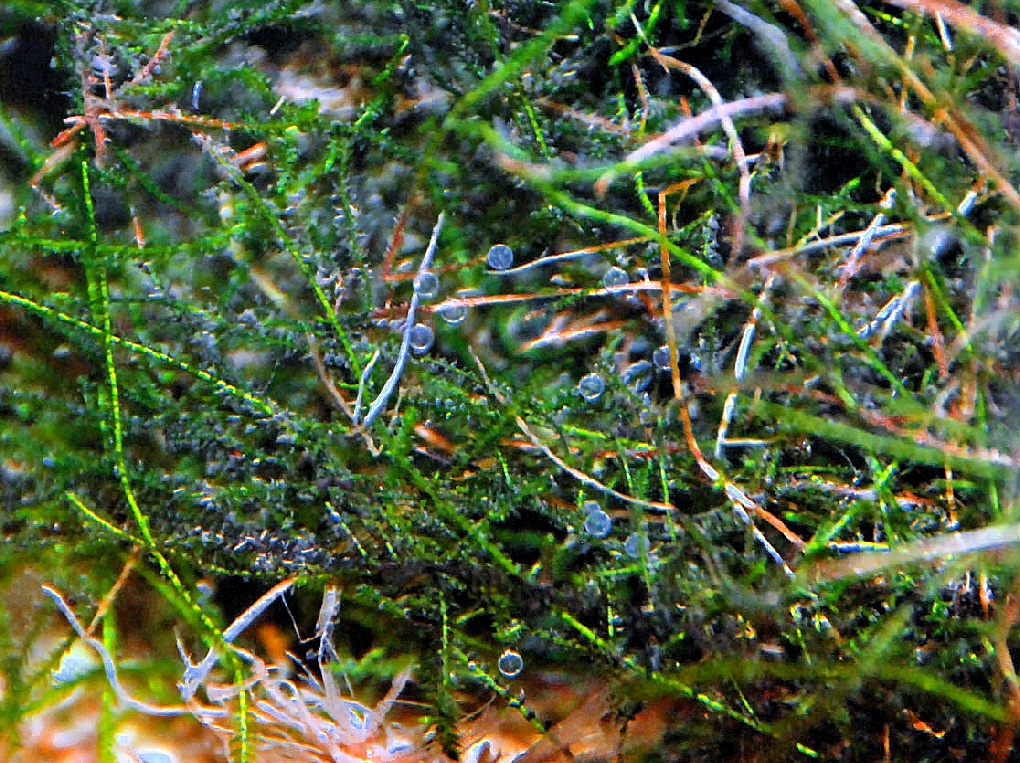
Java moss, or any similar aquatic moss, is a suitable live plant for spawning rainbowfishes and grows well under the low light conditions of most breeding set-ups. Even so, spawning mops are my preferred spawning medium. By imitating a spawning substrate (e.g., aquatic vegetation), they serve as egg collectors and provide a place for egg attachment.
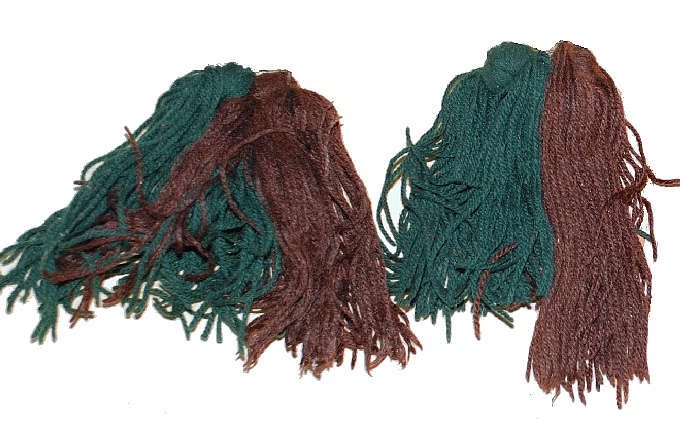
Spawning mops can consist of bundles of fibrous material arranged in a variety of forms and made from a variety of different materials. However, one of the easiest methods is to use acrylic knitting thread (about 8 ply), boiled to remove excess dye, cut to the desire length and tied together in the middle. For a more natural appearance, you could use green coloured thread to simulate aquatic vegetation.
Typically, spawning mops are suspended in the water column or laid along the bottom or sides of the breeding aquarium. The mops can be attached to a block of styrene foam and floated in the water. You can provide several mops to offer the males a choice of spawning sites and females a choice of hiding places. Egg-filled mops are removed from the spawning aquarium and placed in another aquarium for incubation and larval rearing. Eggs are best left attached to the spawning medium to minimise handling stress.
Before being used for different rainbowfish species, mops should always be boiled or sterilised to destroy any eggs or pests, which may still be attached to the mops. This procedure also effectively precludes inadvertent hybridisation resulting from accidental carryover of eggs from the breeding aquarium of one species to another, and demonstrates a significant advantage that artificial spawning medium has over live plants.
Rainbowfishes are sexual dimorphic and can be sexed by their colour and finnage. Males are generally larger, more colourful and have extended finnage, while females are pale by comparison, and have smaller or more rounded appearance in the fins. Generally, the larger males can usually be identified from the elongation of posterior rays in the second dorsal and anal fins. In addition, males generally have a much deeper body than females. These physical differences make it relatively easy to identify mature males. However, female characteristics such as plumpness of the abdomen are subjective and can be misleading. If you are unable to sex your fish, then have someone with more experience do it for you.
Male rainbowfishes can also be highly territorial and will engage in spectacular fin-flashing displays during contests with rivals over the acquisition and defence of spawning sites. Males display to each other by extending their dorsal and anal fins, while at the same time intensifying their colouration. The extension of the fins is an illusionary aspiration by the males to increase their overall body size as they complete with each other for the attention of a female. This is often accompanied by a side-slapping action while swimming together side by side throughout the aquarium. Extended fin and colour intensity is also undertaken by the male when displaying to a female, only this time it is an attempt to increase their overall attractiveness to the females.
Group spawning with multiple males and females is the preferred method of choice for breeding rainbowfishes because it produces less stress on all the participants. Breeding males can be overly aggressive at times and there is usually a dominant male, although not always the largest, but generally the most aggressive and colourful. Therefore, it is best to have three (or more) males, as with two males, one will dominate the other, and in effect prevent him from breeding, while a single male may cause undue force on the females. Three (or more) on the other hand will keep intermale aggression within bounds and spares the females physical abuse. The dominant male will often break away to drive off other male intruders during an actual spawning event and then return to the female and resume at the point where the courtship behaviour was interrupted. This often allows other males to spawn with the female, thereby having different males participate in the final stage of spawning. After spawning with one female, the dominant male will start looking for another female.

Males play an active role in courting females and will often swim over to display to passing females. In the wild, a female has the choice of either spawning or fleeing. In captivity, the flight of the female is reduced or confined to the size of the breeding aquarium. Non-receptive females will move away and swim to the surface or hide amongst the aquatic plants or spawning mops, remaining motionless to avoid detection. Therefore, the size of the breeding aquarium is vitally important and should be appropriate for the species being bred. In a large aquarium, it is possible for males to have their own spawning space. This should allow the females to choose their own mate and in doing so; a variety of genes will be passed on to the next generation. In addition, this method should provide you with more eggs. On average, 60-80% of females set up for group spawning will produce eggs.
Pair breeding is also an acceptable method and is especially well suited for selecting individual fish for genetic reasons. Breeding aquaria should not be less than 50 litres in size, and are probably best left completely bare with a small internal sponge or box filter. Choose your breeders and place them in the breeding aquarium. Spawning activity should commence within 24 to 48 hours. Spawning behaviour typically begins half an hour after the lights are turned on in the aquarium, with a peak of activity around 1-2 hours later. Activity then gradually declines until all spawning activity has finished, usually by mid afternoon.
During pre-spawning activity, males can become overly aggressive and actively pursue the females. Actual spawning is preceded by vigorous coercing by the male. The male swims beside or at right angles to the female with all his fins expanded, making repeated sideways motions or “nods” in the direction of the female, while at the same time intensifying his colouration. Chasing usually follows, with the male swimming below the female, brushing the vent area with erect fins or butting the female with his head near the pectoral fins. During this procedure the colours in both sexes become more intense, but to a lesser extent in the female. Depending on species, males frequently “flash” an instantaneous brightly coloured band that runs from the upper lip to the first dorsal fin, which they flash on and off like a neon sign. The colours can range from white to yellow, orange, rustic red and light blue.
When receptive, the female will enter the spawning site first, closely followed by the male. In the final stage of spawning, the male presses against the side of the female with their heads touching and, accompanied by much trembling action from both fish, eggs are expelled directly among the plants or spawning medium. As the eggs are shed, the pair separated and with a flick of the males’ tail, the eggs are dispersed. The eggs are spherical and opaque with many filaments originating from one small area of the shell. On coming into contact with a surface such as plants or spawning medium, the filaments adhere and contract so that the eggs become suspended by a fine thread. The eggs are negatively buoyant in freshwater and become clear to light amber a few seconds after spawning. Eggs average in size between 0.5–1.5 ± 0.5 mm in diameter. Water hardening (The swelling process of flaccid newly shed eggs when they first contact and absorb water) of fertilised eggs varies according to the water hardness. When hardness is low, increase in egg diameter is greater.
Usually a small number of eggs are deposited at a time, during which time 50-100 eggs can be produced. In captivity, however, with limited space and artificial substrate, females may spawn all their eggs at the same time. The number of eggs shed by a single female is directly related to the size of the female with large females spawning from 40 to 250 eggs, with a fertilisation success rate generally around 70-80%. The total number of eggs released will increase with the maturity and size of the fish. Large females (>50 mm TL) produce more than 100 eggs per day at the peak of their spawning. Smaller females (3035 mm TL), which were only just sexually mature shed fewer eggs, 20-30 per day and do not spawn each day. Females usually only spawn once each day; however, males will often spawn with more than one female in one day. Spawning may be repeated every 3-5 days depending on nutrition, temperature, the age of the fish, and sex ratio.
Survival of eggs is often reduced by the predatory activity of the parent fish during and after spawning. Despite what you may hear or read most rainbowfish will eat their eggs, maybe not all of them, but they will certainly eat what they can find. I have never seen a rainbowfish that doesn’t eat their eggs. The breeding male will attempt to keep all the other fish away from his spawning site and eggs, but by and large it doesn’t work too well. To insure maximum egg survival, check the spawning medium regularly.
If you have a continuing problem with egg eating, you might like to use a stiff bottle brush as a spawning medium. Commercial breeders use these to spawn tropical fishes that regularly eat their eggs. The stiff bristles function as a medium in which the adhesive eggs can be laid, while at the same time, discourages the breeders from eating the spawned eggs. Feeding live foods can also reduce any egg-eating behaviour. A notorious egg-eater often encountered when breeding rainbowfish is a little freshwater flatworm called planaria. If you get them in a breeding aquarium, they can consume a whole spawning of eggs within hours.
The eggs hatch into well-developed larvae after an incubation period of around 4–9 days, depending on temperature (151-152 hours @ 25°C ± 1°C). At hatching, the larvae measure around 3–4 mm, and are well developed. They are strong swimmers with well-developed pectoral fins and a continuous median fin fold, beginning dorsally and continuing around the tail. The larvae swim at the surface of the water, generally within the upper 1-cm water layer. The mouth is well developed and functional, and they begin feeding within hours of hatching. They can be fed small amounts of greenwater, infusoria or finely powered fry foods such as Sera Micron or TetraMin Baby Food, four or five times a day. From about 7 to 14 days, depending on size, brine shrimp nauplii and/or microworm can also be given to the developing young to supplement their diet.
In their natural environment, such as tropical waters, which have prevailing high temperatures, rainbowfishes generally grow faster, mature younger, and have a shorter life span than rainbowfishes in temperate waters. In captivity however, rainbowfishes characteristically display a wide range of sizes, growth rates and life spans, depending on conditions such as food, space, numbers, competition and water temperature. The growth rate of the rainbowfish larvae is initially slow, with little variation until around 14 days. After that time growth rates increased. Initial slower growth might be related to either absorption of the yolk sac or diet. As the larvae increased in age, the variation in length between individuals also increased. Suitable water temperature and adequate food generally results in higher growth rates.
Food is an important factor affecting growth, especially in the early larval stages. The preferred size of prey for larval fishes increases as mouth size and feeding competency increase. Providing natural green-water with resident zooplankton (which contains various invertebrates including rotifers, paramecium and nematodes) as food for the newly hatched fish has several advantages. The larvae are easily able to switch to different sized prey, a feature not present in monocultures of organisms such as rotifers or brineshrimp. Green water also enables the zooplankton to feed on resident algae and microbes, thus retaining their nutritional value for greater periods of time.
An interesting subject matter is hermaphroditism in rainbowfishes. Gerald Allen (1982) noted that Chilatherina fasciata are sometimes hermaphroditic; that is both male and female reproductive organs are present in the same individual. Nick Romanowski (1994) reported his observations of apparent hermaphroditism in Melanotaenia fluviatilis. This could well indicate that hermaphroditism may be more common in rainbowfishes than previously thought.