
Aquarium Calculations
Volume Calculations
Chemical treatments can be ineffective if volume is underestimated and potentially lethal if it is overestimated. Before determining the concentration or amount of chemical to be used the water volume must first be calculated. Therefore, all fishkeepers should know the volume of their aquarium or pond.
Exact measurement of volume is essential in order to calculate any chemical applications and should be calculated before a problem occurs. Ponds preferably should be calculated when they are filled with water for the first time. The information is then recorded so it is immediately available when needed. In small ponds, depth should be measured across the pond in at least two directions. The number of different directions that will be needed will depend on the shape and bottom uniformity of the pond and will have to be determined on site. If water depth is not uniform it is important that average depth is measured. Greater number of depth measurements will result in greater accuracy.
Most aquariums used for holding fish are rectangular and the volume of rectangular aquariums is calculated by the formula: Volume (litres) = length × width × depth in centimetres ÷ 1000.
When measuring a tank, take the internal measurements of length and width and the depth at the appropriate water level. If the bottom of the tank is sloped, an average depth measurement should be used. To get the average depth of the tank, take three measurements: at the shallow end, in the middle and at the deep end. Add these depths together and divide the total by 3.
Circular pond or container volume is determined by the formula: Volume (litres) = 3.14 × radius² × depth in centimetres ÷ 1000. The radius is measured as ½ the inside diameter of the container. The radius is squared or multiplied by itself. For example, a circular container with an inside diameter of 180 cm and depth of 60 cm has a volume of 1526.04 litres (3.14 × 90 × 90 × 60) ÷ 1000.
Aquarium Medication Calculations
All aquarium medications must be applied at a prescribed rate. Accurate application of this prescribed rate is necessary to achieve adequate control of the target organisms, and to avoid unwanted results such as mortality of non-target organisms. Chemical application rates for aquariums are generally given as a final concentration of active ingredient in the water, usually in parts per million (ppm).
To calculate the dose rate of a chemical required in a given volume of water the formula is:
Dose rate = (required ppm × litres of water to be treated) ÷ percent of active ingredient.
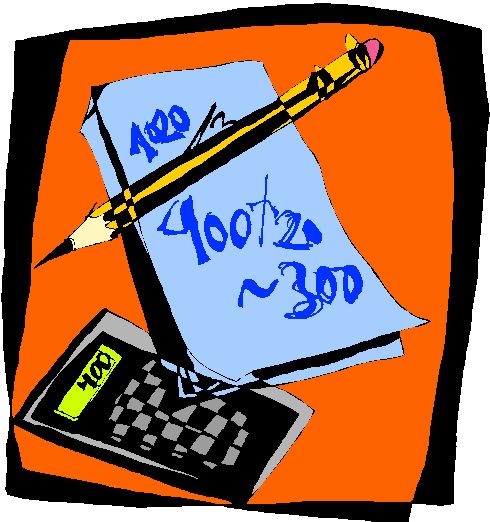
The easiest way to find out the total amount of chemical required is to convert the rates into something understandable like milligrams or grams. For example, to calculate the dose rate of 25 ppm (mg/L) of a chemical with an active ingredient of 400 grams/litre in 100 litres of water:
25 ppm x by total litres to be treated = 25 mg × 100 litres = 2500 mg. 2500 mg divided by percent (40%) of active ingredient = 2500 ÷ 0.40 = 6250 mg.
Example: = (25 ppm × 100 litres) ÷ 40% = (25 mg × 100 litres) ÷ 40% = 2500 mg ÷ 0.40 = 6250 mg or 6.25 grams.
Miscellaneous (parts per million and percent)
0.0038 grams per US gallon = 1 ppm 1 milligram per litre = 1 ppm 0.001 gram per litre = 1 ppm
ppm = mg/L 1 mg/L = 1,000 milligrams per litre
1 Percent (%) = 10,000 parts per million (ppm) = 10 grams per litre (g/L)
How to convert ppm into percent: Percentage is parts per 100. 1 part per hundred is 10 parts per thousand or 10,000 parts per million. So to get from ppm to percentage you have to divide by 10,000.
Percent <--> Grams/Litre Conversions This is a simple conversion. Since percent is parts per hundred, and grams/litre is parts per thousand (ppt), we simply need to multiply percent by 10 to get grams/litre, or: grams/litre = 10 percent
grams per litre g/L = ppt milligrams per litre mg/L = ppm
The two most common elements in sea water, after oxygen and hydrogen, are sodium and chloride. Sodium and chloride combine to form what we know as table salt. Sea water salinity is expressed as a ratio of salt (in grams) to litre of water. In sea water there is typically close to 35 grams of dissolved salts in each litre. It is written as 35‰. The normal range of ocean salinity ranges between 33-37 grams per litre (33‰ - 37‰).
Converting ppm to ppt:
To convert ppm readings to ppt, divide the ppm reading by 1000. For example a reading of 5000 ppm = 5000 ppm/1000 = 5.00 ppt.
To convert ppt readings to ppm, multiply the ppt reading by 1000. For example a reading of 4.00 ppt = 4.00 ppt x 1000 = 4000 ppm.
Converting µS to mS:
To convert µS readings to mS, divide the µS reading by 1000. For example a reading of 5000 µS = 5000 µS/1000 = 5.00 mS.
To convert mS readings to µS, multiply the mS reading by 1000. For example a reading of 4.00 mS = 4.00 mS x 1000 = 4000 µS.
Units of Concentrations
Parts per million: Assuming the density of water is 1.00 g/mL, 1 litre of solution = 1 kg and hence, 1 mg/L = 1 ppm. This is generally true for freshwater and other dilute aqueous solutions.
ppt – parts per thousand (used for common ions in sea water)
ppm = mg/L = µg/mL