
General Maintenance
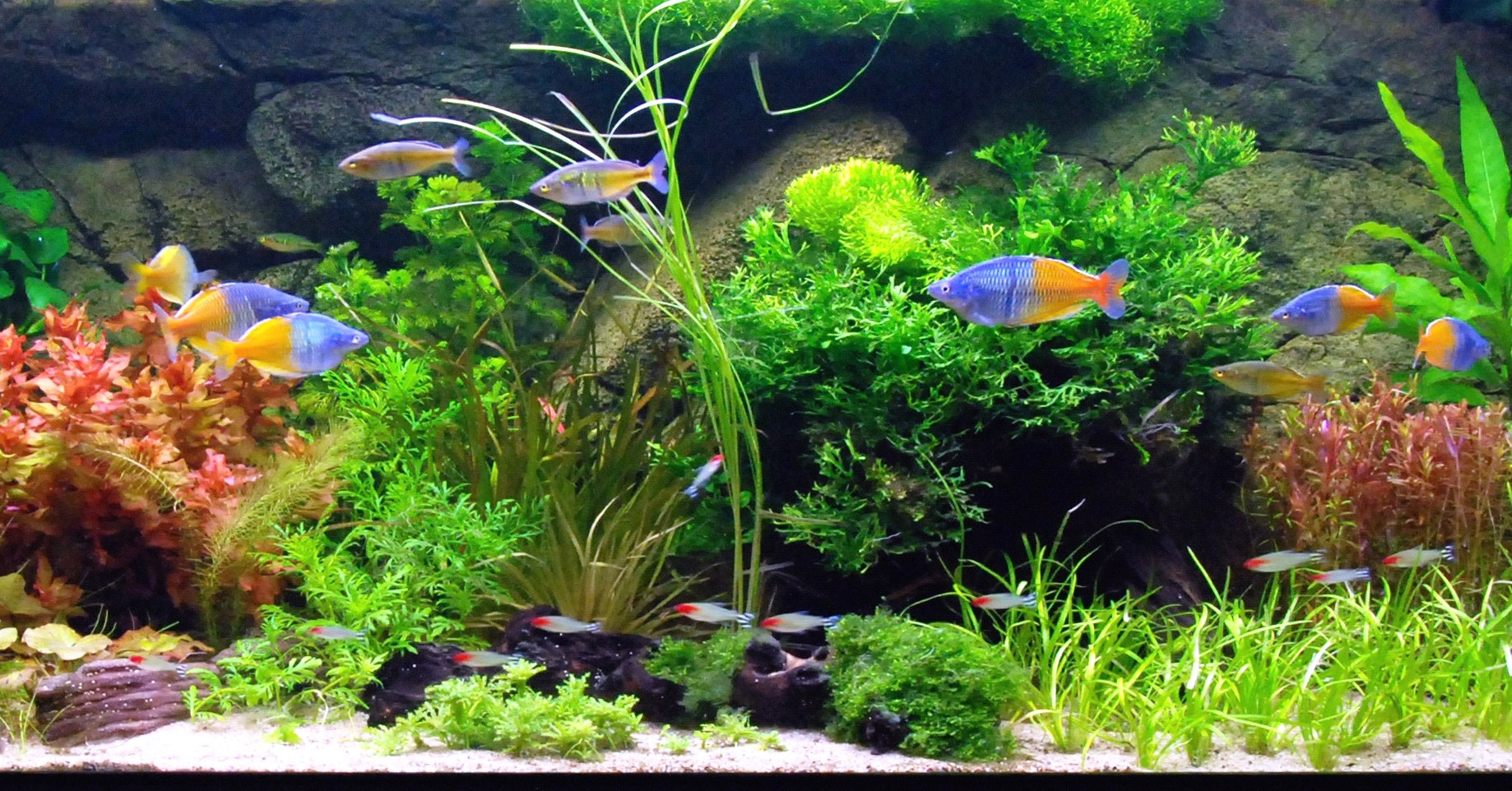
Fundamental to the success of a thriving aquarium is a stable environment made possible with a regular maintenance program. This includes regular removal of particulate matter (faeces, uneaten food, detritus, etc.). The removal of algae from tank walls, removal of particulate matter from the filter, and regular water changes. Water changes provide regular removal of wastes not normally removed by filtration or bacterial decomposition, and restores a stable environment. The more frequently the water is refreshed, the lower the stresses on the system and its inhabitants. Most rainbowfishes enjoy water changes; they seem stimulated by them, so long as they do not involve so great a change in water parameters that they induce stress.
Weekly changes of between 25–35% should be employed to avoid any major changes in water quality and chemistry. Weekly changes of at least 50% will be required for rainbowfishes maintained at high population densities. Water changes are one of the easiest things you can do for your fish, and will do more to support their health and longevity than the most high-tech filtration systems can do without water changes. Although the subject of water changes in aquaria has been one of considerable debate over the years, no systems exist, despite misleading claims to the contrary, that can replace waterchanges.
There is no scientific information for how often or how much water should be changed as stocking density, quality of replacement water and feeding vary from tank to tank. Usually the more water changed and the more often, the better the resulting environment is for the fish. If the chemical composition and temperature of the replacement water are the same as that of the aquarium water ≥50% may be changed with no ill effects on the fish.
Over time dissolved substances begin to accumulate and cannot be efficiently removed through conventional filtration. Persistently high levels of these dissolved substances can compromise the health of the fish as well as the entire aquarium system. Substratum in heavily fed, overstocked or neglected aquariums can rapidly accumulate organic wastes, especially if the water is not changed on a regular schedule. These wastes will stimulate bacterial growth that uses up oxygen. As the dissolved oxygen in the water is depleted the water becomes polluted and the fish can die.
Hydrogen sulphide gas (H2S) can occur in an aquarium that has excessive organic debris in deep gravel or sand substrates that are not completely aerated. It is created by anaerobic bacteria living in the substrate of the tank. This is often visible as a black slime that occurs between the substrate and glass sides of the aquarium.
Disturbing the bottom substrate can release hydrogen sulphide into the water column. Any presence of hydrogen sulphide should be considered detrimental. The best way to avoid this problem is to ‘vacuum’ the gravel each time you do a waterchange. This process removes organic wastes, which otherwise might clog the gravel bed.
Many fine particulates are too small to be removed by conventional filters. These small particulates cause or complicate many other system problems. Particulate removal is one of the most complicated problems in aquarium systems. Particulates come from uneaten feed and undigested wastes. It has been estimated that over 60% of feed placed into the aquarium ends up as particulate. A diatomaceous earth filter will remove very fine particles down to about 0.1 microns from water in aquaria. Particulate filters should be cleaned frequently and maintained at peak efficiency. In addition to these fine particulates, decomposing organic matter and dissolved substances can also be problematic in an older tank. Larger than normal water changes in the ≥50% range are necessary as otherwise the dilution and removal of these substances is so small that little is removed and the problem lingers or becomes worse.
Detritus can also accumulate in the substrate over time and should be removed at every opportunity. This may require the addition of more water flow within the tank to keep detritus in the water column as long as possible so that the particulate filtration system can remove it.
The most common apparatus for vacuuming the gravel is a siphon with a large cylinder on one end attached to a long, narrow tube. These devices are generally available from aquarium suppliers. However, should the gravel becomes contaminated, the aquarium should be drained, cleaned and the gravel thoroughly washed before re-establishing the aquarium.
Incidentally, if no more contaminants enter the aquarium, eventually the bacteria most suited to the existing conditions will convert all waste to gases and trace elements (denitrification) and the dissolved oxygen in the water will begin to rise to the point where the water will be safe for fish again.
Although I have detailed a number of routine jobs in the maintenance of an aquarium, the work is not quite as laborious as a reading of it may imply. The less an aquarium is fussed with the better, and, as a rule, if it has been set up in the correct manner in the first place it requires very little further attention. It does not mean that a great deal of time has to be spent every day in looking after the fish and plants. A few minutes each day, to feed the fish, to remove uneaten food, to see that all the fish are in good health is ample. Once a week the aquarist will have to spend half an hour, perhaps a little longer, overhauling the plants, removing excess sediment, water changing, cleaning the filter, and cleaning the front glass. It is important to note that such attention as is necessary must be given regularly, once you neglect an aquarium the whole thing becomes a nuisance rather than the attraction that it can be with a little care.
Keeping healthy aquarium fishes is greatly affected by water conditions within the aquarium. If you want to keep your fish looking vibrant and healthy in the long term you must adhere to an acceptable maintenance schedule. If the aquarium is properly maintained as outlined above it is possible to have the aquarium looking as vibrant after 5 five years as it did when it was first setup. Rather than combating the effects of an unhealthy aquarium, practice proper aquarium maintenance, including routine water changes and water testing and especially regular cleaning of the gravel substrate.