
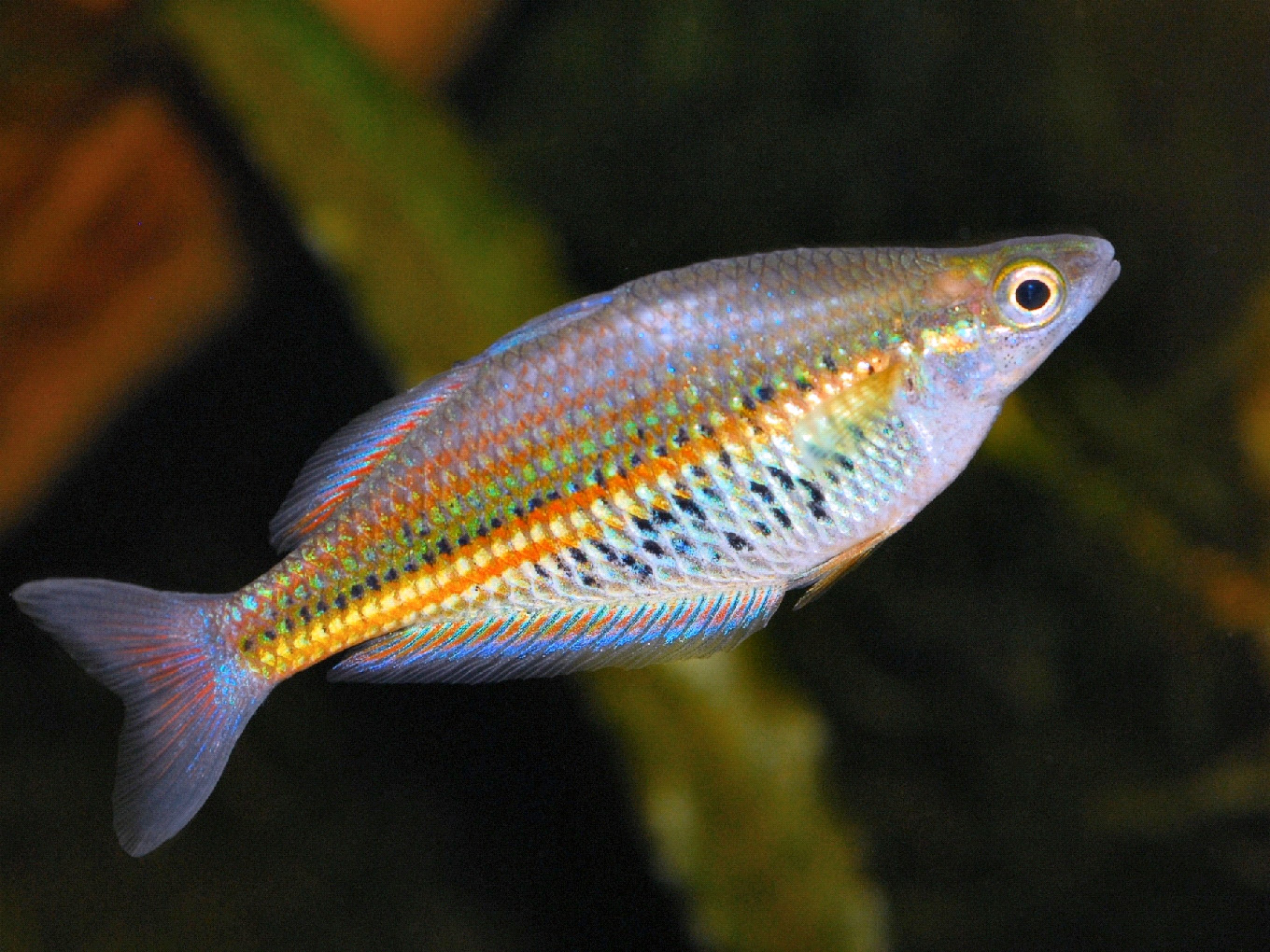
Glossolepis ramuensis
Ramu Rainbowfish
Species Summary
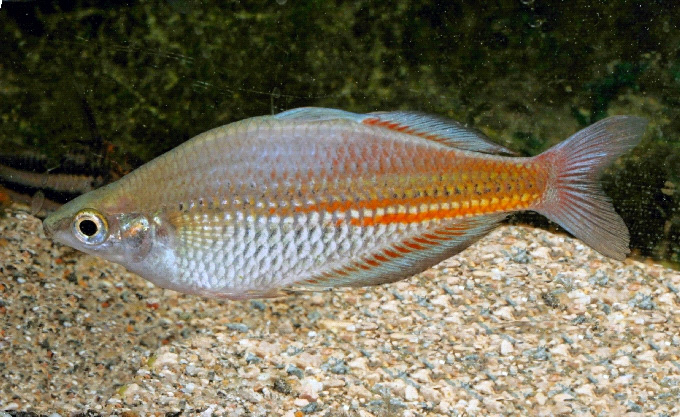
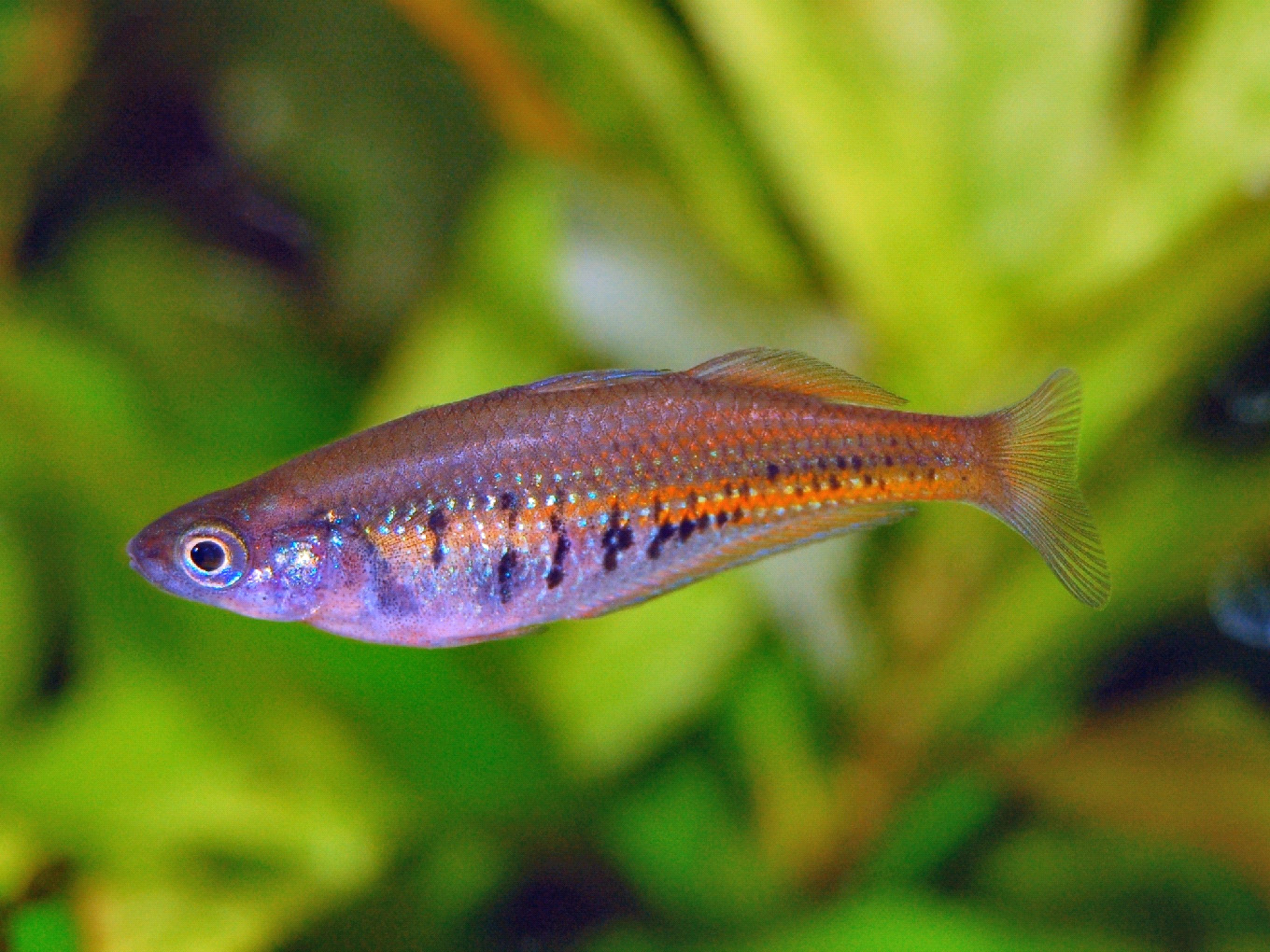
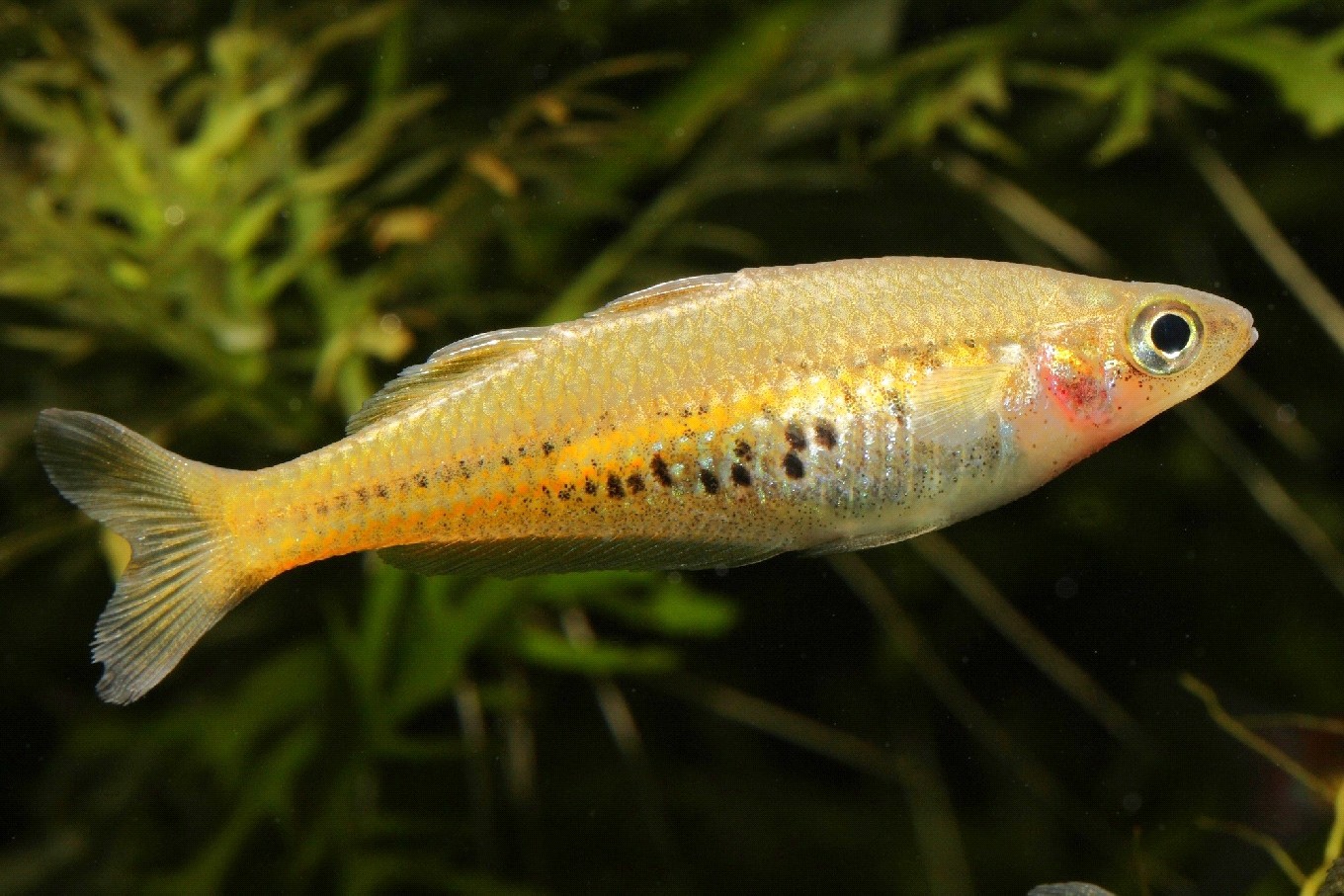
Glossolepis ramuensis was described on the basis of a single male specimen, found in October 1983 in a tributary of the Ramu River in Papua New Guinea. The species was named ‘ramuensis’ with reference to the river system of the type locality. Males are greenish-brown to purplish on the back with charcoal scale outlines, and white or mauve on the lower half. There are several narrow orange horizontal lines on the sides; those on the middle above and below the midlateral band are the most vivid. These stripes extend from the level of the anal fin origin to caudal fin base. About 10 irregularly scattered black blotches on the lower sides between the yellow stripes and anterior portion of the anal fin base. These usually disappear with ageing. A blackish stripe runs from upper rear edge of the eye to the upper pectoral fin base. The first dorsal fin is slightly dusky grey; second dorsal and anal fins yellow on basal third, translucent or slightly dusky on distal portion; caudal fin charcoal grey at base and translucent distally with yellow at base of central rays; pelvic and pectoral fins mainly translucent. Glossolepis ramuensis may reach a maximum size of 10 cm, but are usually less than 8 cm. Mature males are usually much larger and deeper bodied than females.
Glossolepis ramuensis is most closely allied to G. maculosus known from the Markham, Ramu and Sepik river systems. Both species have crenulate scale margins and a small premaxillary with relatively few teeth, typical features of the genus. However, they differ from the other Glossolepis species with respect to a reduced number of gill rakers and scales. Glossolepis ramuensis differs from G. maculosus only with respect to colour pattern and a slightly higher number of vertical scale rows (38 vs. 34-36).
Etymology
The species name ramuensis is a suffix denoting place, referring to the Ramu River system, Papua New Guinea, the type locality.
Etymology compiled from C. Scharpf (2021), “Fishes of Sahul: An Etymological Survey (Part 4), the Rainbowfishes”, Fishes of Sahul 35(1): 1706–1714, and etyfish.org.
Distribution & Habitat
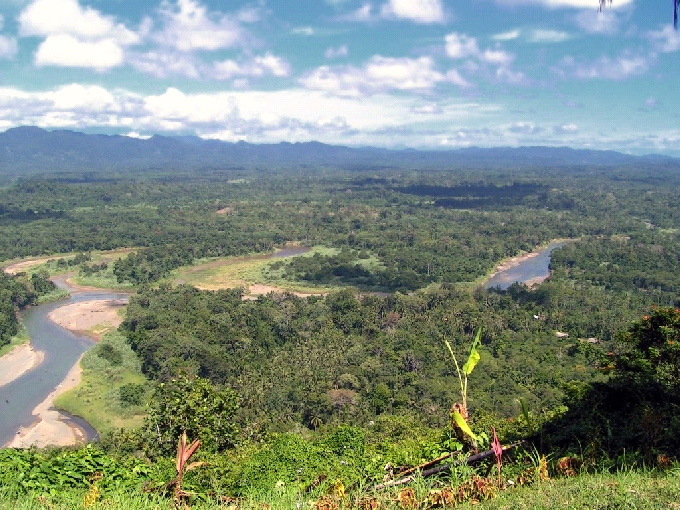
Glossolepis ramuensis is currently known only from the Ramu River system and tributaries of the Gogol River near Madang, Papua New Guinea. The holotype specimen was collected from a metre-wide tributary of the Ramu River flowing slowly through dense rainforest about 3 km south of Walium Village by Gerald Allen and Roger Steene. The water was exceptionally clear with gravel bottom and very few aquatic plants except in occasional sunlit pools. Temperature and pH readings of 28.5° C and 7.8 were recorded at the collecting site. The stream was inhabited by large numbers of Chilatherina campsi and a few Melanotaenia affinis.
Remarks
Live specimens were collected for the aquarium hobby from the Gogol River in 1988 by Heiko Bleher.