

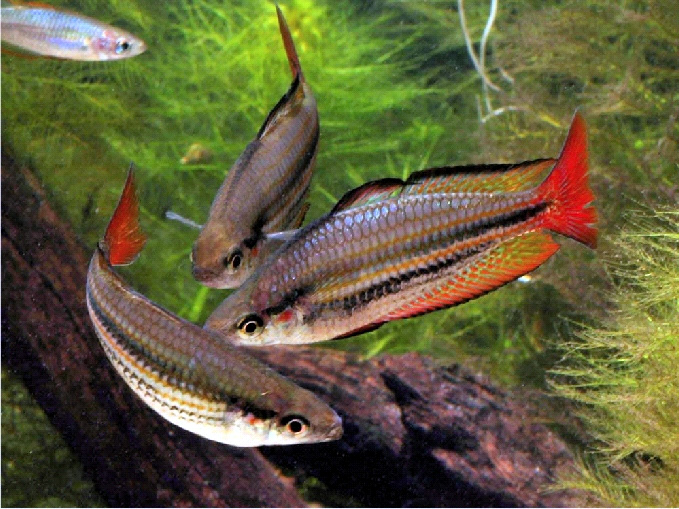
Melanotaenia australis
Western Rainbowfish
Synonymy
- Neoatherina australis Castelnau, 1875
- Melanotaenia solata Taylor, 1964
- Nematocentris australis Allen, 1975
- Melanotaenia splendida australis Allen, 1980
- Melanotaenia australis Allen, Midgley & Allen, 2002
Species Summary
Melanotaenia australis was first described by Castelnau as Neoatherina australis in 1875. The original type specimens were collected from Weeli Wolli Creek, Hammersley Range, and Millstream homestead in Western Australia. In earlier days they were commonly known as the ‘Westralian Sunfish’. In 1964 another species of rainbowfish collected from the Northern Territory was named Melanotaenia solata. After Gerald Allen’s review of the rainbowfish family in 1980, these two species were considered as one and he placed them in the large “splendida” group as a sub-species, and named them Melanotaenia splendida australis, but genetic studies indicate they are clearly a distinct species.
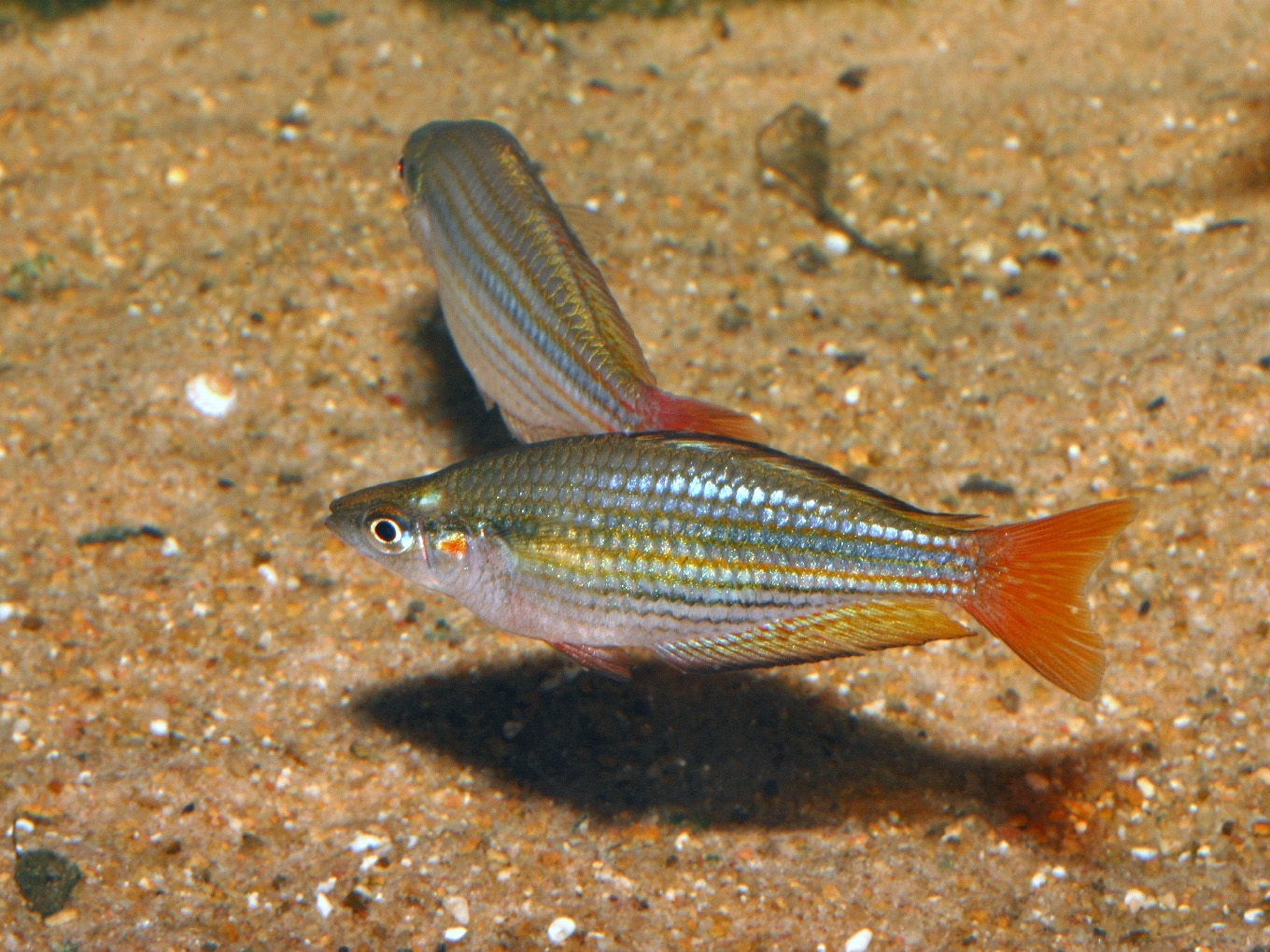
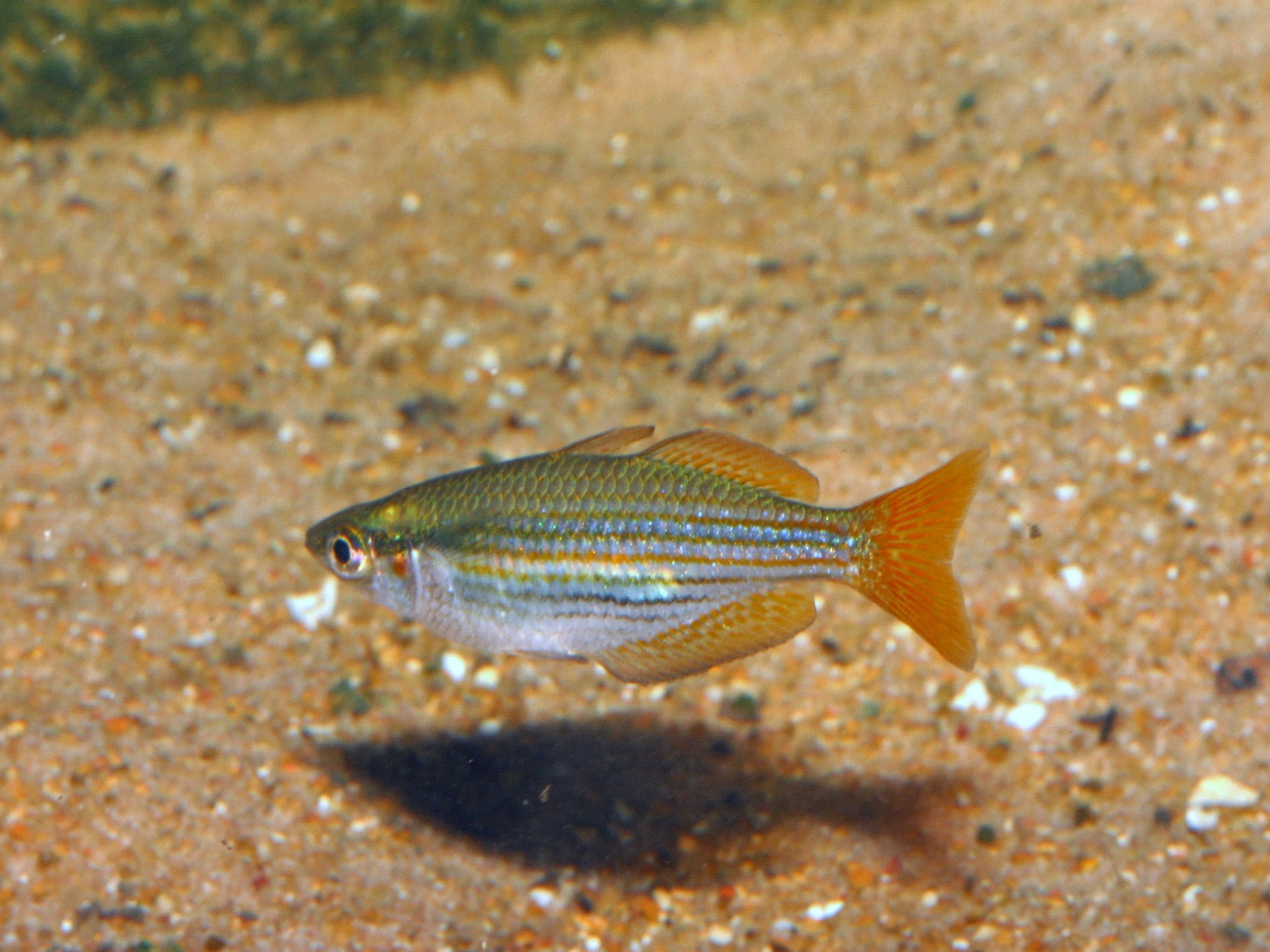
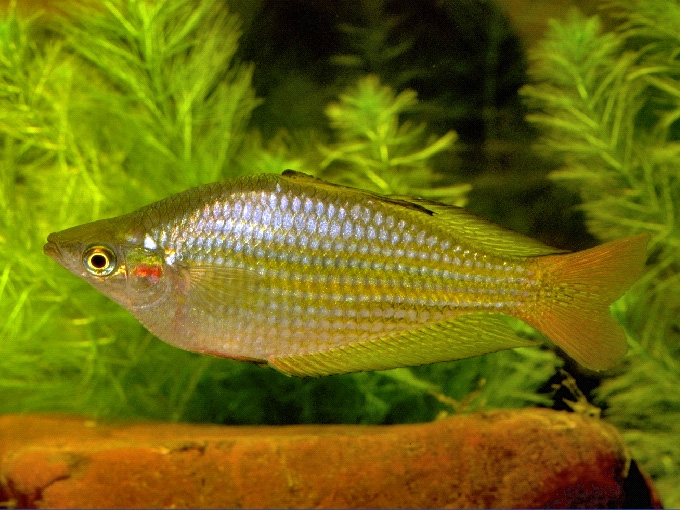
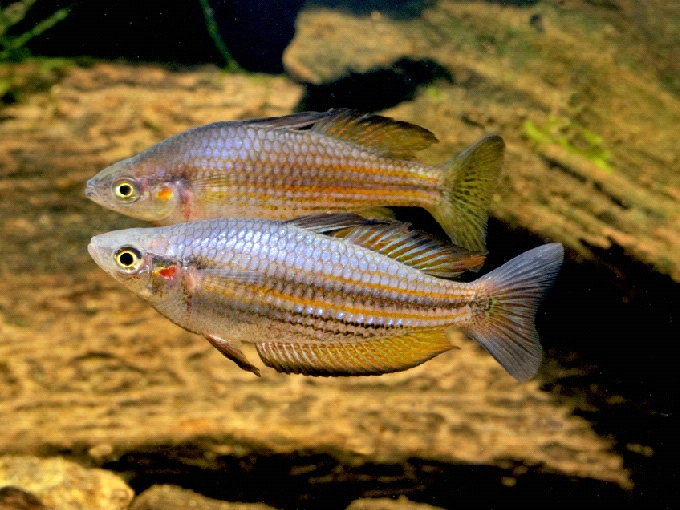
Melanotaenia australis can grow to a length of around 10 cm, but are more common at 8 cm or less. Males are usually much larger and deeper bodied than females. Their colouration, particularly the fins and intensity of the mid-lateral stripe, is highly variable depending on their geographic locality. This is mainly due to a rapid speciation in the rainbowfish group and is further enhanced by the degree of random morphological variation occurring among the various populations. Colouration generally consists of 1-2 broad, dark mid-lateral stripes and a series of narrow longitudinal stripes of orange-red corresponding with each scale row. The whole body has an overall sheen of iridescent purple. Fins range from nearly colourless to deep red, or clear with red or green flecks. The second dorsal and anal fins have reddish orange rays with a yellow membrane and dark distal border. Gerry Allen notes that the real trademark of this species is the zigzagging blackish lines on the lower sides, just above the anal fins. The black mid-lateral line may be very prominent or scarcely apparent.
Males are easily distinguished from females by their brighter colours and longer and more elongated dorsal fin rays. In males, the spines of the first dorsal fin are usually extended and may lie well past the origin of the second dorsal when not erect. The posterior rays of the second dorsal and anal fins are extended caudally and in some species may extend past the origin of the caudal fin. With increasing age and length, the males may develop a very deep body with a distinct nuchal hump and angulated breast which increases the proportional body depth in some species to more than 40% of SL.
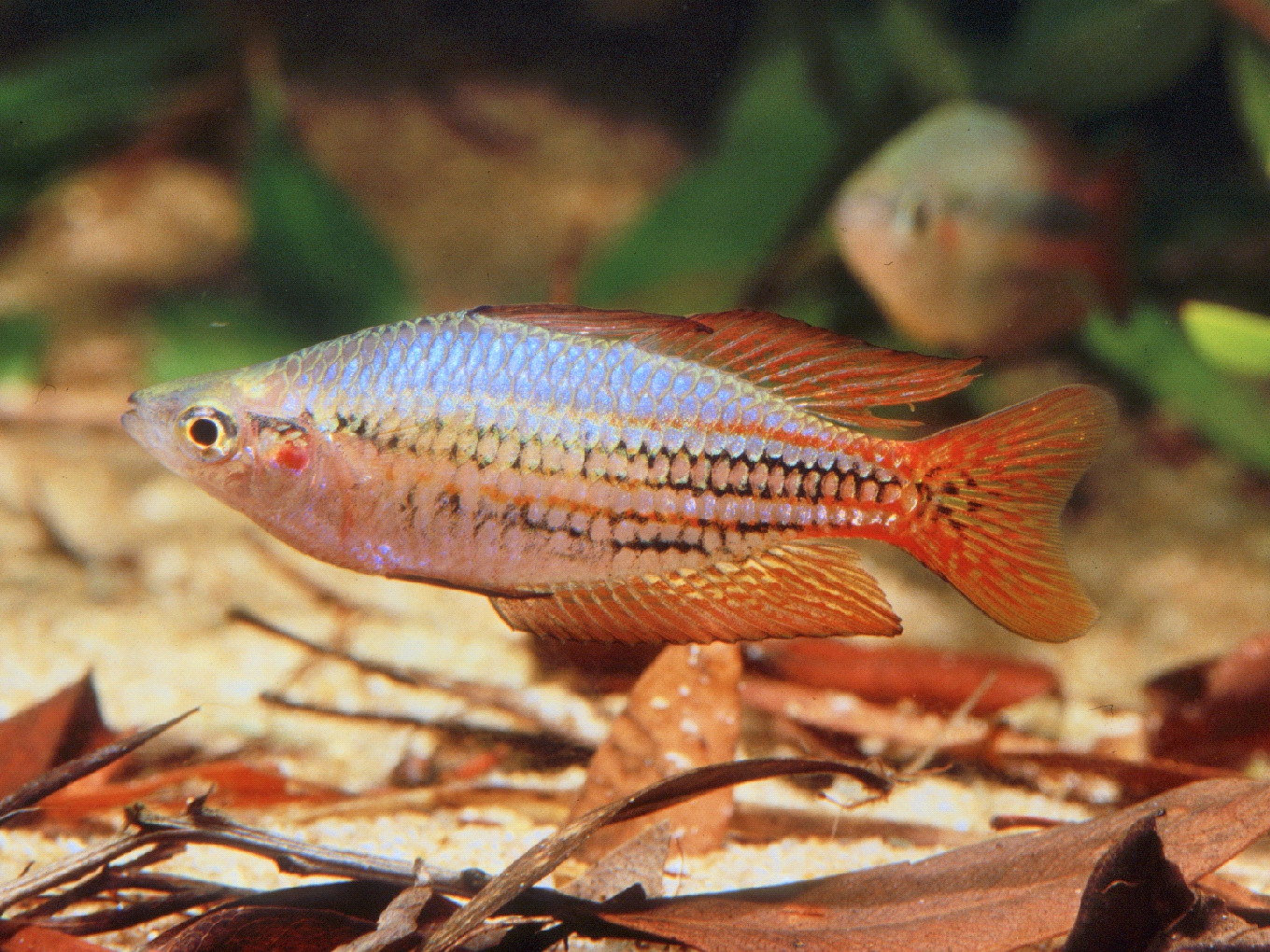
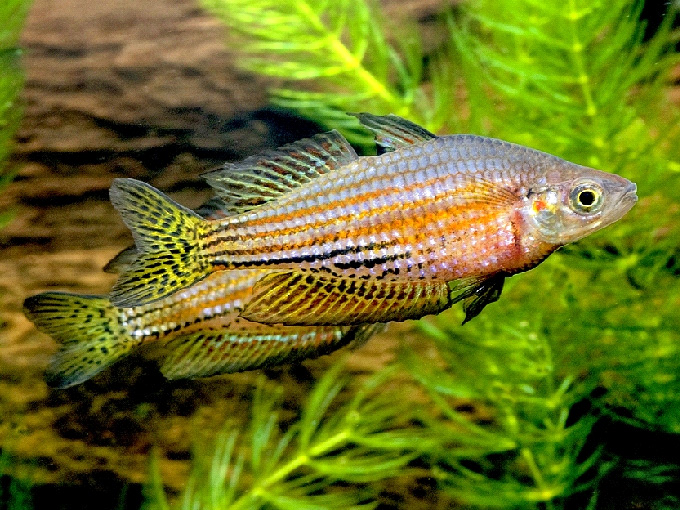
The body colouration of the females resembles the males but is much paler and lacks the dark mid-lateral band and zigzag stripes below it. In females, the first dorsal spines are short, not reaching the origin of the second dorsal. The posterior rays of the anal and second dorsal fin are not extended. They also have smaller rounded fins. Fish from the Drysdale River of Western Australia are generally smaller in statue and possess a distinctive double mid-lateral black stripe.
Unlike many other rainbowfishes, Melanotaenia australis does not display the brightly coloured ‘flashing nape band’ that runs from the upper lip to the first dorsal fin whilst spawning. Males display by extending their dorsal and anal fins, while at the same time intensifying their colouration. The secondary sexual characteristics of fin development are not usually so pronounced in Melanotaenia australis as in the other species of rainbowfishes.
Distribution & Habitat
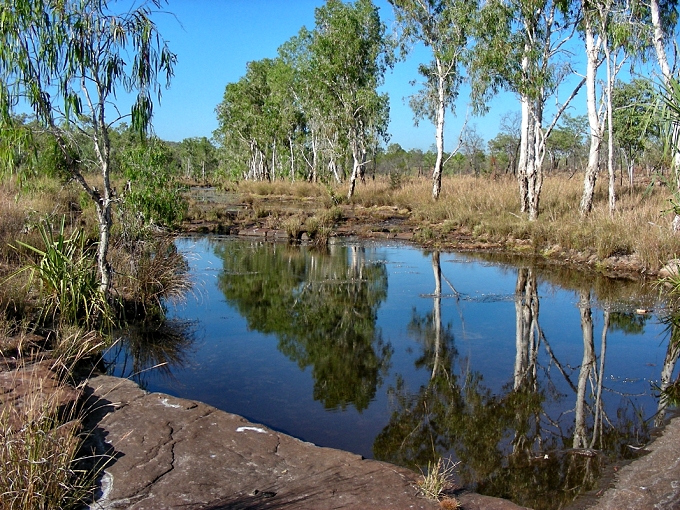
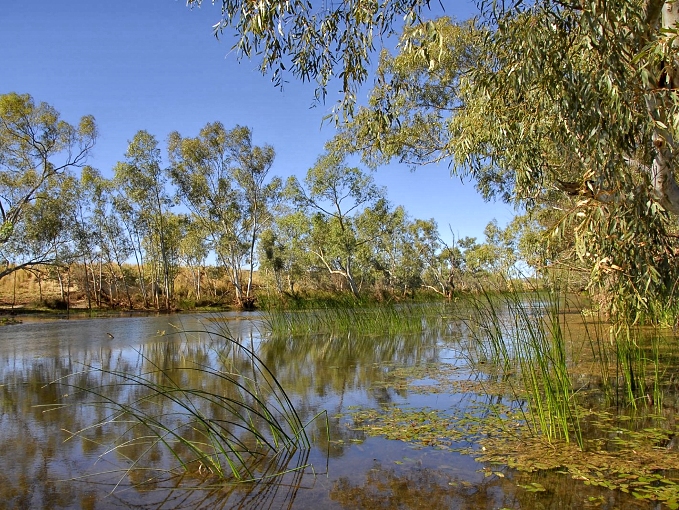
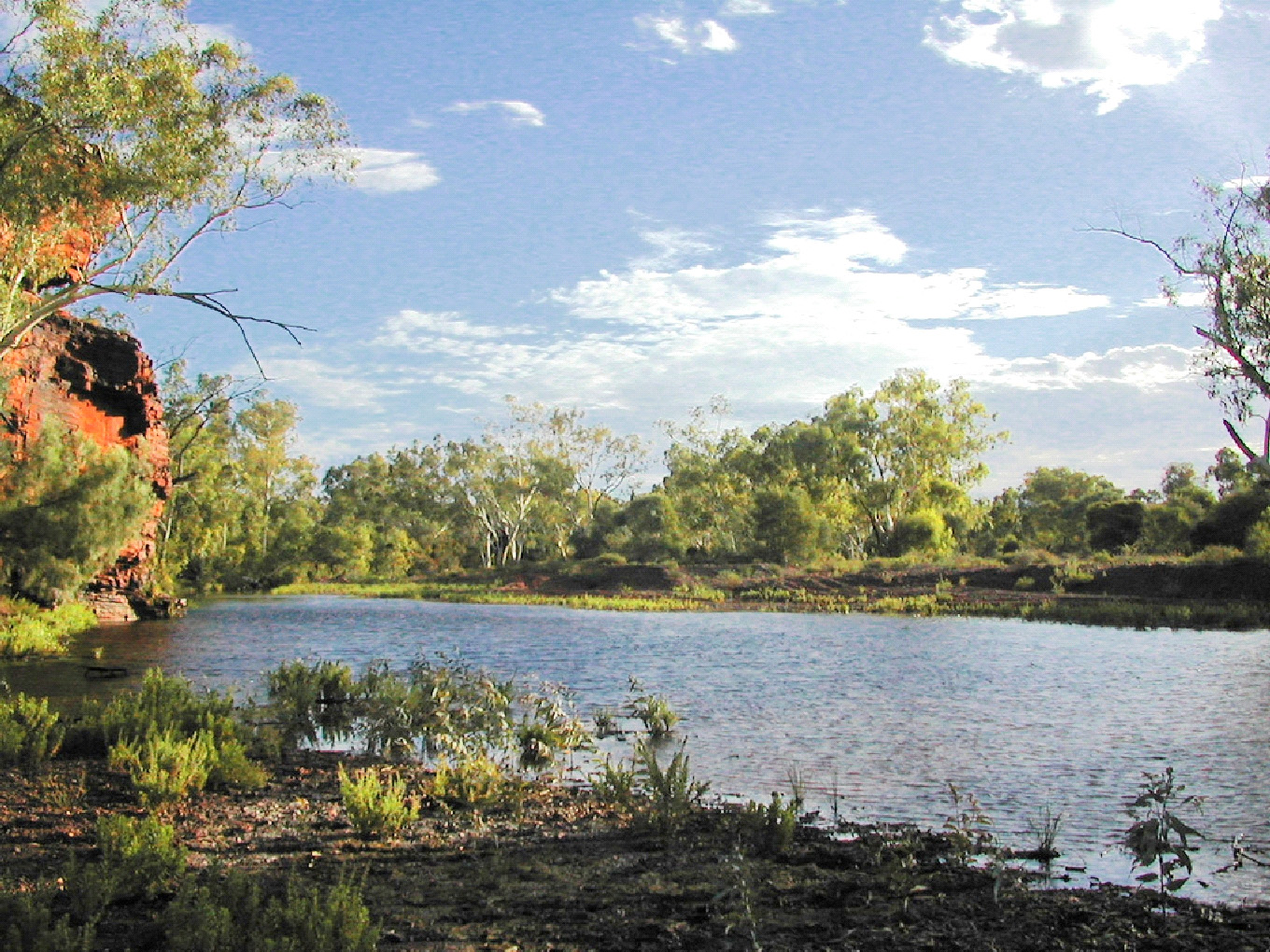
Melanotaenia australis occurs in river systems of northwestern Australia; the Ashburton River forms the western and southern limit of its distribution. It is common in most streams of the Kimberley region and in north-western Northern Territory.
Their natural environment is subjected to seasonal variations with water temperature (22–36°C), pH (6.5–8.0), and hardness levels varying considerably. There is often a large fluctuation in water conditions between the dry and wet seasons.
Etymology
The species name australis is Latin for southern; it was originally described as representing a new genus, Neoatherina, and family, believed at the time to be endemic to Australia.
Etymology compiled from C. Scharpf (2022), “Fishes of Sahul: An Etymological Survey (Part 5), the rainbowfishes (continued)”, Fishes of Sahul 36(4): 1968–1992, and etyfish.org.
Remarks
Melanotaenia australis show considerable variation in morphology across its known distribution and genetic studies suggest that there may be more than one species in the “australis” complex. Genetic studies in 2000 (McGuigan, et al.) found that M. australis is represented by two distinct lineages. These lineages are geographically restricted to Western Australia and the Northern Territory. The difference between the two groups could indicate the presence of two distinct species. The study suggested that irrespective of the situation in the Northern Territory, West Australian populations of M. australis should be accorded species status. The research did not support the inclusion of either group within Melanotaenia splendida.
More recent studies (Phillips 2004) have shown that there is also a very large genetic difference between the Pilbara and east Kimberley populations of M. australis. These studies provide support for the separation of the Western Australian populations of M. australis into different species: a southern one from the Pilbara region and the remaining northern populations.
Pilbara populations are quite distinct and Allen (1995) noted that Pilbara populations lacked the mid lateral band that is prominent in many other M. australis populations. However, despite the research that has been undertaken to date, the specific status and distribution of M. australis still remains unclear.
References
- Allen G.R. (1978) The rainbow fishes of northwestern Australia (Family Melanotaeniidae). Tropical Fish Hobbyist 26: 91-102.
- Ivantsoff W., L.E.L.M. Crowley, E. Howe and G. Semple (1988) Biology and early development of eight fish species from the Alligator Rivers Region. Technical memorandum 22, Supervising Scientist for the Alligator Rivers Region, AGPS, Canberra.
- McGuigan K., D. Zhu, G.R. Allen and C. Moritz (2000) Phylogenetic relationships and historical biogeography of melanotaeniid fishes in Australia and New Guinea. Marine and Freshwater Research 52: 713-23.
- Phillips R. (2004) Population Structure of the Western Rainbowfish, Melanotaenia australis in the East Kimberley. Honours thesis, UWA.
- Unmack P.J. (2002) Rainbowfish populations with unusual colour varieties within the range of Melanotaenia australis with miscellaneous observations on other fishes in the Darwin area. Fishes of Sahul. 16: 854-863.
- Young M.J., L.W. Simmons and J.P. Evans (2011) Predation is associated with variation in colour pattern, but not body shape or colour reflectance, in a rainbowfish (Melanotaenia australis). Journal of Animal Ecology 80: 183-191.
- Zhu D., B.G.M. Jamieson, A. Hugall and C. Moritz (1994) Sequence evolution and phylogenetic signal in control-region cytochrome b sequences of rainbowfishes (Melanotaeniidae). Molecular Biology and Evolution 11: 672-683.