

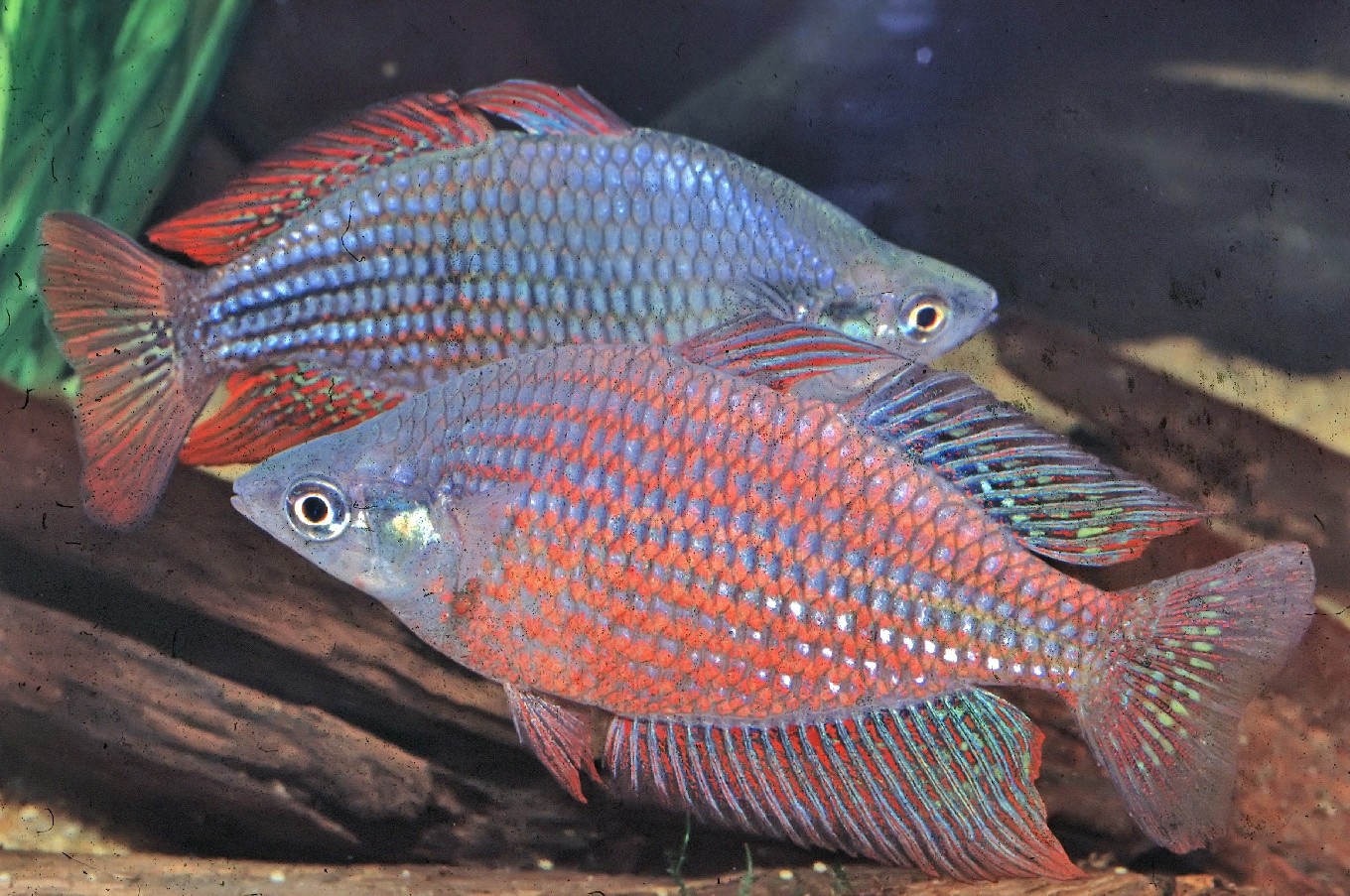
Melanotaenia rubrostriata
Red-striped Rainbowfish
Synonymy
- Melanotaenia maculata Weber, 1908
Species Summary
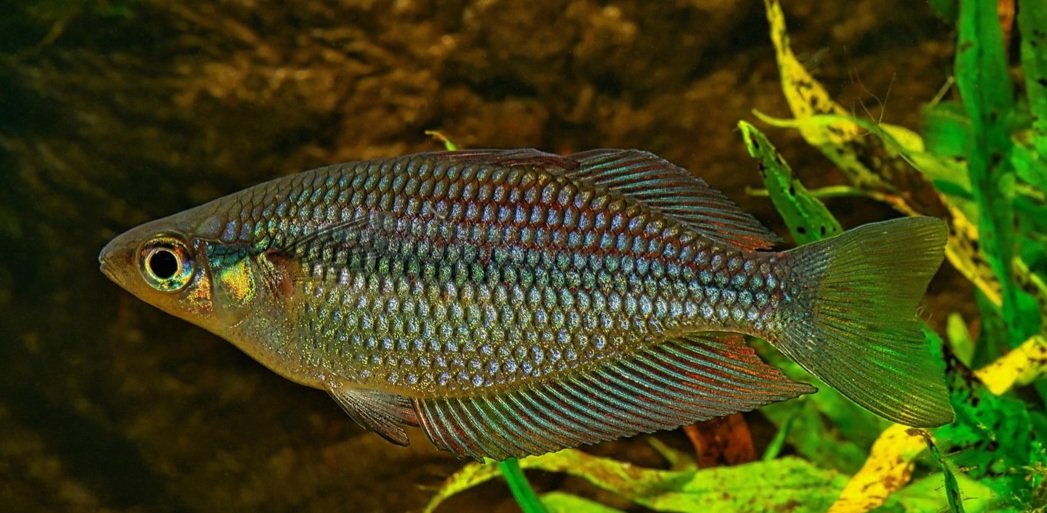
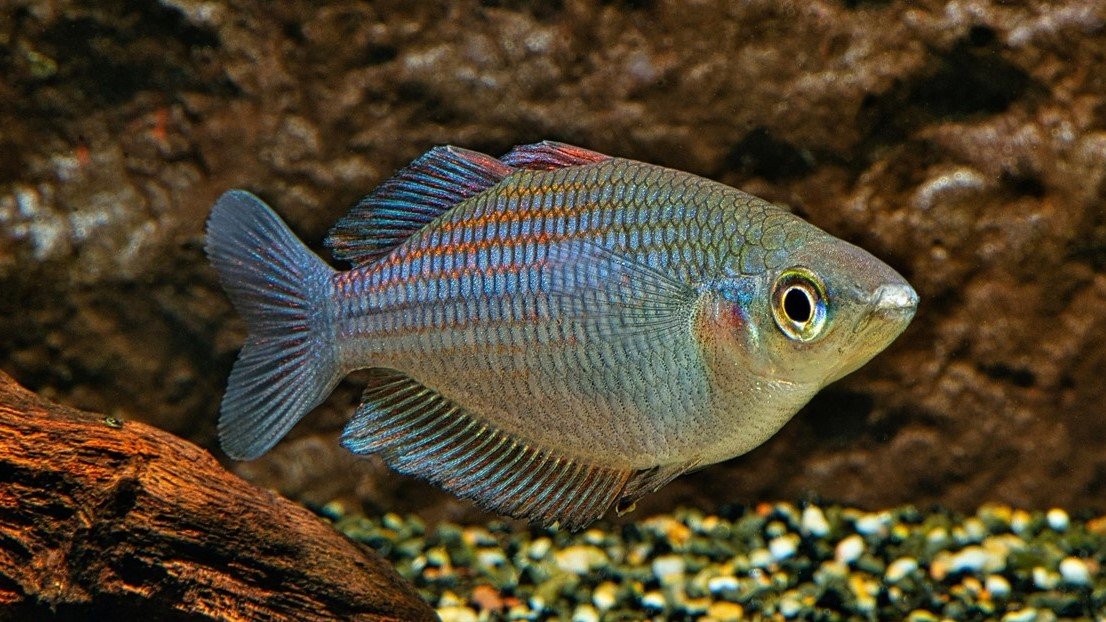
Melanotaenia rubrostriata have a basic body colouration of overall pale bluish-green, grading to white on the lower sides. Each horizontal scale row is separated by a narrow orange to pink stripe. The membranes between the rays of the second dorsal and anal fin are red. Melanotaenia rubrostriata may reach a maximum size (TL) of 16 cm, but usually less than 12 cm, with a body depth of 6–8 cm. Males are more brightly coloured, larger, and much deeper bodied than females.
Etymology
The species name rubrostriata combines the Latin ruber, red, and striata, striped, referring to the broad red longitudinal bands on the silvery body.
Etymology compiled from C. Scharpf (2022), “Fishes of Sahul: An Etymological Survey (Part 5), the rainbowfishes (continued)”, Fishes of Sahul 36(4): 1968–1992, and etyfish.org.
Distribution & Habitat
Melanotaenia rubrostriata were initially collected during the 1880s from the Strickland River, Papua New Guinea. They are widely distributed in southern New Guinea between Etna Bay in West Papua and the Central Province of Papua New Guinea. The Kikori River was the previous eastern limit of distribution, but recent surveys indicate that they are more widespread; having been collected in the Sapoi River in the Lakekamu Basin. The Sapoi River drainage is located approximately 150 km northwest of Port Moresby. Previously recorded from the Aru Islands, these populations were later separated into three other species, M. albimarginata, M. aruensis and M. patoti. Melanotaenia rubrostriata inhabit freshwater creeks and rivers along lowland coastal plains. They are usually found around sub-surface vegetation, submerged logs, or branches. Temperature and pH recorded in their natural habitats range from 24–33°C and 5.6–7.5.
Remarks
Melanotaenia rubrostriata were one of the earlier New Guinea rainbowfishes to be introduced to the aquarium hobby. They first appeared in the Australian hobby around 1959. Live specimens were also collected by Gerald Allen during the period 1978-1982. This was another rainbowfish that fell out of favour with hobbyists as the number of new species arrived from New Guinea, and much of the captive stock disappeared.
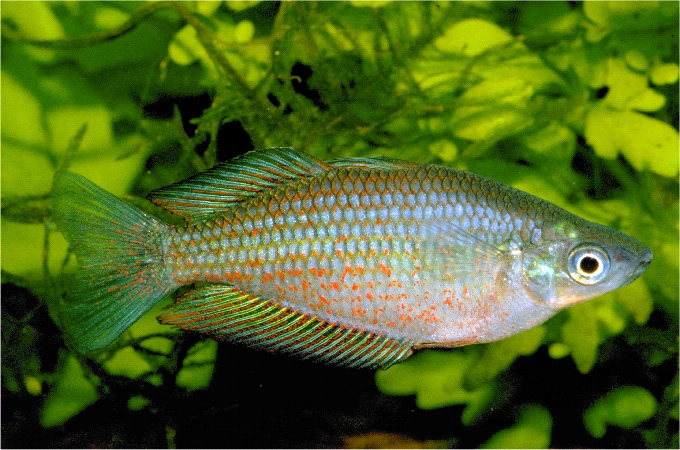
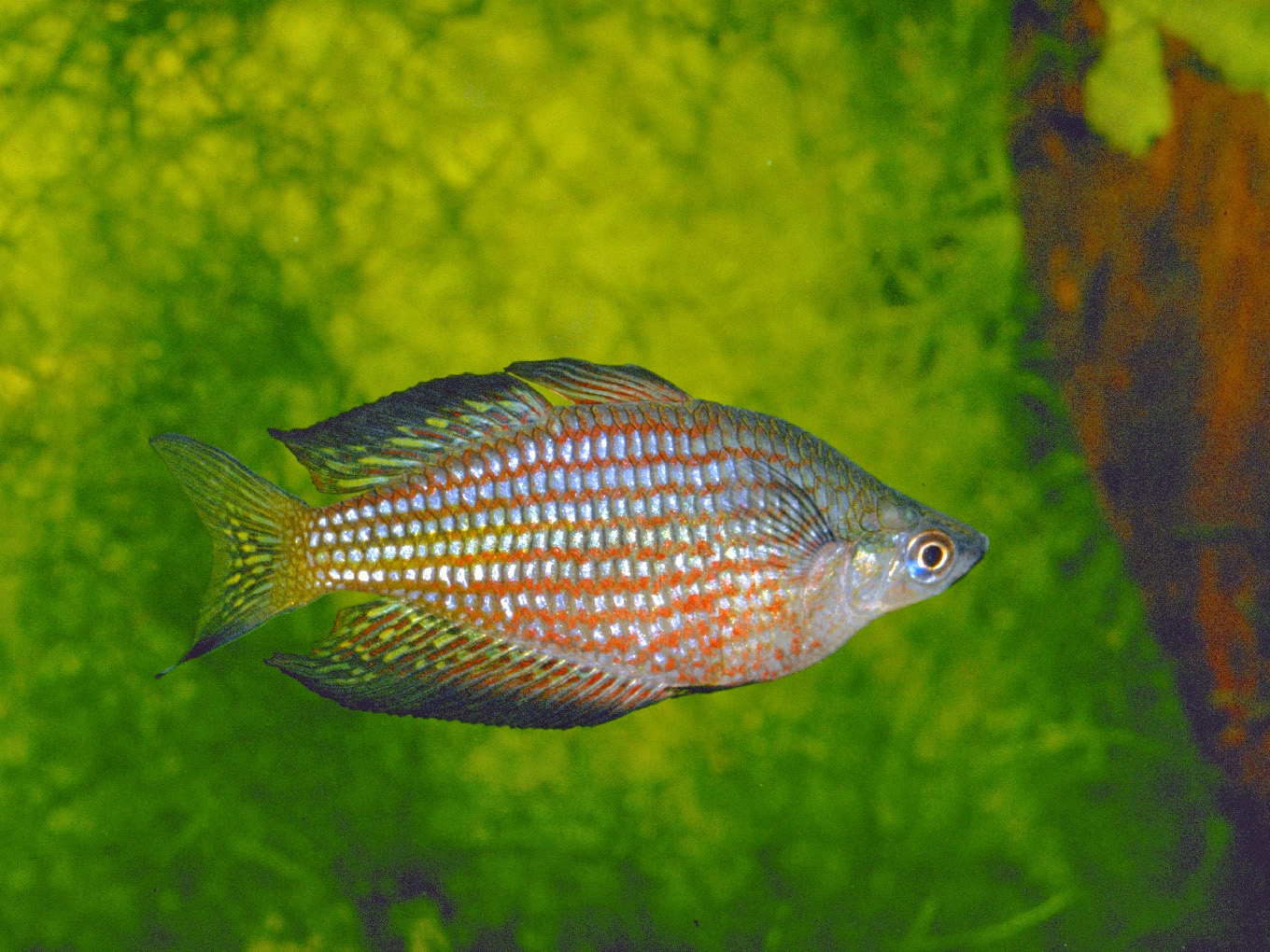
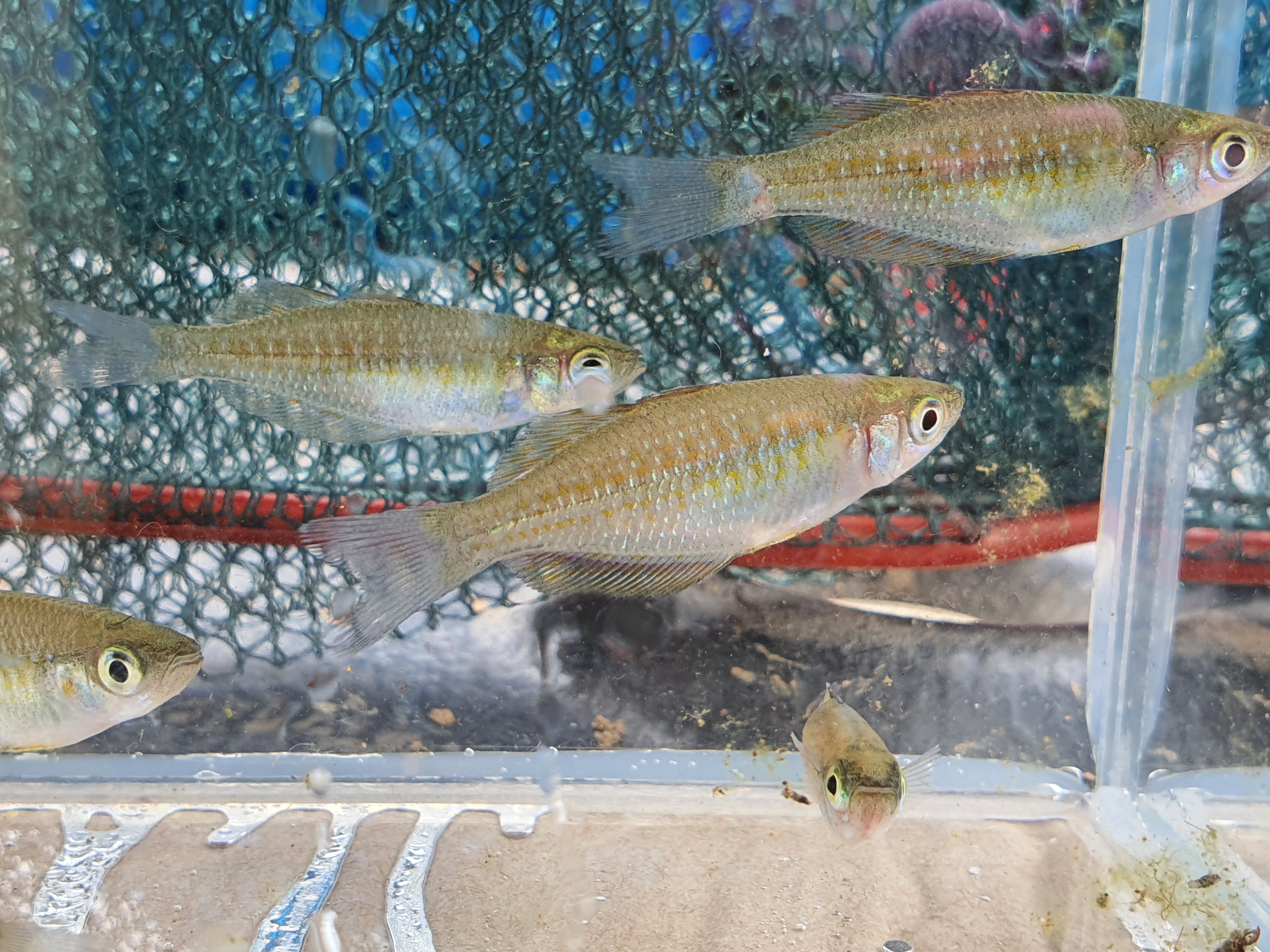
Preliminary genetic studies (P. J. Unmack 2009, pers. comm.) revealed significant genetic variation between Melanotaenia splendida rubrostriata and other geographically distinct populations of Melanotaenia splendida subspecies in northern Australia that resulted in the species being recognised as a full species rather than a subspecies of M. splendida.
References
- Allen G.R. (1980) A Generic Classification of the Rainbowfishes (Family Melanotaeniidae). Records of the Western Australian Museum 8(3): 449-490.
- Allen G.R. (1991) Field guide to the freshwater fishes of New Guinea. Christensen Research Institute, Madang, Papua New Guinea.
- Allen G.R., S.H. Midgley and M. Allen (2002) Field guide to the freshwater fishes of Australia. Western Australian Museum.
- Hitchcock G., M.A. Finn, D.W. Burrows and J.W. Johnson (2012) Fishes from fresh and brackish waters of islands in Torres Strait, far north Queensland. Memoirs of the Queensland Museum - Nature 56(1): 13-24. Brisbane.
- Perugia A. (1894) Viaggio di Lamberto Loria nella Papuasia orientale. XIII. Pesci d'acqua dolce. Annali del Museo Civico di Storia Naturale di Genova (Serie 2a) v. 14: 546-553.
- Ramsay E.P. & J.D. Ogilby (1886) A contribution to the knowledge of the fish-fauna of New Guinea. Proceedings of the Linnean Society of New South Wales (Series 2) Volume 1: 8-20.
- Weber M.W.C. & L.F. de Beaufort (1922) The fishes of the Indo-Australian Archipelago. Vol. 4. Heteromi, Solenichthyes, Synentognathi, Percesoces, Labyrinthici, Microcyprini. E.J. Brill, Leiden, xiii+410 pp.