
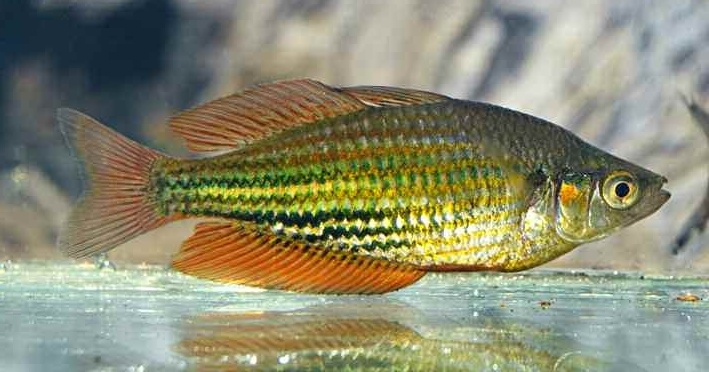
Melanotaenia sp. “Running River”
Running River Rainbowfish (also Burdekin, Hidden Valley or Zig-zag Rainbowfish)
Species Summary
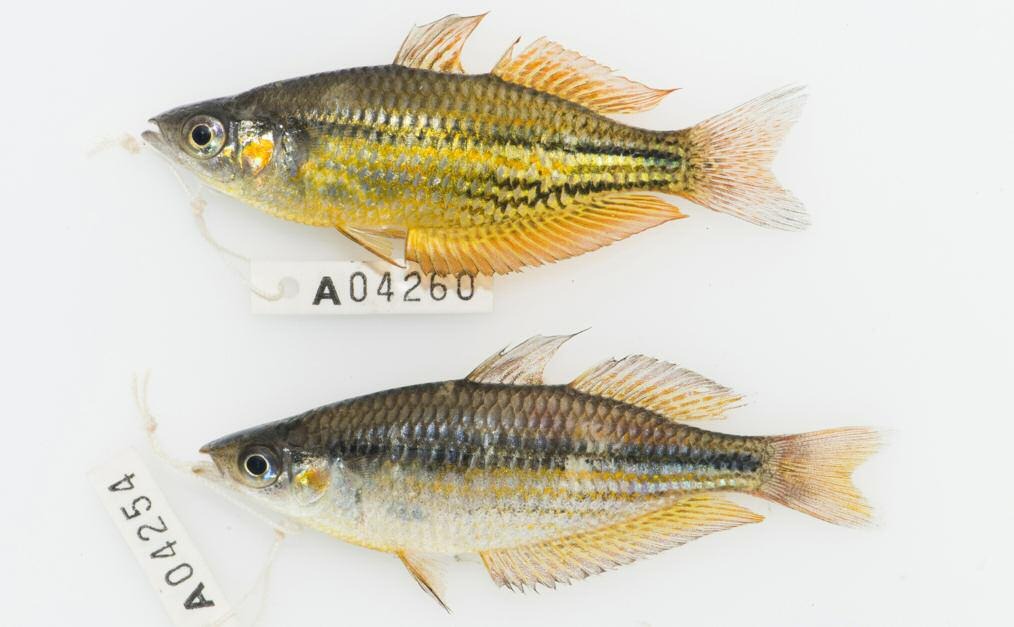
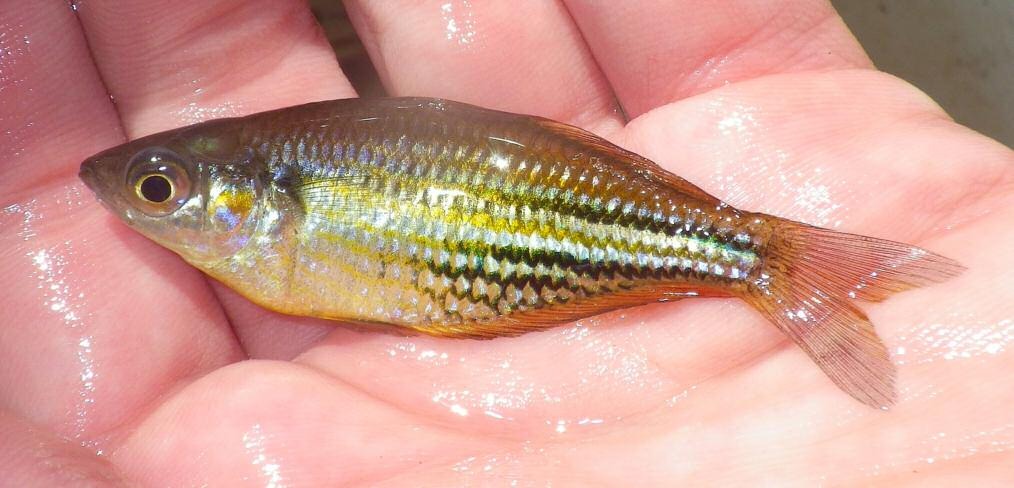
The Running River Rainbowfish is a small, golden-bodied rainbowfish restricted to a single 13–16 km stretch of one river in the upper Burdekin catchment of north Queensland, hemmed in between two gorges. Long known to aquarists simply as an unusually colourful, deep-bodied population of the widespread Eastern Rainbowfish (Melanotaenia splendida), genetic and morphological work beginning in 2015 confirmed it as a genuinely distinct, undescribed species — just as that same fieldwork revealed Eastern Rainbowfish had newly invaded its home river and were hybridising it out of existence. What followed is one of the best documented rescue efforts for any small Australian native fish: a worldwide aquarium-hobby crowdfunding campaign, an emergency captive-breeding program built from wild-caught broodstock, and the successful establishment of two entirely new wild populations in predator-screened tributary creeks. Listed Critically Endangered by the Australian Society for Fish Biology since 2016, the species remains formally undescribed and unnamed to this day, and so is ineligible for Australian federal conservation listing despite the depth of work that has gone into saving it.
Names
This fish carries a small tangle of informal names, none of them yet official. Queensland Museum researcher Ray Leggett, who first noticed it during a field trip to Fletcher Creek in 1981, coined the name “Burdekin Rainbowfish” the following year, and for three decades that name was applied broadly to a whole complex of unusual rainbowfish populations scattered across several upper tributaries of the Burdekin River — not just Running River, but also the Fanning River, the Fletcher/Lolworth Creek system and the Basalt River, each with its own subtly different colour form. It was only once targeted genetic work on the Running River population specifically got underway in 2015–16 that researchers felt confident separating it out under its own working name, “Running River Rainbowfish,” leaving “Burdekin Rainbowfish” as the umbrella term for the wider, still largely unstudied group of populations it belongs to. “Hidden Valley Rainbowfish” and “Zig-zag Rainbowfish” are older aquarium-trade names tied to particular collecting localities — Zig Zag Station, the pastoral property on Running River where most wild collections have been made — though “Zig-zag Rainbowfish” is also sometimes used for the unrelated Glossolepis dorityi, a frequent source of confusion.
A Complex Still Being Unravelled
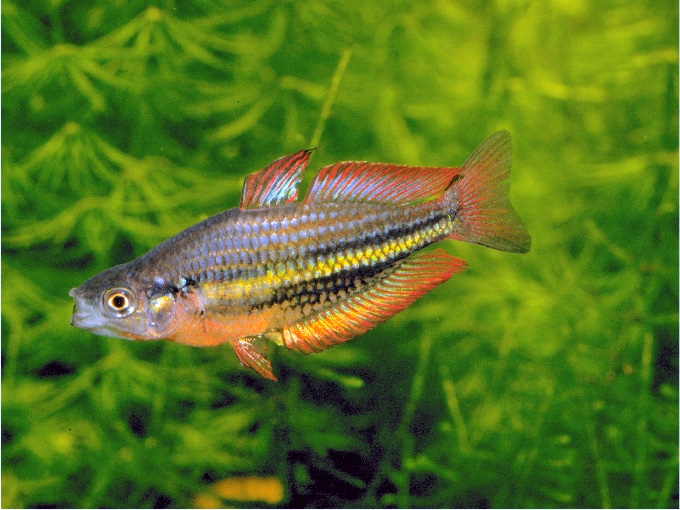
It is worth being upfront that the broader “Burdekin Rainbowfish” picture is still genuinely unresolved, and earlier sources are necessarily more tentative about it than later ones. A 2016 review found the complex included at least two recognisably different forms: a moderate-sized, deep-bodied Running/Fanning River type reaching about 60–80 mm, silvery anteriorly with a golden posterior body and black “zig-zag” lines low on the belly; and a larger Fletcher/Lolworth Creek and Basalt River type approaching 110 mm, whitish anteriorly with a lime-green posterior body and heavily black-speckled fins, lacking the true zig-zag pattern. Whether these represent one variable species, several distinct species, or a mix of genuine species and local colour variation shaped by habitat (gorge pools versus open lowland reaches) remains an open question — the 2016 review could only conclude that “there is currently very limited genetic or morphological data available to properly determine the true taxonomic status of this form.” The conservation genetics work that followed answered that question specifically for the Running River population, which is why this account, and the rescue project it describes, deals with Running River alone; the Fanning River, Fletcher/Lolworth and Basalt River populations remain essentially unstudied and their relationship to the Running River Rainbowfish is not yet known.
Distribution & Habitat
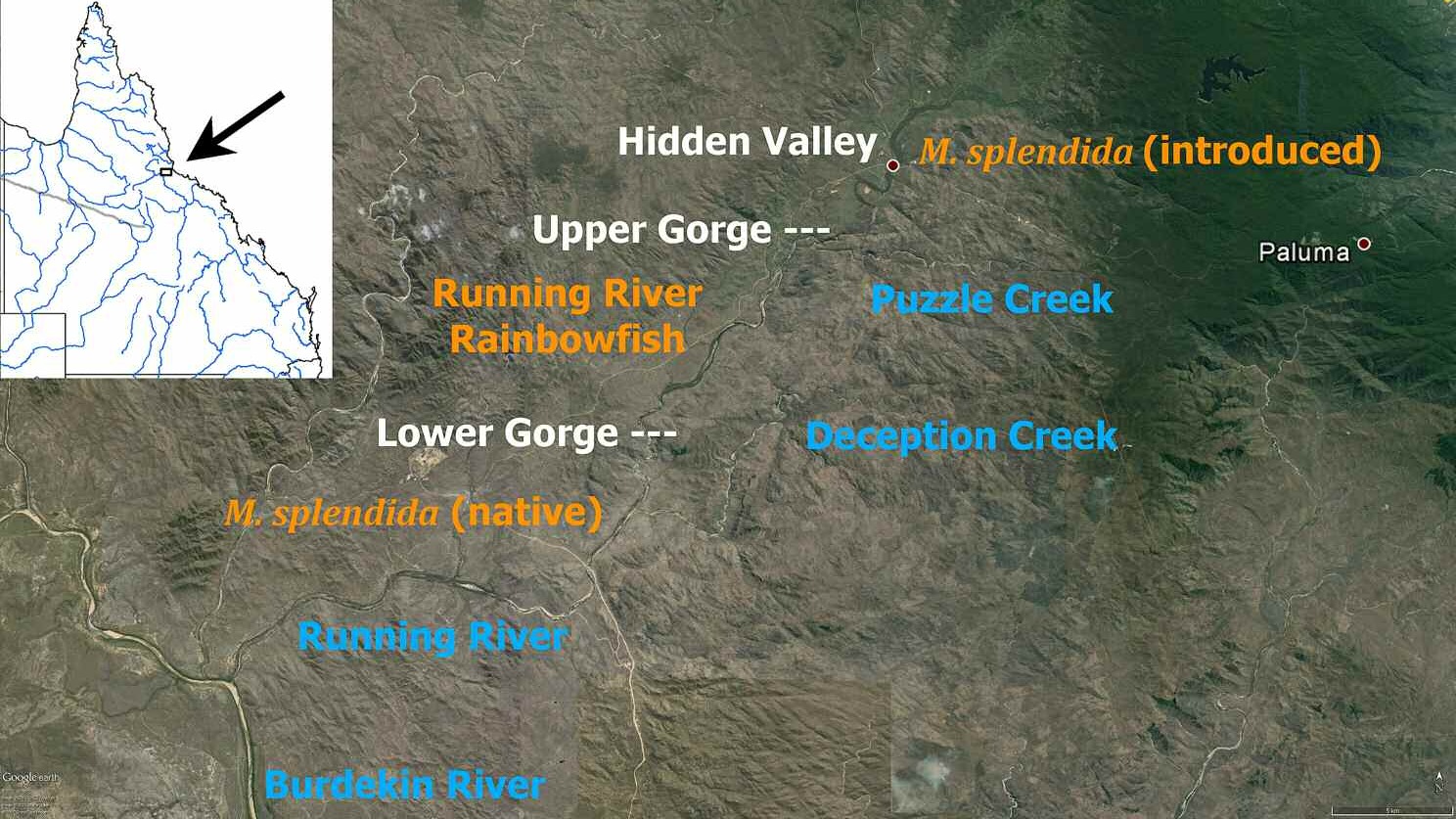
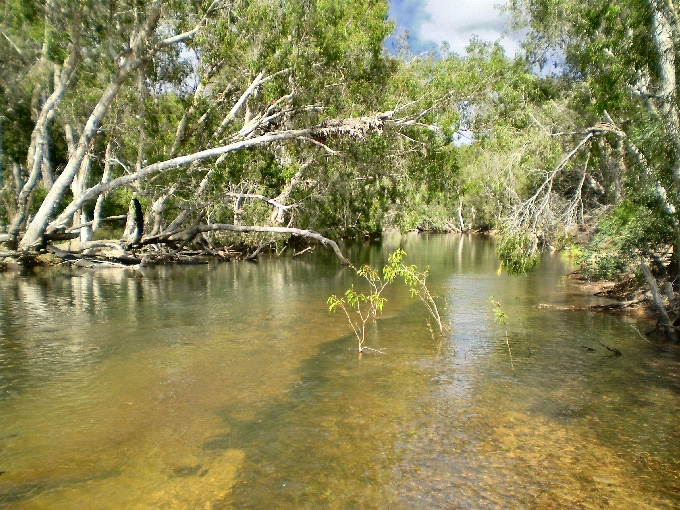
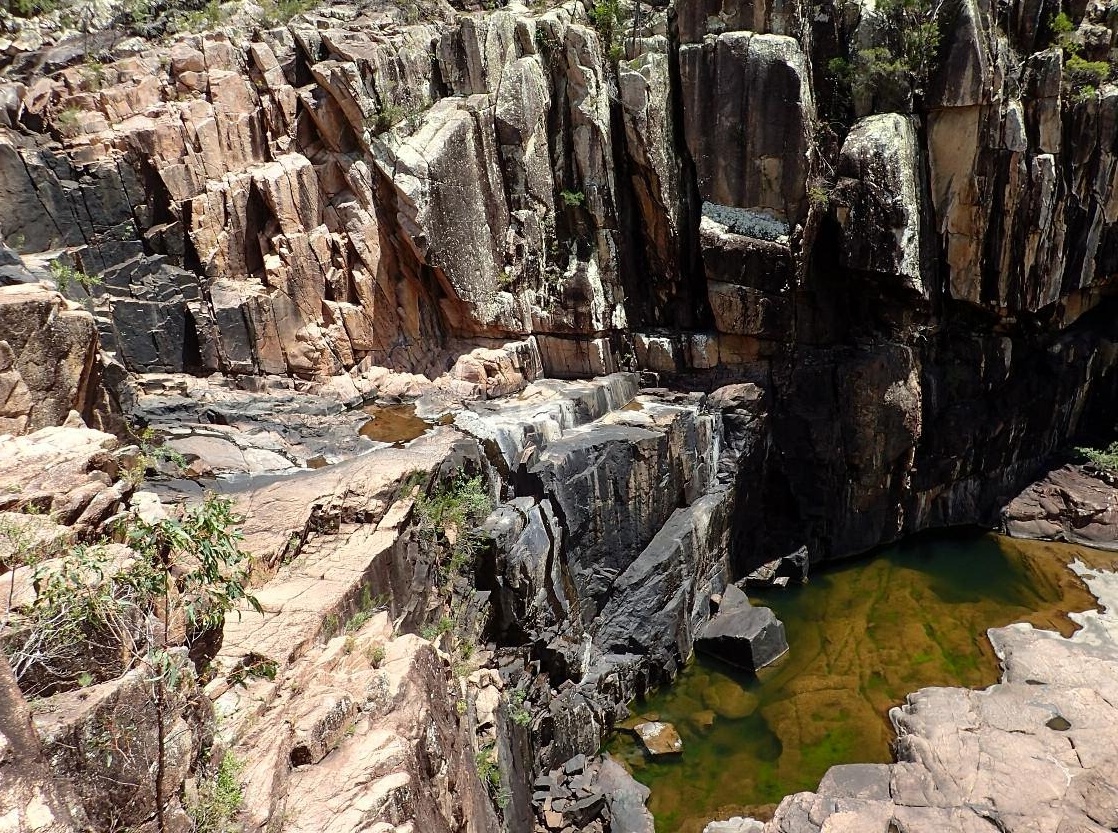
Running River is a perennial tributary of the Burdekin River, one of Australia’s largest drainage basins, rising in the rainforest-covered Seaview and Paluma Ranges before flowing west through sandstone country and a series of gorges to join the Burdekin near Ewan. Two gorges divide the river into three distinct zones. The Running River Rainbowfish is confined to the middle reach between them, at 400–650 m elevation, over sandy and rocky substrate with a fringing cover of Melaleuca. The lower gorge largely blocks the true Eastern Rainbowfish population native to the lowermost river from moving upstream into that reach, while the upper gorge, just below the township of Hidden Valley, has long marked the natural upper limit of any rainbowfish at all — no population was ever recorded upstream of it until 2013.
The Threat: An Upstream Invasion
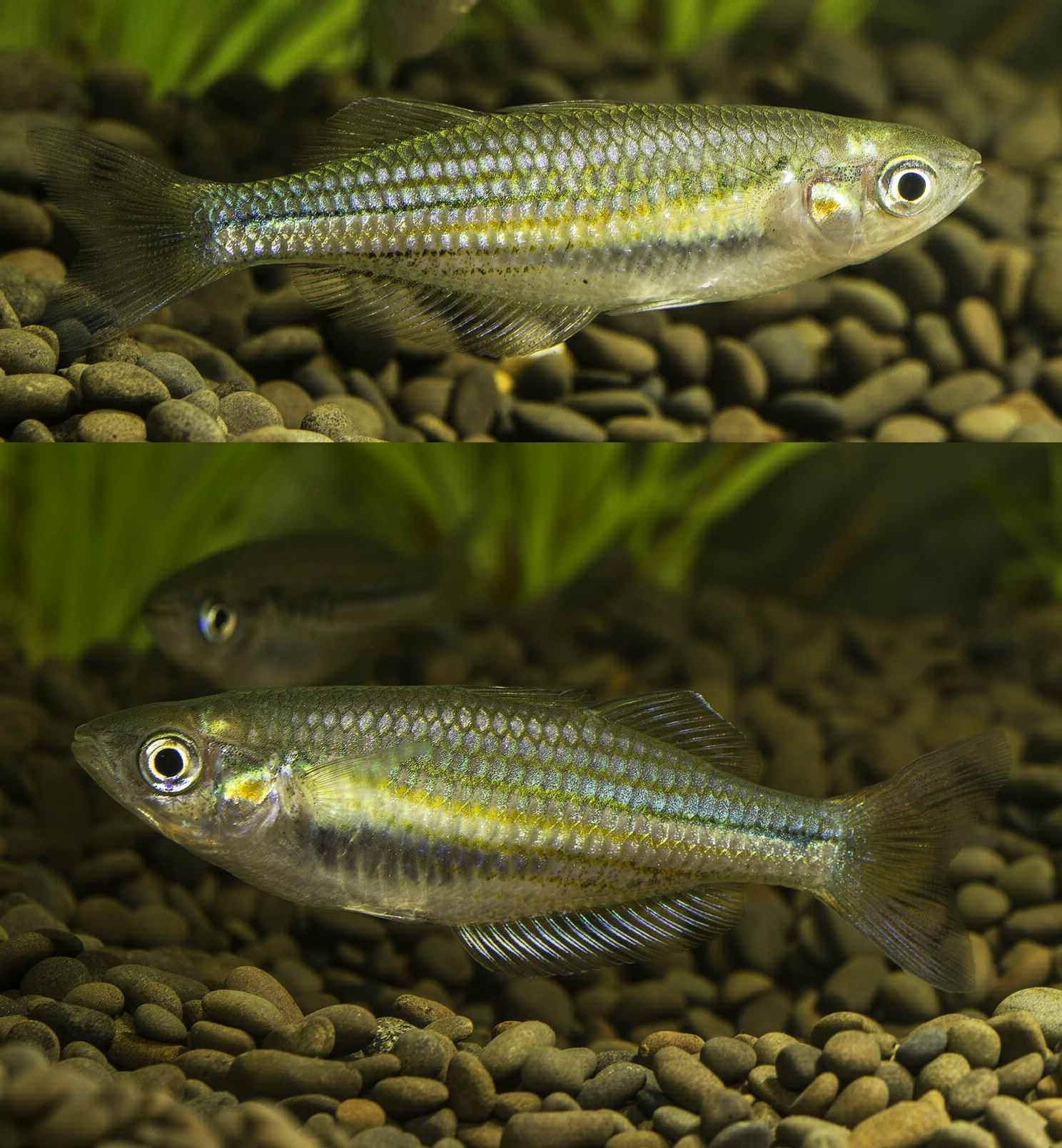
That changed by August 2015, when a survey by Peter Unmack and Michael Hammer found Eastern Rainbowfish established in large numbers at Hidden Valley, above the upper gorge, in an area that had never held any rainbowfish before — and already spreading downstream towards the Running River Rainbowfish’s home reach. It remains unclear whether this represented a fresh, deliberate translocation or downstream dispersal from an older introduced population recorded in nearby Paluma Dam since 2004, though a search of the dam itself failed to find any fish. Whatever its origin, the implication was stark: naturally co-occurring rainbowfish species in Australia are almost always drawn from quite different, distantly related lineages — the Splendida, Trifasciata, Nigrans and Maccullochi groups, for example, are never found breeding together where their ranges meet. Species within the same lineage, as the Running River Rainbowfish and the closely related Eastern Rainbowfish both are, essentially never manage to co-occur without interbreeding. With no barrier left between the two populations, hybridisation, and the genetic swamping of the smaller, rarer population that comes with it, was considered all but inevitable.
Racing the Clock: Genetics and Crowdfunding
With no time to wait for a full taxonomic description, researchers moved straight to conservation genetics. Fifty-two live fish were collected from Running River in August 2015 and taken to the University of Canberra as an insurance population, while a public crowdfunding campaign — organised through the University of Canberra Foundation with ANGFA’s help — was launched to cover the cost of the genetic work needed to confirm the fish were pure and design a sound breeding program. The response from the worldwide rainbowfish community was, by the researchers’ own account, extraordinary: over two campaigns run in 2015–16, donations eventually totalled more than AU$26,000, contributed by individuals, aquarium clubs and businesses across Australia, the USA, Canada, Switzerland and Germany — the single largest donation, AU$10,000, coming from the Aquarium Society of Victoria. Money raised covered DNA sequencing, fish food, live shipping costs and, later, years of ongoing monitoring.
Genetic results, run through Diversity Arrays Technology and analysed with the help of Flinders University’s molecular ecology laboratory, confirmed the Running River population was indeed genetically distinct from other Burdekin rainbowfish — but also showed that hybridisation was already under way. Identifying hybrids from appearance alone proved difficult, especially in females, so researchers leaned on genetics instead: of the first batch of live and preserved fish tested in 2015, all were confirmed pure, but by November that year one of seven newly collected males was found to be a first-generation (F1) hybrid, and by February 2016 testing of “odd-looking” fish from the upstream end of the population’s range turned up further F1 hybrids and backcrosses, including two hybrid females among a group of 32 fish being screened for the breeding program itself.
Breeding Fish to Save a River
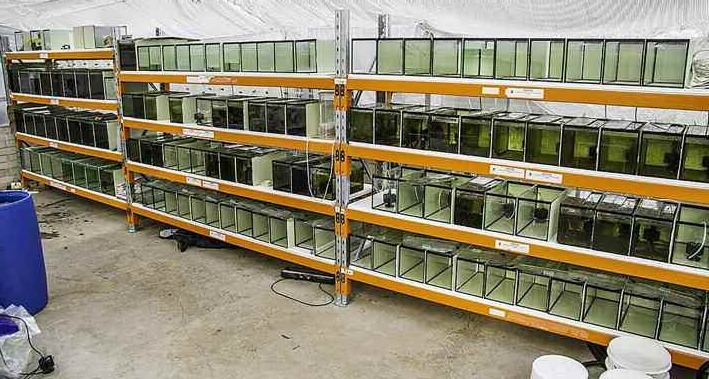
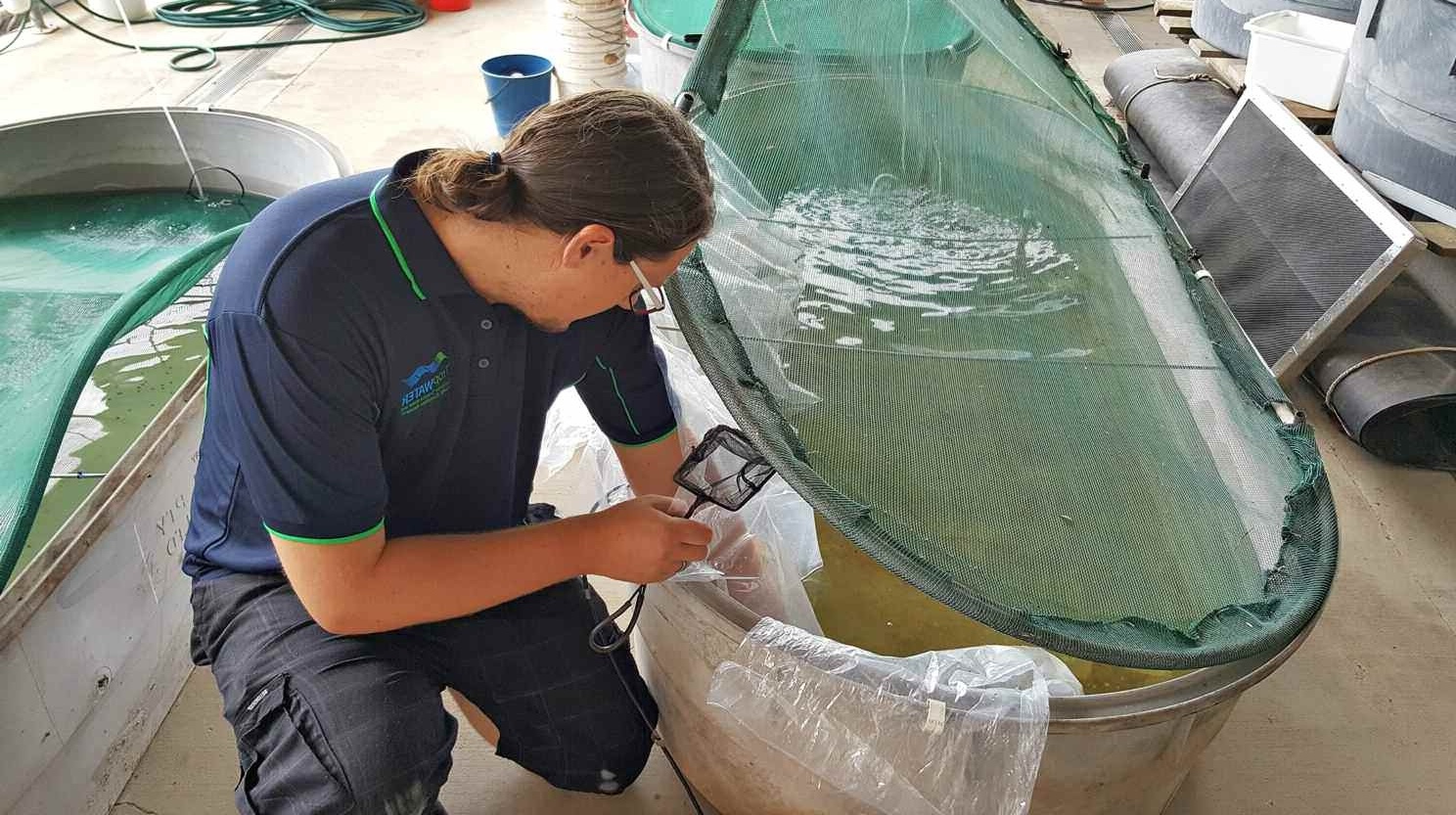
With purity confirmed for the remaining fish, an intensive captive-breeding program began at the University of Canberra, guided by Flinders University geneticists to pair fish in ways that maximised genetic diversity and avoided sibling matings. Twenty-six pairs from the original 2015 collection, later joined by 24 more fish collected in February 2016, were bred in a rolling system of dozens of aquaria — each pair given its own tank, spawning mops moved weekly into fresh rearing tanks, and every week’s new batch of fry needing yet another tank of its own. The target was an even 110 offspring from every pair, so each parent fish’s genes would be equally represented in the fish eventually released to the wild. In total, close to 6,900 fish were produced across two breeding rounds — roughly 2,700 destined for Deception Creek and 4,200 for Puzzle Creek — fed on live vinegar eels as tiny fry, then brine shrimp and flake food as they grew, before being air-freighted north to TropWATER at James Cook University in Townsville to be grown on in outdoor ponds under much warmer conditions than Canberra could offer.
Finding New Homes
The only realistic long-term option was to establish new, secure wild populations, since removing an already-established invasive population from upper Running River was judged logistically and ethically impractical. Field surveys in early 2016 identified two promising tributaries on land managed by the Australian Wildlife Conservancy: Deception Creek, which joins Running River below the lower gorge, and Puzzle Creek, which joins it in the middle of the upper gorge. Both held permanent water behind substantial waterfall barriers tall enough to keep any future rainbowfish invasion out, and both already supported a small resident fauna of Spangled Perch (Leiopotherapon unicolor) and Purple Spotted Gudgeon (Mogurnda adspersa) but, crucially, no rainbowfish of any kind — meaning a release there would displace nothing.
Before any fish went in the water, a portion of the captive stock was screened by a fish health specialist at James Cook University to rule out disease, and formal permission had to be secured from both Queensland Fisheries and the Australian Wildlife Conservancy. A research side-project also tested whether “predator training” — giving half the young fish repeated, controlled exposure to a caged Spangled Perch plus a chemical alarm cue from injured rainbowfish before release — improved survival. Released fish were given a gentle, staged introduction: transported in salted, stress-coat-treated water, then held overnight instream in a mesh-and-PVC holding pen at the release site itself so they could adjust to natural water conditions before the pen was upended and they swam free.
Ten releases of 250 fish each went into Deception Creek between November 2016 and January 2017, and a further four releases of 375 fish went into Puzzle Creek in May 2017 — close to 4,000 fish altogether, into ten and four separate pools respectively. Notably, eggs were already being laid inside the overnight holding pens at some sites before the fish were even released, a promising sign that well-conditioned, mature fish given a soft, low-stress release could begin breeding almost immediately in their new home.
Did It Work? Monitoring the New Populations
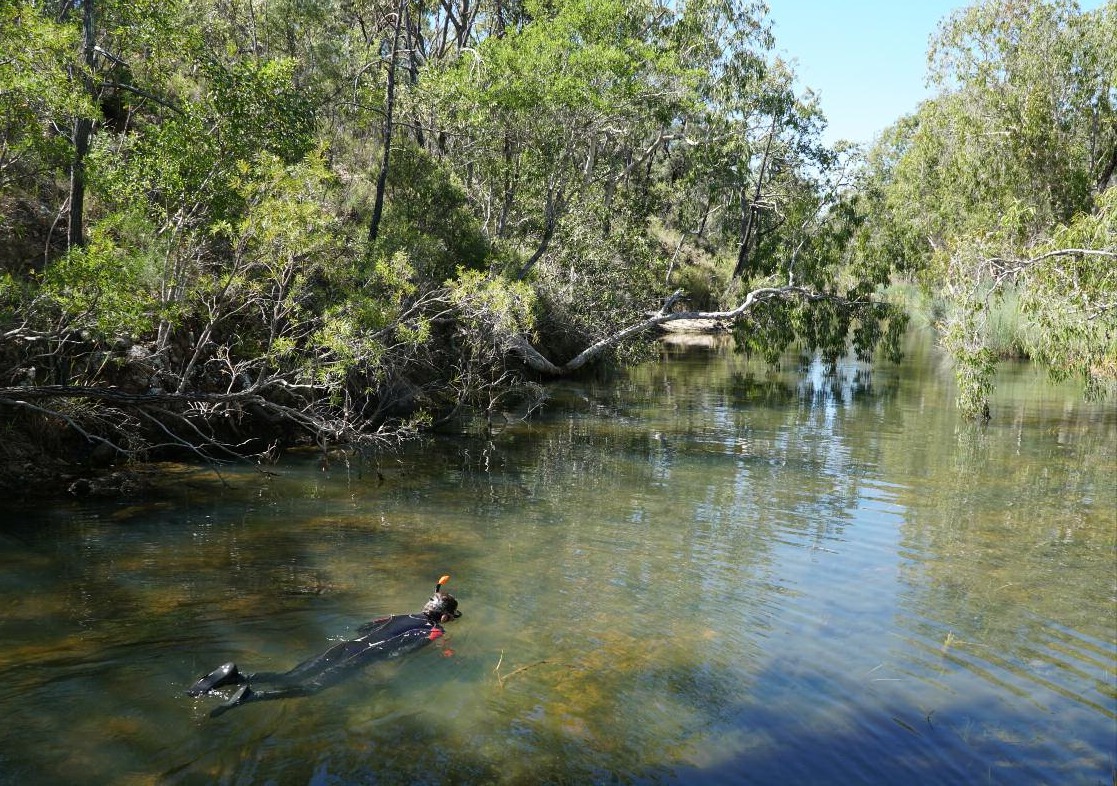
Snorkel surveys — chosen because they are non-destructive and, unlike bait traps or underwater cameras, actually detect this species reliably — tracked both new populations over the following years. Wild-spawned fry turned up in Deception Creek within weeks of the first releases, and by December 2016, barely a month in, successful recruitment was already confirmed. Average counts at release sites climbed steadily: from around 60 fish sighted per site within the first week, to roughly 248 by May 2017 and 264 by October 2017. The population spread quickly along the creek too, moving roughly 1.9 km upstream and 1.3 km downstream of the release sites within six months, reaching 2.5 km upstream and more than 6.3 km downstream by 17 months. One especially striking record: ten days after a major flood, a single fish turned up in an ephemeral gully stream 660 m upstream of Deception Creek and 24 m higher in elevation than the nearest release site — a reminder of just how far a small rainbowfish can disperse given the chance. Puzzle Creek, monitored less intensively owing to access and funding constraints, nonetheless showed the same pattern of confirmed juveniles and adults establishing and spreading, dispersing about 460 m upstream and 1.33 km downstream within its first year.
The predator-training experiment itself turned out to be inconclusive — trained and untrained fish survived and established at statistically similar rates, and the only release that failed outright happened to be of untrained fish at a site otherwise indistinguishable from its neighbours. Researchers noted anecdotally, though, that trained fish shoaled tightly in shallow, sheltered water for several days after release, while untrained fish were seen swimming in the open, apparently unaware of the predatory Spangled Perch actively trying to eat them — a real behavioural difference that simply may not have mattered much once the fish began breeding and building up numbers faster than predation could remove them.
A Rare Conservation Success
By any measure this was an unusually successful conservation translocation — a genuine rarity for Australian freshwater fish, where a 2015 review found that most failed reintroductions involved captive-reared stock struggling with the transition to the wild. The comparison researchers themselves draw is instructive: an earlier, similarly well-intentioned captive-breeding effort released 3,000 hatchery-raised Lake Eacham Rainbowfish (Melanotaenia eachamensis) back into Lake Eacham after the wild population was wiped out by introduced fish, yet subsequent surveys found no survivors at all. The Running River project succeeded, its authors argue, for reasons that may generalise to other small, fast-maturing native fish: releasing well-conditioned, sexually mature fish able to spawn almost immediately; a gradual, low-stress “soft release” rather than simply tipping a bucket into a creek; picking sites entirely free of the specific threat (hybridisation) that endangered the species in the first place, even though other, non-threatening species were already present; and the sheer speed at which small, short-lived rainbowfish reach breeding age and can out-produce ordinary predation losses. The entire program, researchers note, was run on a modest budget of around AU$10,000–20,000 a year — a genuine demonstration that meaningful conservation outcomes for small-bodied threatened fish do not require the scale of funding typically reserved for larger, more charismatic species.
Fieldwork on the Frontier
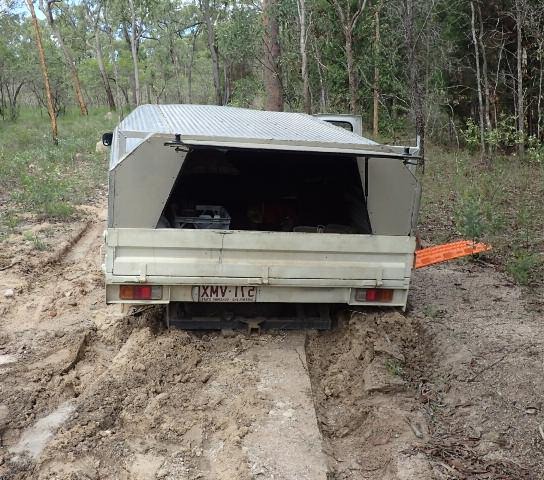
None of this happened somewhere convenient. Running River, Puzzle Creek and Deception Creek sit on remote pastoral and conservation land with no public access, reached along unsealed tracks that the north Queensland wet season can turn to bog with little warning — as researcher Karl Moy discovered at the close of the first release season in January 2017, when heavy rain and rising subterranean flow left the track to Puzzle Creek “a spongy layer on top of a liquid soup,” burying his ute to both axles and ending the field season on the spot.
Keeping & Caring
Running River Rainbowfish has been maintained in the aquarium hobby, on and off, since collectors first brought specimens into captivity in the early 1980s, and pure, genetically confirmed stock derived from the conservation program has since been distributed to ANGFA members and, increasingly, to hobbyists in Europe and North America. As a member of the Australis lineage of rainbowfishes, its general care needs are broadly similar to other small, robust Australian Melanotaenia species: a well-planted, moderately sized aquarium, a varied diet of live, frozen and flake foods, and stable, unremarkable water chemistry. Anyone keeping this fish should bear in mind that wild genetic purity is the entire point of the conservation effort behind it — stock of known, documented origin should never knowingly be crossed with ordinary Eastern Rainbowfish, for exactly the reason the wild population itself was so nearly lost.
Account compiled for Home of the Rainbowfish from P. J. Unmack & M. P. Hammer (2015), “Burdekin rainbowfish on the verge of disappearing from Running River!”, Fishes of Sahul 29(4): 933–937; K. C. Martin & S. Barclay (2016), “A review of the distribution and status of ‘Burdekin rainbowfish’ populations in north Queensland”, Fishes of Sahul 30(1): 962–972; P. J. Unmack (2016), “Update on saving Running River Rainbowfish”, Fishes of Sahul 30(3): 1025–1032; K. G. Moy & P. J. Unmack (2017), “Update on saving the Running River Rainbowfish – new populations established and going well!”, Fishes of Sahul 31(4): 1189–1197; K. G. Moy, J. Schaffer, M. Lintermans & P. J. Unmack (2018), “Conservation introductions of the Running River rainbowfish into Deception and Puzzle Creeks, Australia”, in Soorae, P.S. (ed.), Global Reintroduction Perspectives: 2018, IUCN/SSC Reintroduction Specialist Group, pp. 34–37; and K. Moy, J. Schaffer, M. P. Hammer, C. R. M. Attard, L. B. Beheregaray, R. Duncan, M. Lintermans, C. Brown & P. J. Unmack (2023), “Alternative conservation outcomes from aquatic fauna translocations: losing and saving the Running River rainbowfish”, Aquatic Conservation: Marine and Freshwater Ecosystems 33: 1445–1459.