

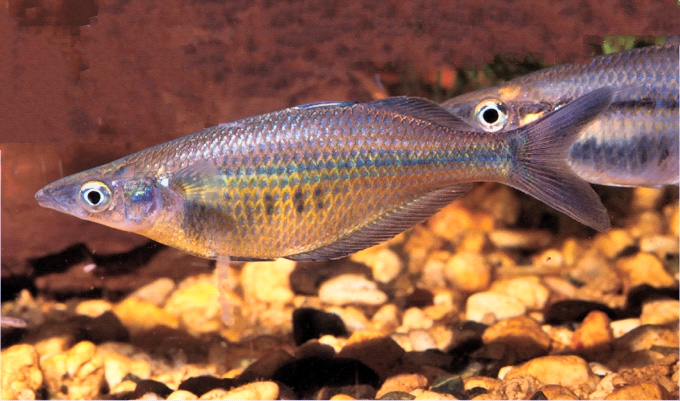
Chilatherina sentaniensis
Sentani Rainbowfish
Synonymy
- Rhombatractus sentaniensis Weber, 1908
- Chilatherina sentaniensis Regan, 1914
Species Summary
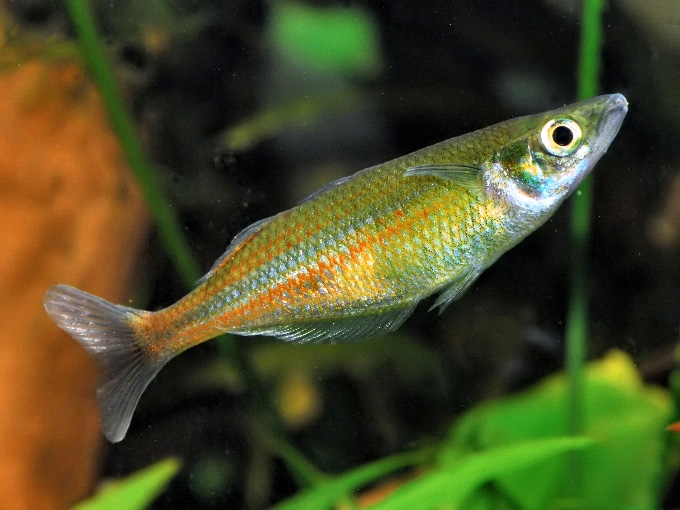
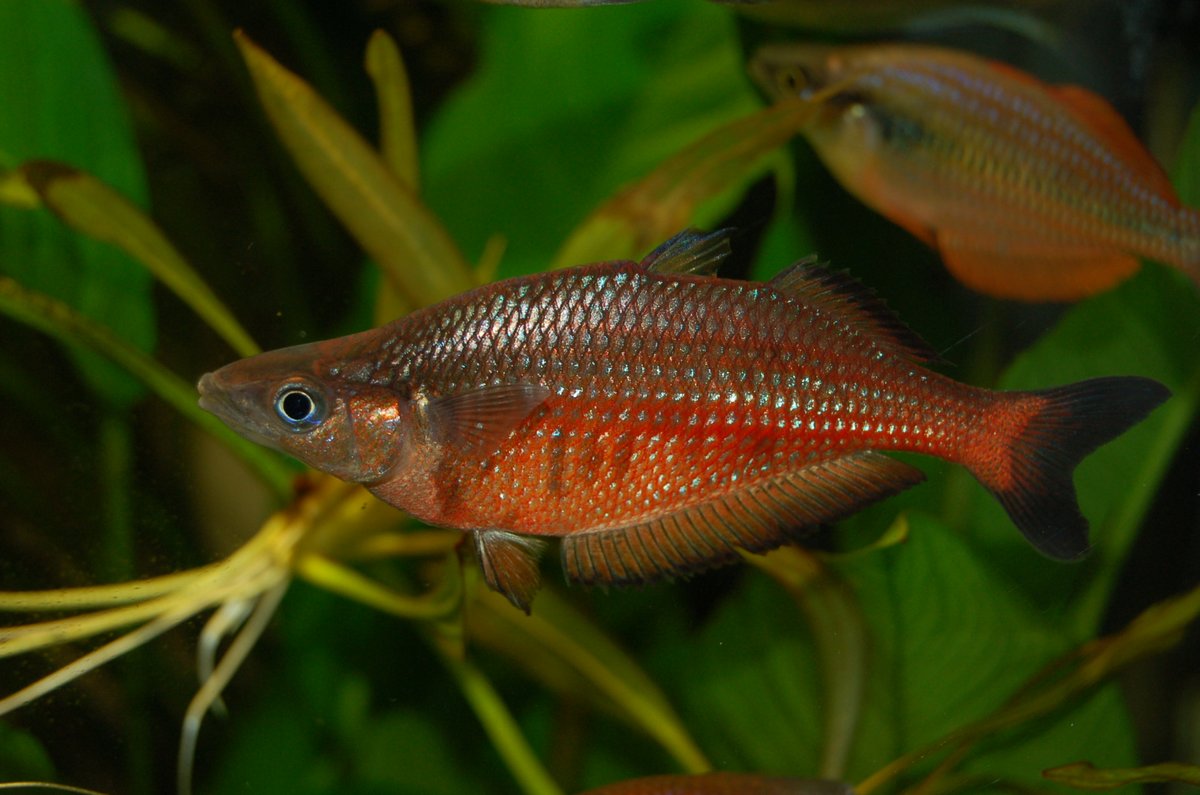
Perhaps the most distinguishing feature of the Chilatherina genus is their deep, laterally compressed body that increases with age, particularly in males, and Chilatherina sentaniensis is no different. Their overall body colouration is silvery-blue or greenish on the upper back fading laterally to silverly orange. They have a diffuse blue or green mid-lateral band and narrow silver or light blue stripes between each horizontal scale rows. Males often show 6–8 reddish-brown bars on the lower sides of the body between the pectoral fin base and the level of the middle anal rays. However, colour can be variable depending on captive conditions. Males are more brightly coloured, larger, and deeper bodied than females. Males may reach a maximum size of 12 cm, but females are usually less than 10 cm.
Etymology
The species name sentaniensis is a suffix denoting place, referring to Lake Sentani, Irian Jaya, Indonesia, where it is endemic.
Etymology compiled from C. Scharpf (2021), “Fishes of Sahul: An Etymological Survey (Part 4), the Rainbowfishes”, Fishes of Sahul 35(1): 1706–1714, and etyfish.org.
Distribution & Habitat
Chilatherina sentaniensis are endemic to Lake Sentani and its tributaries streams. Lake Sentani is located some 10 kilometres west of Jayapura at the NE extremity of West Papua. It is an irregularly shaped lake with approximate dimensions of 28 km (E-W) by 19 km (N-S) and a surface area of 104 km2. Its bluegreen waters are dotted with at least 16 small islands, and it is surrounded by hillsides in the south and the Cyclops Mountains in the north, which separate the lake from the Pacific Ocean. Lake Sentani is by far the largest of the West Papuan lakes and has a catchment area of about 600 km2. About 35 small rivers flow into the lake, and there is one natural outlet in the southeastern tip, via the Jafuri and Tami rivers to the Pacific Ocean near the Papua New Guinea border. The lake is divided into three main sections with recorded depths of 7 to 52 metres. According to surveys in 1970-71, 1984 and 1987 the lake is thermally unstratified, with surface temperatures of 29–32° and pH 6.2–6.8. Rainbowfishes are generally found around the margins of the lake. Large numbers are found congregating around submerged aquatic vegetation, fallen tree branches etc.
Because of its proximity to the provincial capital Jayapura and the large population around it, Sentani is no longer the pristine lake it once was. A survey by Samuel J. Renyaan in 1993 recorded 33 species of fish, of which 13 were introduced. Surveys have shown an increase in introduced species but the impact on the total fish population has not been documented. Fish are extensively raised in ponds and cages around the perimeter of the lake and the introduction of species (particularly carp and tilapia) has been both accidental and intentional.
Remarks
Chilatherina sentaniensis was originally collected from Lake Sentani and the Sekanto River during the 1899–1900 Siboga Expedition to the Dutch East Indies (West Papua). A large collection of specimens were also obtained from the lake by Marinus Boeseman during a collecting expedition for the Leiden Museum in 1954–1955. The lectotype of C. sentaniensis, preserved in the Amsterdam museum, shows a very long snout, which according to Gerald Allen, is an important distinguishing mark. In his 1982 book, “Rainbowfishes of Australia and New Guinea” Allen showed C. sentaniensis among the colour sketches, because he didn’t have any photographs of live specimens.
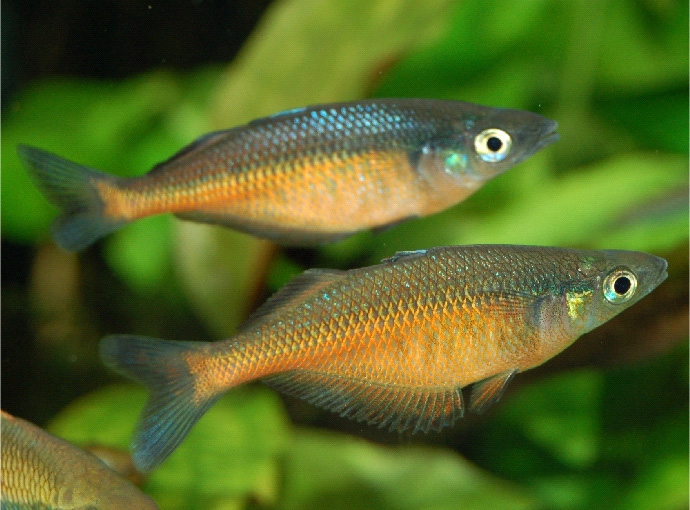
In 1982, live specimens of Chilatherina fasciata were collected from the Jafuri River and during the 1980s and early 1990s they were being distributed in the hobby as Chilatherina sentaniensis. In his Field Guide to the Freshwater Fishes of New Guinea of 1991 Gerald Allen noted that probably all records of C. sentaniensis in the aquarium literature related to C. fasciata varieties and that the most recent collection of the true C. sentaniensis was made in 1954. In yet another book, Rainbowfishes in Nature and in the Aquarium, published in 1995, Gerald Allen showed a picture of a live specimen, with the remarkably long snout, that was collected in a small tributary stream flowing into the north-eastern end of Lake Sentani in 1991. Several specimens were netted along with Chilatherina fasciata and Glossolepis incisus. None of these specimens however, were collected live for the aquarium hobby.
The “genuine” Chilatherina sentaniensis does however, exist in the hobby and they have a much longer, more pointed head and usually 9–12 soft dorsal rays compared to 11–16 rays in Chilatherina fasciata. Live specimens were collected from the lake in 1991 by Charles Nishihira and distributed in the aquarium hobby. Specimens were also collected from a small tributary stream in 2004 and 2005. However, they have not been widely available and only a handful of enthusiasts are maintaining them in captivity.
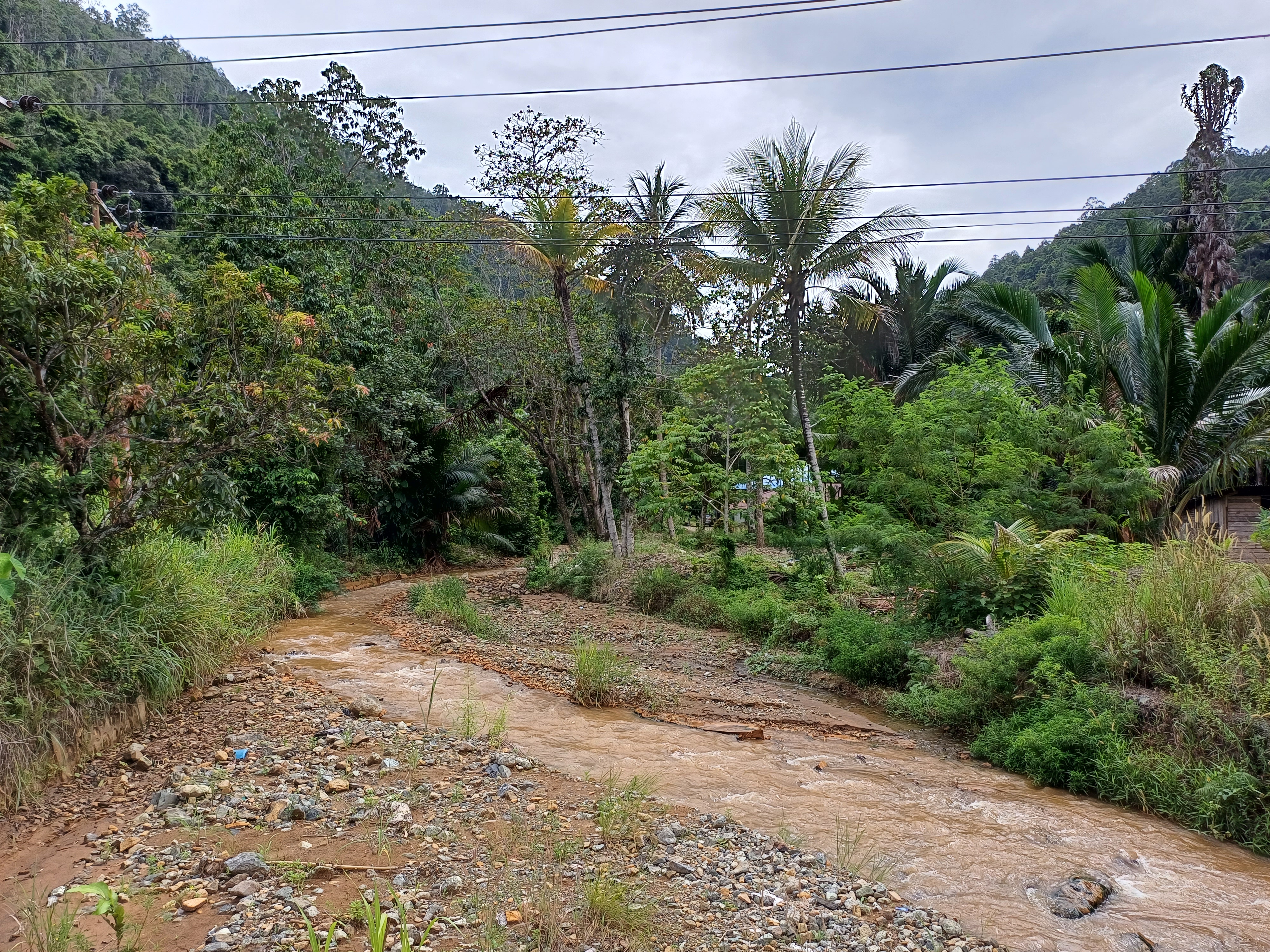
There is some concern that C. sentaniensis may not occur in Lake Sentani anymore, only in some of the feeder streams. The only currently known location is “Carwash Creek” (locally called “Jambatan II”) which is crossed by the road from Sentani to Jayapura. This creek is nowadays heavily polluted by upstream mining activities. In the last years, attempts to re-collect C. sentaniensis from this creek have been unsuccessful. A visit by a collecting party in 2023 found the creek still heavily polluted and turbid. It hasn’t been found at any other location so far (J. Graf 2009, pers. comm.).
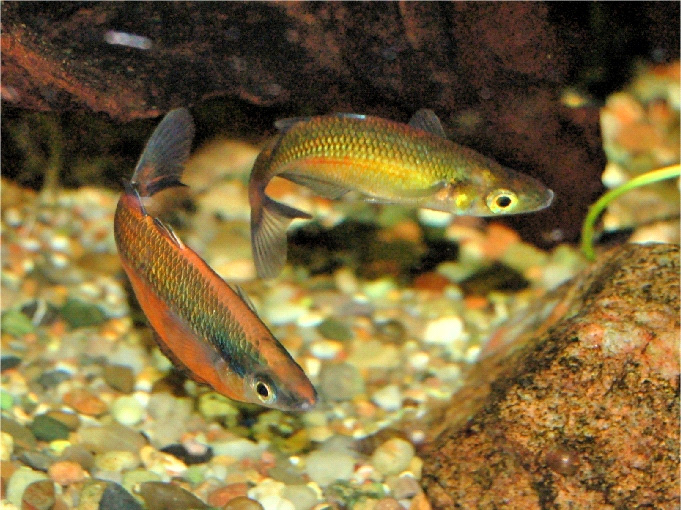
Chilatherina sentaniensis: Dorsal spines: 5–7; Dorsal soft rays: 9 –12; Anal spines: 1; Anal soft rays: 21–26. 22-27 scales in front of dorsal. 10–12 soft dorsal rays (Weber, 1922).
Chilatherina fasciata: Dorsal spines: 5–8; Dorsal soft rays: 11– 16; Anal spines: 1; Anal soft rays: 21–28. 19–21 scales in front of dorsal. 13–16 soft dorsal rays (Weber, 1922)
References
- Allen G.R. & N.J. Cross (1982) Rainbowfishes of Australia and New Guinea. Angus and Robertson: Sydney.
- Allen G.R. (1991) Field Guide to the Freshwater Fishes of New Guinea. Christensen Research Institute, Madang, Papua New Guinea.
- Nishihira C. (2008) Personal Communications.
- Ohee H.L. (2013) The Ecology of the Red Rainbowfish (Glossolepis incisus) and the Impact of Human Activities on Its Habitats in Lake Sentani, Papua. Dissertation, Georg-August Universität Göttingen.
- Renyaan S. J. (1993) The Freshwater Fishes of Lake Sentani, Jayapura, Irian Jaya. Proceedings of the Biological Society of New Guinea, R. Hoeft, Ed., Wau Ecology Institute.
- Regan C.T. (1914) Report on the Freshwater Fishes collected by the British Ornithologists' Union Expedition and the Wollaston Expedition in Dutch New Guinea. The Transactions of the Zoological Society of London 20(6): 275-286.
- Weber M. (1907) Süsswasserfische von Neu-Guinea ein Beitrag zur Frage nach dem früheren Zusammenhang von Neu-Guinea und Australien. In: Nova Guinea. Süsswasserfische Neu-Guinea 201-267.
- Weber M. & L.F. de Beaufort (1922) The Fishes of the Indo-Australian Archipelago. IV. E. J. Brill, Leiden, 4: 1-410.