

Melanotaenia praecox
Neon Rainbowfish
Species Summary
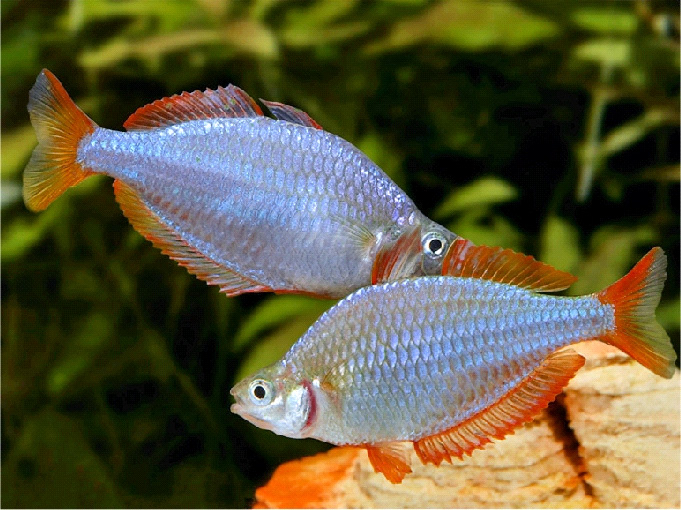
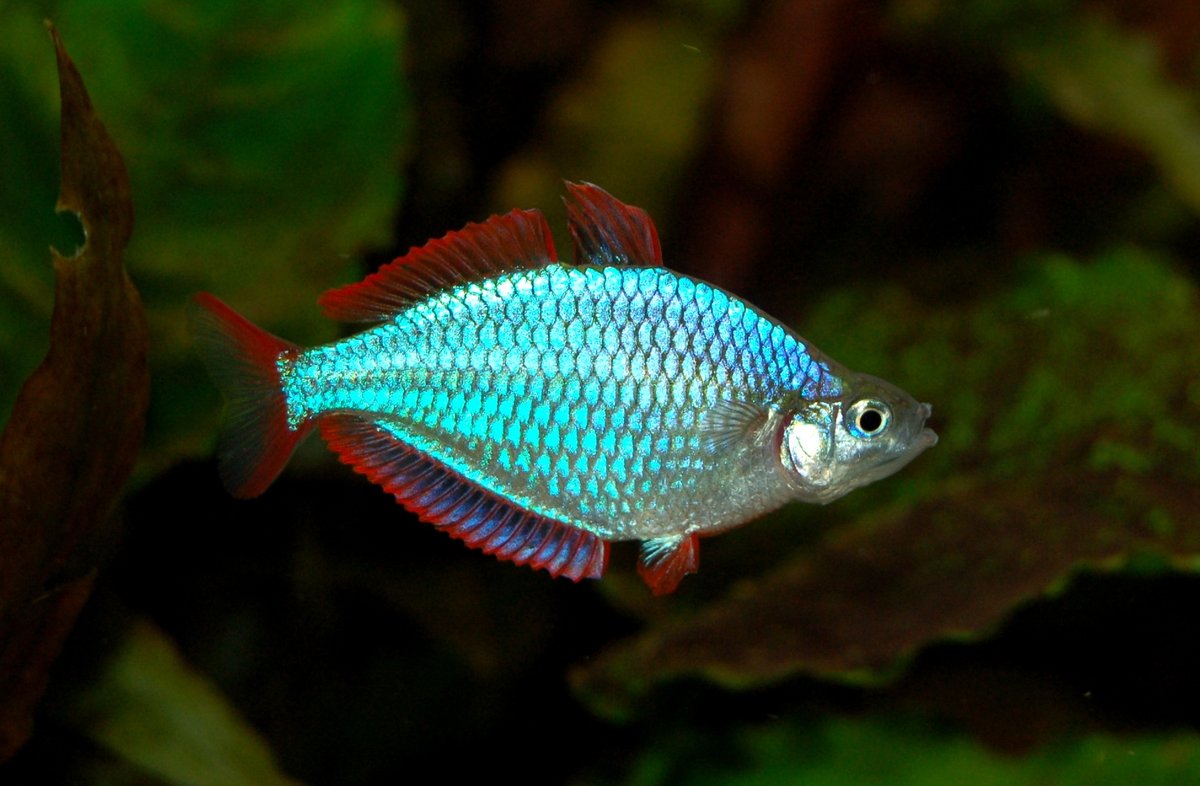
Melanotaenia praecox are bright neon blue with red dorsal, anal, and caudal fins. May reach a maximum size of 8 cm, but usually less than 6 cm SL. Heiko Bleher reported in Aqua Geõgraphia, “... males have red-edged fins while the fins of females are pure yellow”. However, my original females had red fins and succeeding generations produced red-finned females, although at times they can appear faintly orange coloured. There are however, aquarium stocks that have yellow-finned females.
Etymology
The species name praecox is Latin for premature, presumably referring to its elevated, rhombic body form, which is attained at a much smaller size than in any other rainbowfish known to the authors.
Etymology compiled from C. Scharpf (2023), “Fishes of Sahul: An Etymological Survey (Part 6), the rainbowfishes (continued)”, Fishes of Sahul 37(1): 2006–2022, and etyfish.org.
Distribution & Habitat
Melanotaenia praecox was initially collected by the Dutch naturalist W.C. van Heurn in 1910 from a tributary of the Mamberamo River in West Papua. They have been collected from the Mamberamo and Wapoga River systems. Gerry Allen collected specimens in 1991 from two small localities near the airstrips at Dabra and Iritoi on the edge of the Mamberamo Plains. In 1998, Gerry Allen also found them in small creeks and swampy ponds in the Tirawiwa River system, a remote area of northern West Papua about 200 km west of the Mamberamo River basin. These specimens differ from those of the Mamberamo in having a more slender body shape and several red stripes on the body. Habitat consists of small floodplain swamps and slow-flowing streams with clear water, soft muddy bottoms and accumulated leaf litter. Temperature 27–29°C and pH 6.6–8.0.
Remarks
Melanotaenia praecox were originally introduced to the aquarium hobby by Charles Nishihira around 1991 who had obtained wild-caught specimens from a local aquarist in Jayapura. Heiko Bleher collected wild-caught specimens in 1993. Further live specimens were collected by Gary Lange and Johannes Graf in 2008. Fish from these collections have been bred and distributed in the aquarium hobby.
Breeding trials with M. praecox were conducted over a sixmonth period on viability regarding egg numbers, fertilisation rate, hatching rate, length of incubation period, and survival rate in a seven days rearing period. While observations of growth rate, survival rate, and male percentage were conducted until 6 months old. The results reported the average of number of eggs was 27 eggs/spawning, fertilisation rate was 92.93%; hatching rate was 98.18%; length of incubation period was 8 days (7–9), and survival rate in seven days rearing period was 89.45%, respectively. The growth rate up to 6 months rearing period was 3 cm, while the survival rate was 94 (92–96)%, and the male percentage was 42.58%.
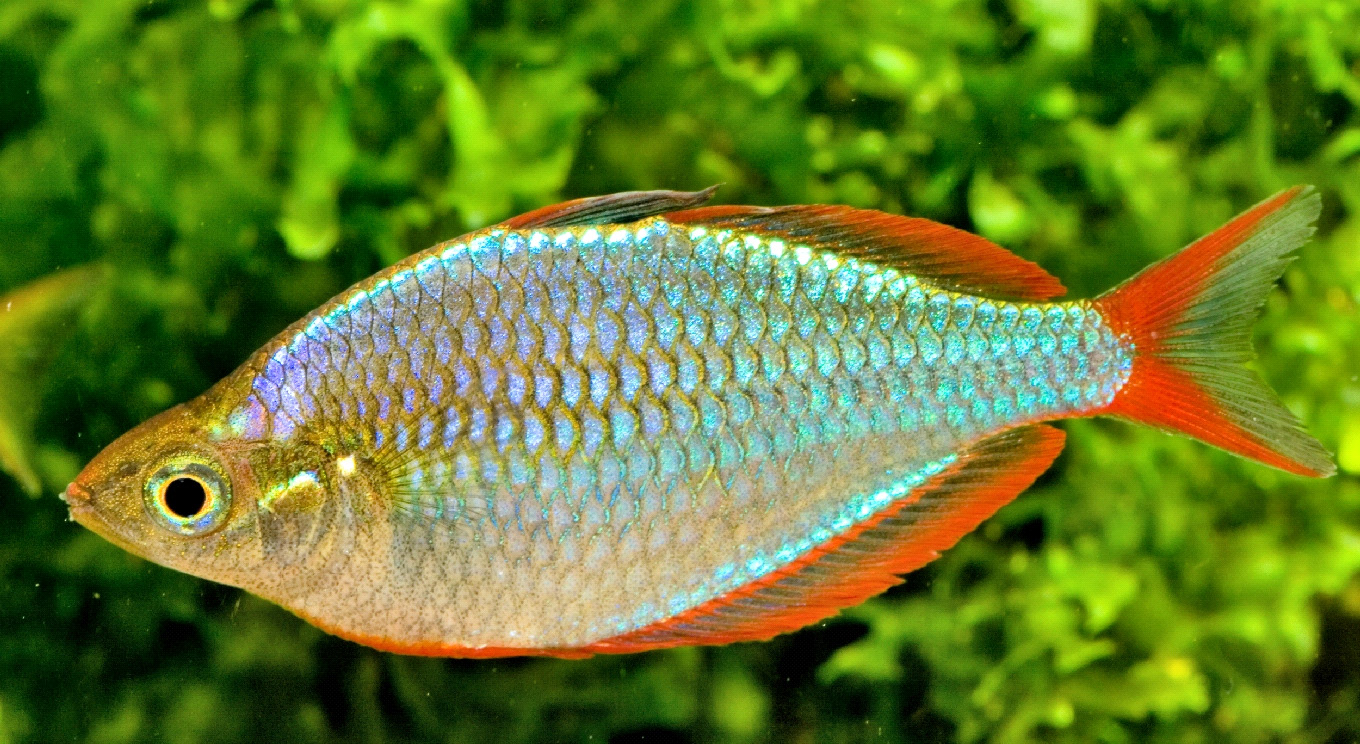
The above specimen was collected near the village of Pagai [Taritatu River]. The Tariku River (previously known as the Rouffaer River) in the west flows eastward and the Taritatu River (previously known as the Idenburg River) in the east flows roughly westward. They meet in the Meervlakte Basin to form the main Mamberamo River.
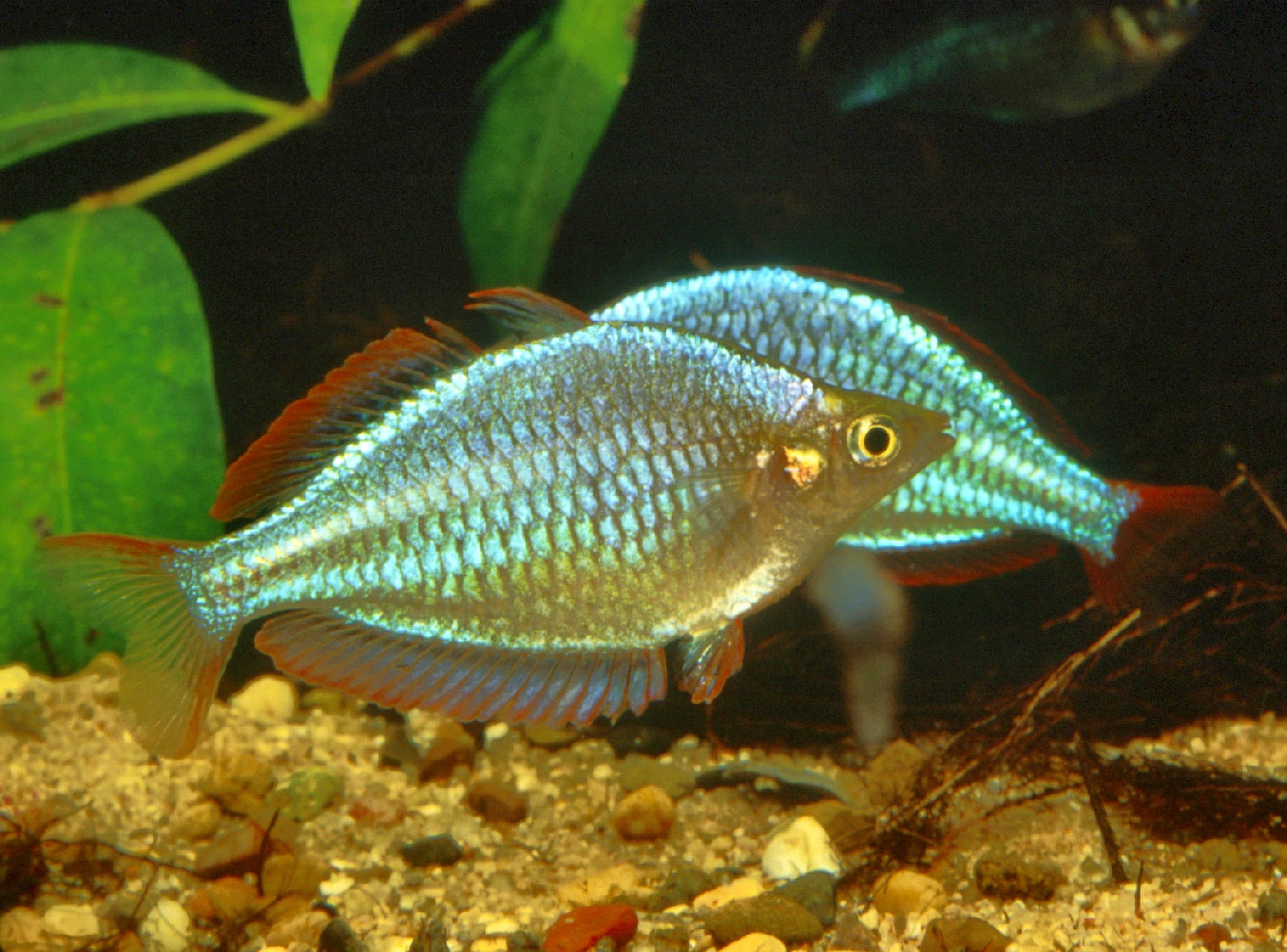
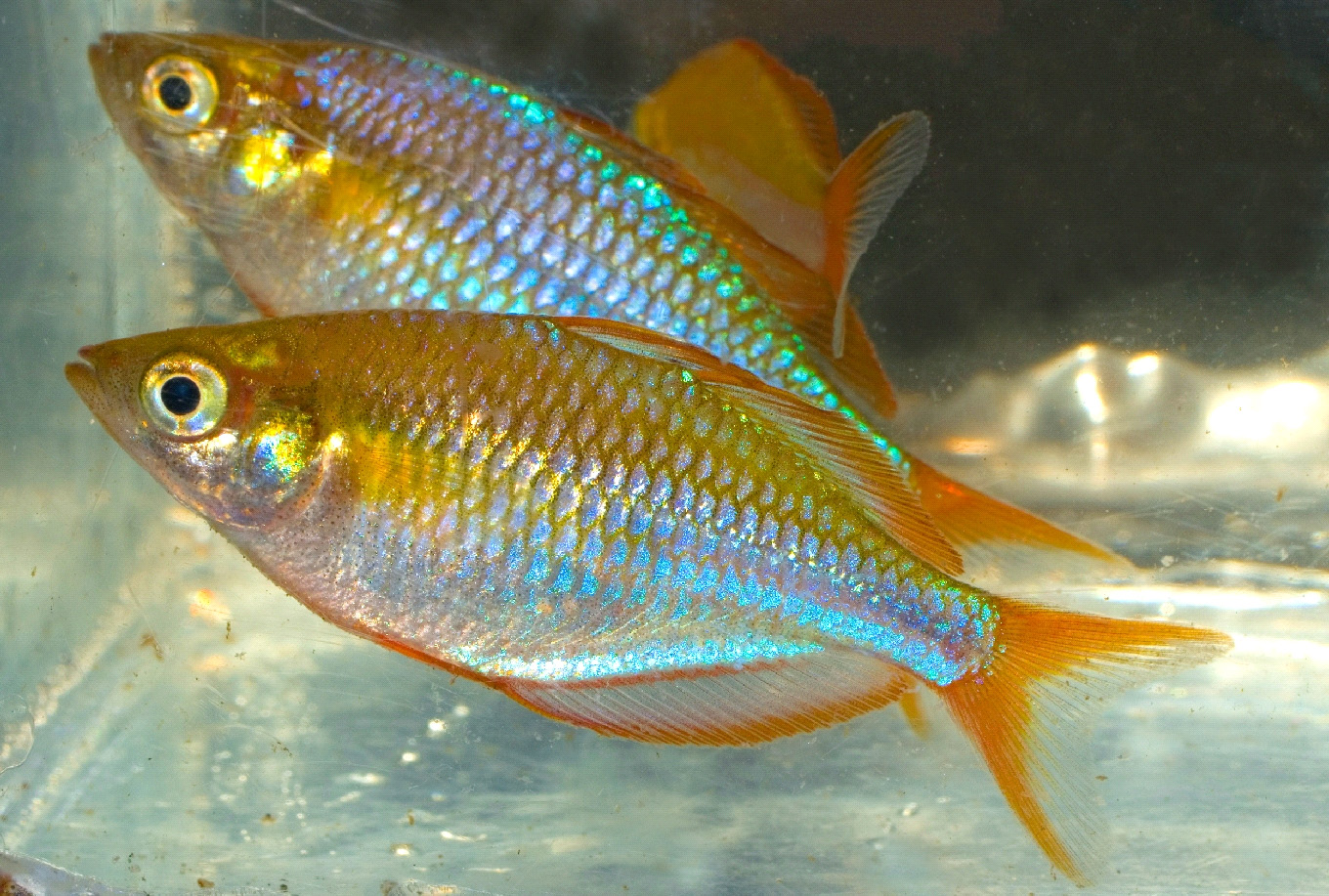
Wild caught specimens in field tank—collected near the village of “Pagai” on the north bank of the upper Taritatu River
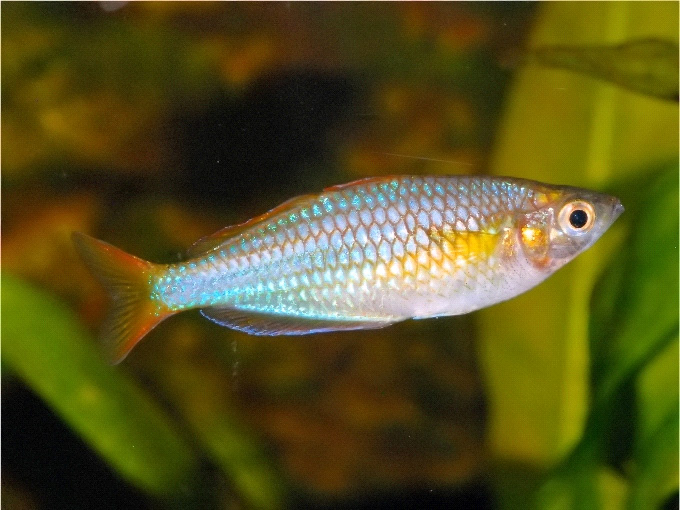
Female
References
- Allen G.R. (1991) Field guide to the freshwater fishes of New Guinea. Christensen Research Institute, Madang, Papua New Guinea.
- Allen G.R. (1992) In Search of the Kamaka Rainbow. Tropical Fish Hobbyist 41(4): 126-145.
- Allen G.R. & S. Renyaan (2000) Fishes of the Wapoga River System. In: Mack A.L. and L.E. Alonso (eds.) A Biological Assessment of the Wapoga River Area of Northwestern West Papua, Indonesia. RAP Bulletin of Biological Assessment 14, Conservation International, Washington, DC. USA.
- Allen G.R., H. Ohee, P. Boli, R. Bawole and M. Warpur (2002) Fishes of the Yongsu and Dabra areas, Papua, Indonesia. In Richards S.J. and S. Suryadi (eds.) A Biodiversity Assessment of Yongsu - Cyclops Mountains and the Southern Mamberamo Basin, Papua, Indonesia. RAP Bulletin of Biological Assessment 25. Conservation International, Washington, DC, USA.
- Allen G.R., P.J. Unmack and R.K. Hadiaty (2015) Melanotaenia rubrivittata, A New Species of Rainbowfish (Melanotaeniidae) from Northwestern Papua Province, Indonesia. Fishes of Sahul 29(1): 846-859.
- Bleher H. (1995) The Fish of the Century. Fishes of Sahul 9(1): 385-391.
- Graf J. (2012) Into the wilds of West Papua in search of the Neon Rainbowfish. AMAZONAS 1(4): 46-52 [English edition]
- Radael M.C., et al. (2013) Morphophysiological characterization of the embryonic development of Melanotaenia praecox. Zygote 22(4): 1-7.
- Said D.S. (2008) Viabilitas reproduksi dan pertumbuhan ikan pelangi mingil Melanotaenia praecox pada habitat terkontrol. Limnotek 15(1): 31-39.
- Weber M. and L.F. de Beaufort (1922) The fishes of the Indo-Australian Archipelago. IV. Heteromi, Solenichthyes, Synentognathi, Percesoces, Labyrinthici, Microcyprini. E.J. Brill, Leiden, Netherlands.