

Melanotaenia goldiei
Goldie River Rainbowfish
Synonymy
- Aristeus goldiei Macleay, 1883
- Nematocentris novae-guineae Ramsay & Ogilby, 1886
- Rhombosoma goldiei Ogilby, 1896
- Rhombatractus goldiei Ogilby, 1896
- Rhombatractus novae-guineae Ogilby, 1896
- Melanotaenia dumasi Weber, 1908
- Rhombatractus kochii Weber, 1908
- Rhombatractus weberi Regan, 1908
- Rhombatractus senckenbergianus Weber, 1911
- Rhombosoma novae-guineae Regan, 1914
- Rhombosoma goldiei Regan, 1914
- Rhombosoma novae-guineae Regan, 1914
- Rhombatractus archboldi Nichols & Raven, 1934
- Anisocentrus dumasi Munro, 1958
- Melanotaenia goldiei Allen, 1991
Species Summary
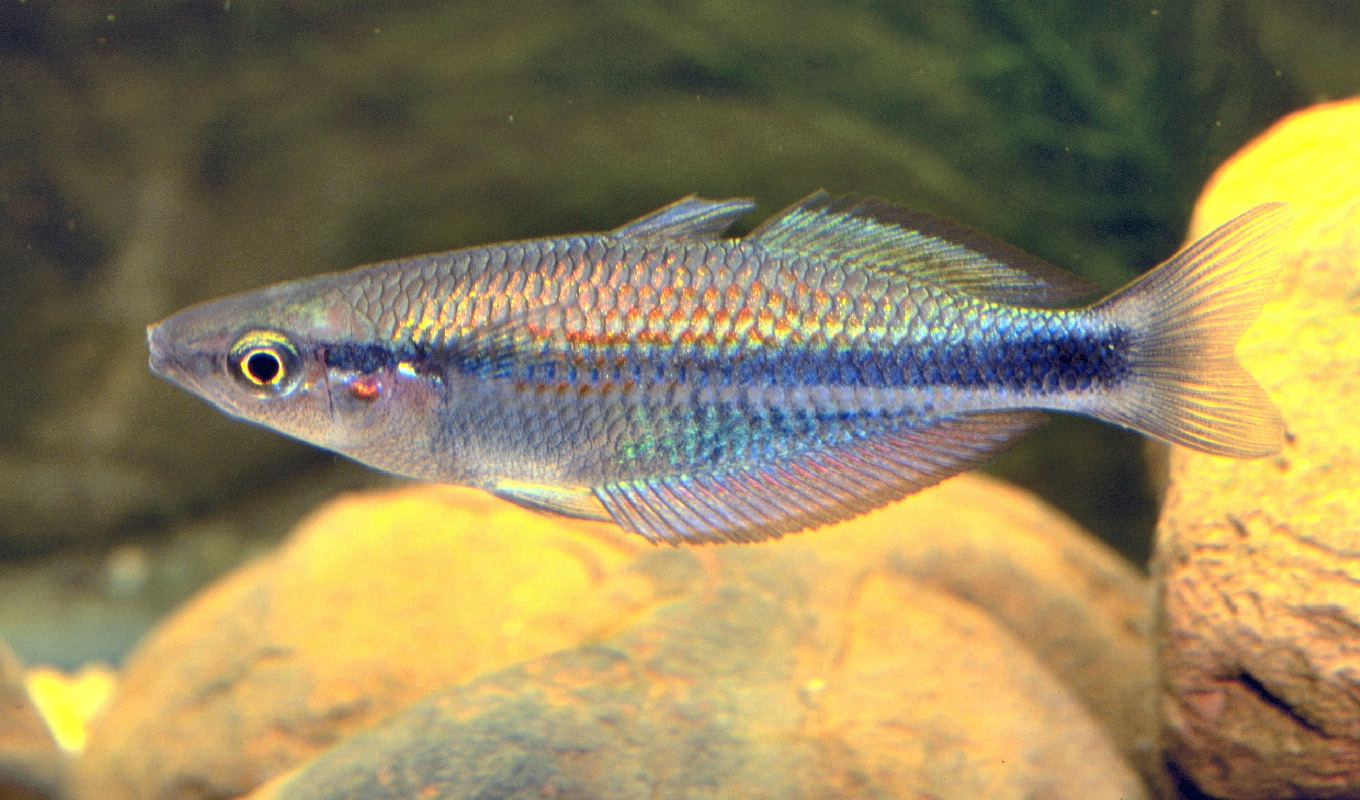
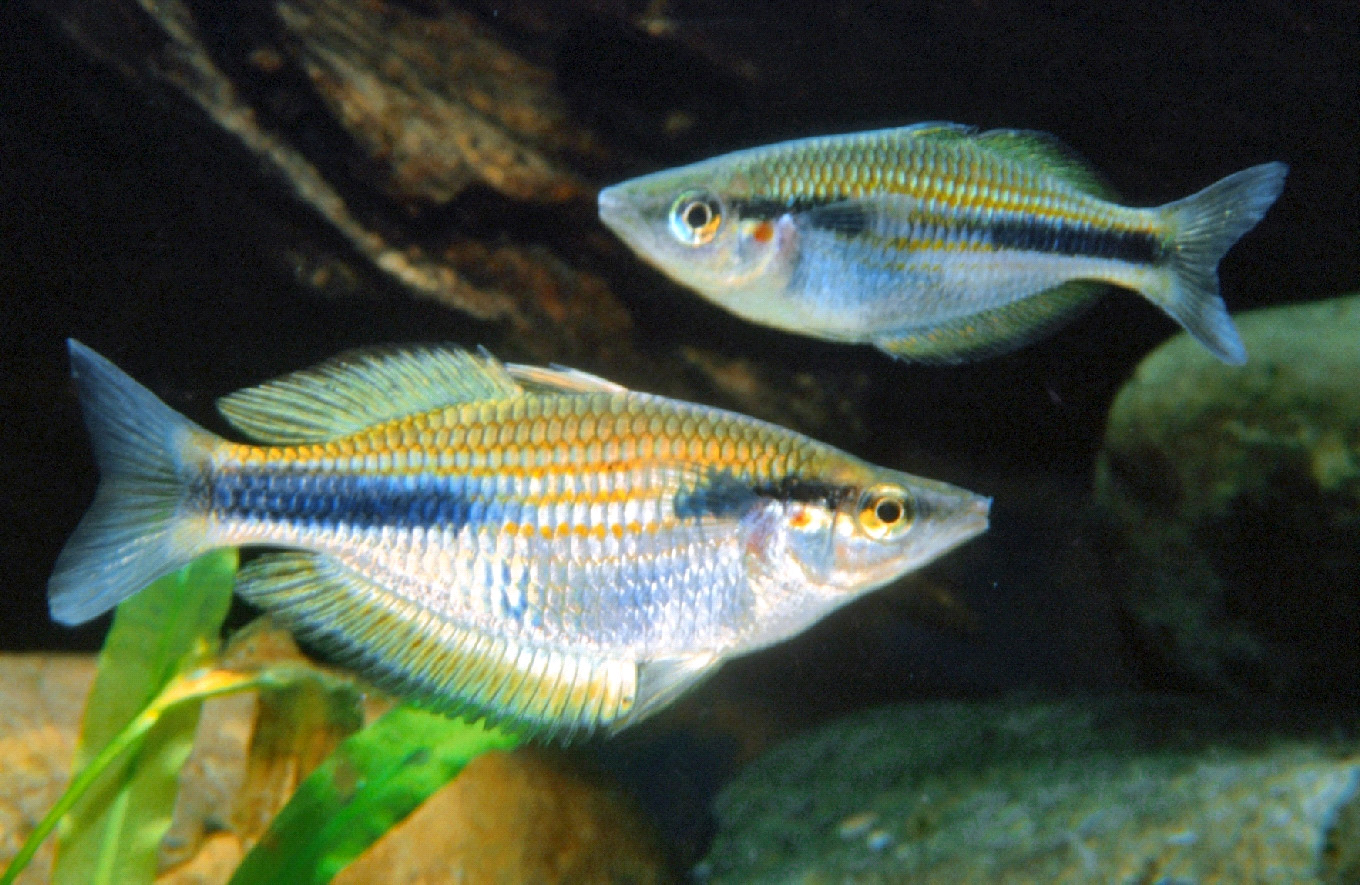
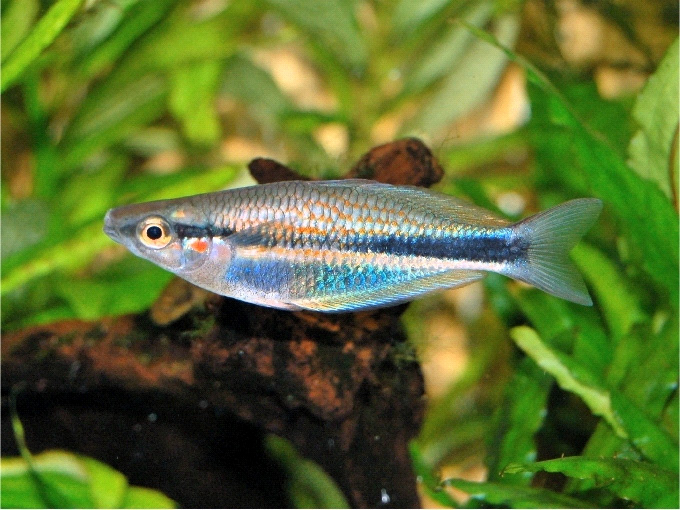
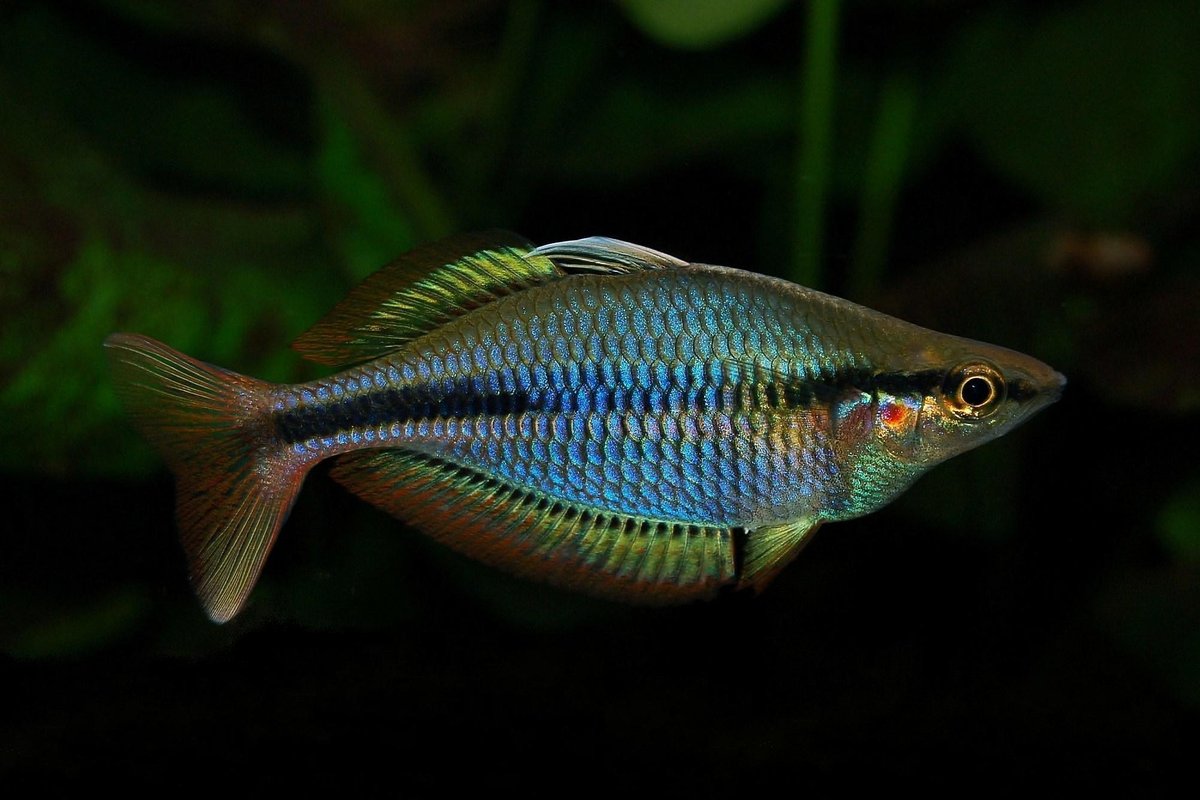
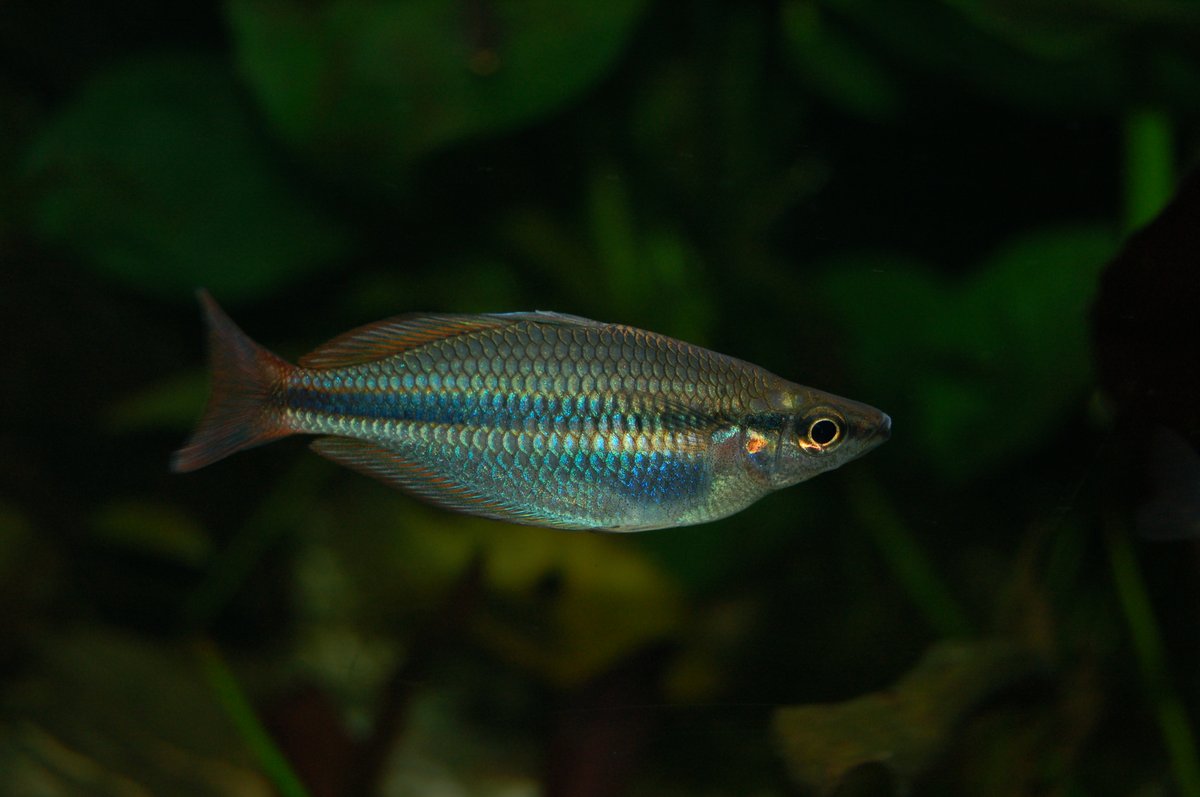
Melanotaenia goldiei have a distinctive coppery coloured sheen on the upper half of the body with a creamy white colour on the lower half. The mid-lateral stripe is discontinuous, dark blue or blackish, and about 2 scale rows wide. There is a narrow copper or orange-coloured stripe between each scale row on the upper half of the body. Males may reach a maximum size of 10 cm, but females are usually less than 8 cm.
Etymology
The species is named in honour of “Mr. Goldie,” probably Andrew Goldie (1840–1891), a Scottish-born merchant, explorer and natural-history collector, who collected the type from the Goldie River (which he named after himself) in Papua New Guinea.
Etymology compiled from C. Scharpf (2022), “Fishes of Sahul: An Etymological Survey (Part 5), the rainbowfishes (continued)”, Fishes of Sahul 36(4): 1968–1992, and etyfish.org.
Distribution & Habitat
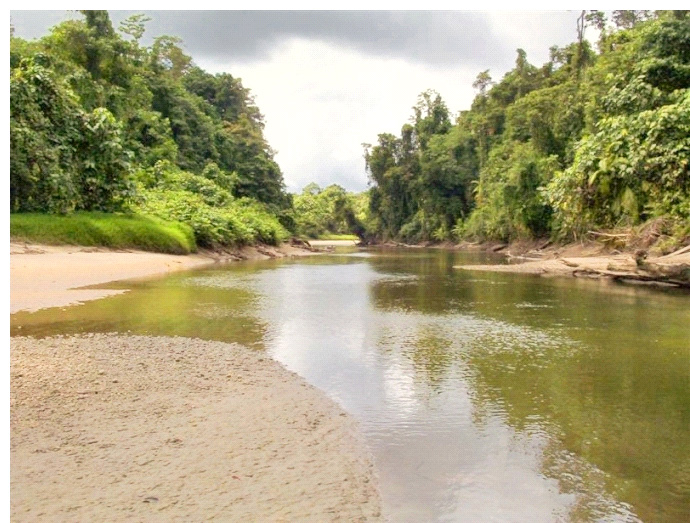
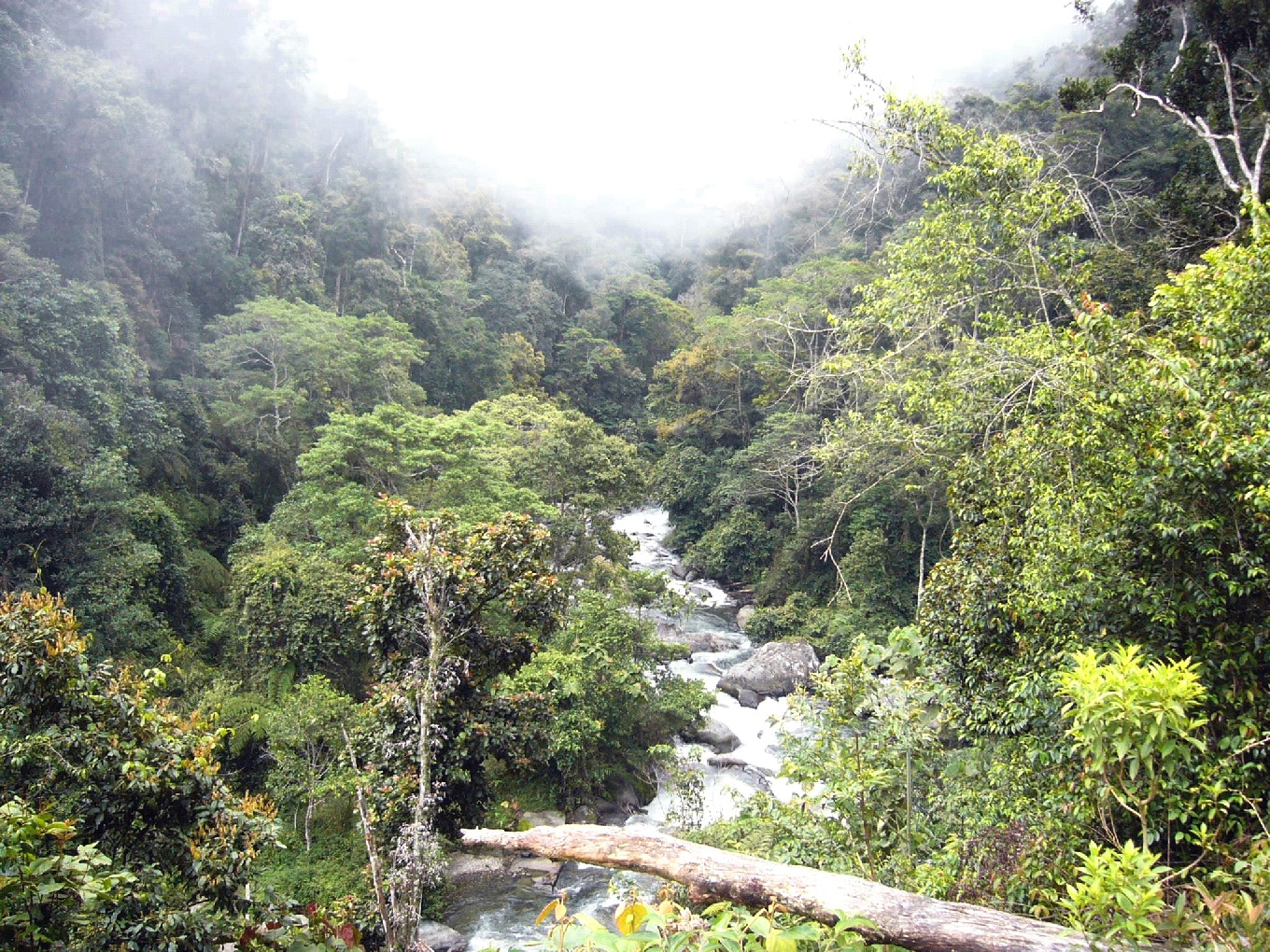
Melanotaenia goldiei were initially collected from the Goldie River, a major tributary of the Laloki River in southern New Guinea, near Port Moresby in the 1880’s. The Laloki River and its major tributaries, the Brown and Goldie Rivers, arise in the lush foothills of the Owen Stanley Ranges in the Central District of Papua New Guinea.
Melanotaenia goldiei was considered one of the most widely distributed rainbowfishes in southern New Guinea, ranging from Lake Yamur (West Papua) eastward to the Port Moresby region. However, a number of populations formerly attributed to M. goldiei were described in 2016 as new species, e.g. Melanotaenia dumasi. As scientific analysis progresses, it is very likely that more populations will eventually be described as new species in the future. Populations from the Aru islands also turned out to be new species, e.g. Melanotaenia wokamensis and M. picta. Other river systems where populations still currently considered to be M. goldiei have been collected include the Fly, Kemp Welsh, Lakekamu, Lorentz, Ok Tedi, Palmer, Oriomo and Sapoi Rivers as well as the Timika region in West Papua. In 2005, populations attributed to M. goldiei were collected in 17 sites in the Fly River catchment - Elevala River, Ok Tedi, upper Fly River, Ok Mart and Ok Menga. However, it is probable that many of these populations will turn out to be different species upon scientific analysis.
Melanotaenia goldiei are found in a wide ranges of habitats, including swamps, backwaters, small creeks, and large rivers. They are most abundant in deep pools behind fallen logs or buttress roots of large trees, where they form loose midwater aggregation. They occur most frequently around sub-surface vegetation, submerged logs, or branches in small tributary streams. Typical habitat consists of small, clear; slow-flowing creeks in closed canopy forest over relatively flat terrain. These creeks typically have mud or gravel bottoms and littered with leaves and log debris. Their natural environment is subjected to seasonal variations with water temperature, pH, and hardness levels varying considerably, and they adapt to the particular water conditions and the seasonal changes when they occur. They have been found in company with Melanotaenia ogilbyi, Melanotaenia papuae, Melanotaenia rubrostriata and Melanotaenia sylvatica. Temperature and pH recorded 24.6 –33.0°C; pH 7.0–7.8.
Remarks
Melanotaenia goldiei was one of the first New Guinea rainbowfishes to enter the aquarium hobby. They were being maintained in the Australian hobby as early as 1958 and perhaps even earlier. Just how many separate collections have occurred over the years is not known, but I know of at least 3 during the early 1970’s. What eventually happened to the fish from these importations has been lost in the pages of aquarium history. One collection that has been documented was made by Gerald Allen in 1978. However, as the number of new species arrived from New Guinea, M. goldiei fell out of favour with hobbyists and most of the captive stock disappeared.
Another collection was made by Heiko Bleher around the late 1980s, and these were introduced to the European hobby. They are known as the “Tapini” variety. These were collected from the Loloipa River, which is an upper tributary of the Angabanga River which flows to the sea near Bereina, Papua New Guinea.
Allen (1982) suggested that M. goldiei and M. trifasciata from northern Australia originated from one and the same ancestral species. In the time when New Guinea and Australia were connected by land, this species must have lived in the area where now the Arafura Sea is. After the rising of the sea levels the separated populations have become the two species we know today. However, recent genetic studies (P. J. Unmack 2009, pers. comm.) now suggest that the populations from the Fly River may actually be Melanotaenia trifasciata.
For much of the past three million years, Australia and New Guinea were a single land mass, with a wide plain across what is now the Arafura Sea. The only high ground on the plain were low hills that are now islands fringing the Kimberley coast and Arnhem Land, the islands in Torres Strait and the low hills that fronted the north-western coastline of the Arafura plain (now the Aru Islands of Indonesia).
The Aru Islands (also known as Aroe Islands or Kepulauan Aru) lie on the western edge of the shallow seas of Torres Strait, around 7°S and 134°E, and is part of the Maluku province of eastern Indonesia, which lies directly south of the Vogelkop Peninsula, West Papua. New Guinea is some 150 km to the north across a shallow sea; central Arnhem Land in Australia is some 550 km to the south.
References
- Allen G.R. (1991) Field guide to the freshwater fishes of New Guinea. Christensen Research Institute, Madang, Papua New Guinea.
- Kailola P.J. (1987) The fishes of Papua New Guinea. Research Bulletin No. 41. Dept of Fisheries and Marine Resources, Port Moresby PNG.
- Macleay W. (1883) Contribution to a knowledge of the fishes of New Guinea, No. 4. Proceedings of the Linnean Society of New South Wales 8 (2): 252-280.
- Nichols J.T. & H.C. Raven (1934) Two new fresh-water fishes (Percesoces) from New Guinea. American Museum Novitates, No. 755: 1-4.
- Unmack P.J., G.R. Allen and J.B. Johnson (2013) Phylogeny and biogeography of rainbowfishes (Melanotaeniidae) from Australia and New Guinea. Molecular Phylogenetics and Evolution 67 (1): 15-27.