
Iriatherina werneri
Threadfin Rainbowfish
Species Summary
In 1973, two visiting German aquarists collected some small freshwater fishes in a rice paddy field on the outskirts of the town of Merauke in New Guinea. They were transported back to Europe and a number of them were given to Herman Meinken, a well known aquarist and ichthyologist, who realised that they were an undescribed species. In 1974, Meinken published the scientific description of the fish in the German aquarium magazine Das Aquarium (Aqua Terra) and they were named Iriatherina werneri after one of the collectors, Arthur Werner. They are commonly known as the ‘Threadfin’ or ‘Featherfin’ Rainbowfish. In Australia the ‘Standard Names of Australian Fishes’ published by the CSIRO lists them as ‘Threadfin Rainbowfish’.
When Iriatherina werneri were first released to the aquarium trade in Europe only males were sold to the unsuspecting aquarium public. This of course meant that all attempts to breed this new species failed. Then in 1978, more of these delightful little jewels were found in swamplands of the Jardine River in Cape York Peninsula. Their discovery in Australia opened up the trade in the species with both males and females being freely available, much to the delight of aquarium hobbyists.
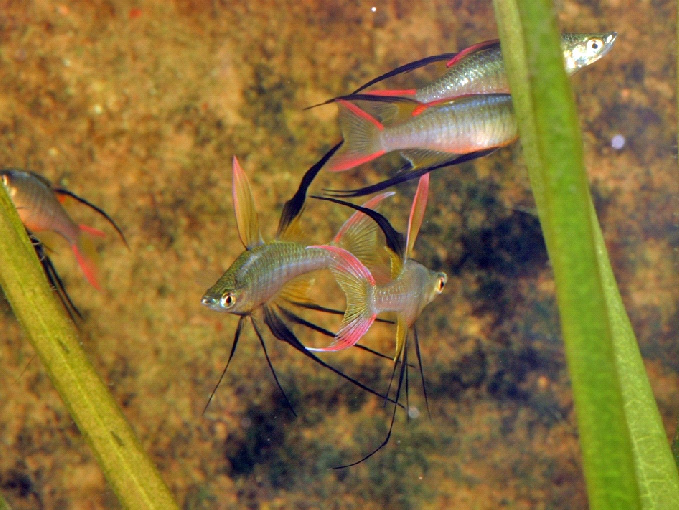
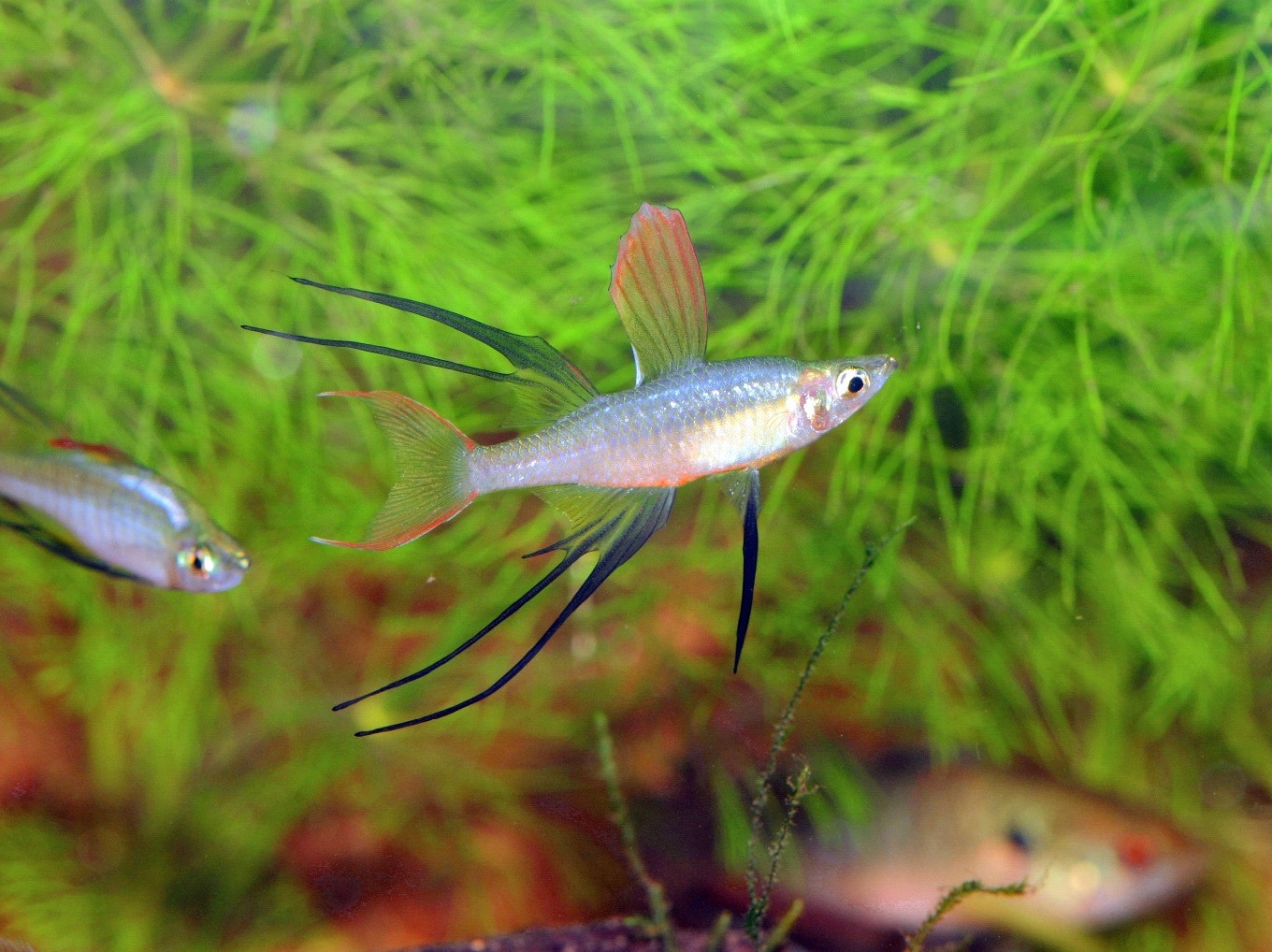
Iriatherina werneri may grow to a maximum size of 5 cm, but are more commonly seen at around 3–4 cm. Mature males have a first dorsal fin that is fan shaped, while the second dorsal fin has exceptionally long filaments. The anal fin is similarly extended. This elegant finnage is used in a remarkably vivacious display for females and rival males. The body is slender, laterally compressed and general metallic silver with slightly visible dark vertical bars. The colours of the dorsal, anal and pelvic fins are black with a reddish-tan wash. The tail fin is deeply forked, transparent, and edged in a rustic red colouration.
There are also small differences in fin shape and colouration of male specimens from different locations. Some males have a narrow and high sail-like first dorsal fin, while this fin is lower and broader in other males. Specimens from the Cadell River in the Northern Territory often have a more lyre-tail shaped tail fin, and the fins may be darker and longer. Females however, pale in comparison to the males, although their tail fins are adorned with a pinkish margin and the edges of the pelvic and anal fins are edged with black.
The colouration of the fish in their natural habitat is usually much more intense than specimens maintained in the confines of an aquarium. Specimens found in New Guinea are usually darker than the Australian variety. A yellow finned variety has been collected from a tributary of the Embley River in northern Queensland.
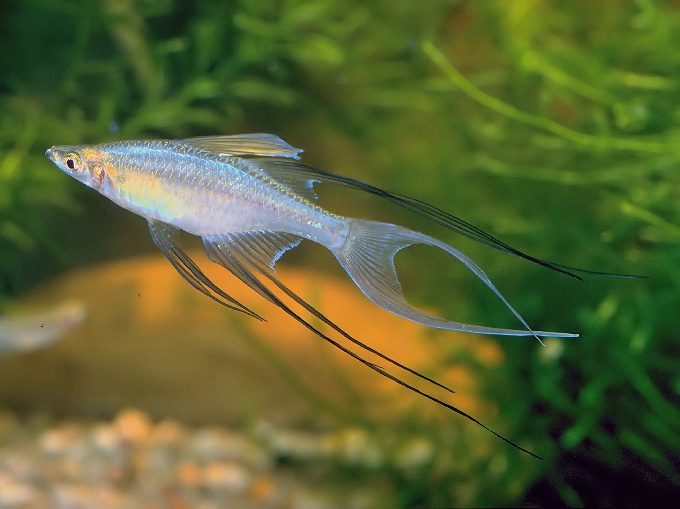
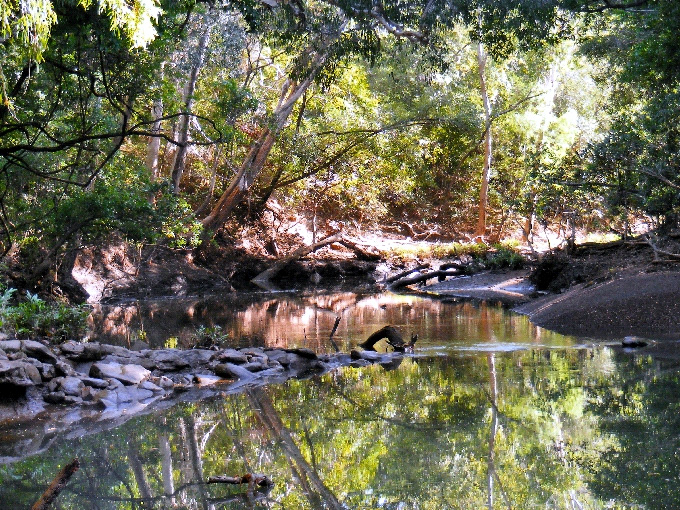
Preliminary genetic studies have revealed significant genetic variation between some of different geographical populations of Iriatherina werneri that may warrant taxonomical separation at the species level.
Etymology
The genus name Iriatherina combines Iria, referring to west Irian Jaya, Indonesia, the type locality of I. werneri, and Atherina, the type genus of Atherinidae, its presumed family at the time. The species is named in honour of Arthur Werner, a German aquarium-fish exporter, who collected and donated the holotype to the Senckenberg Forschungsinstitut und Naturmuseum, Frankfurt, Germany.
Etymology compiled from C. Scharpf (2021), “Fishes of Sahul: An Etymological Survey (Part 4), the Rainbowfishes”, Fishes of Sahul 35(1): 1706–1714, and etyfish.org.
Distribution & Habitat
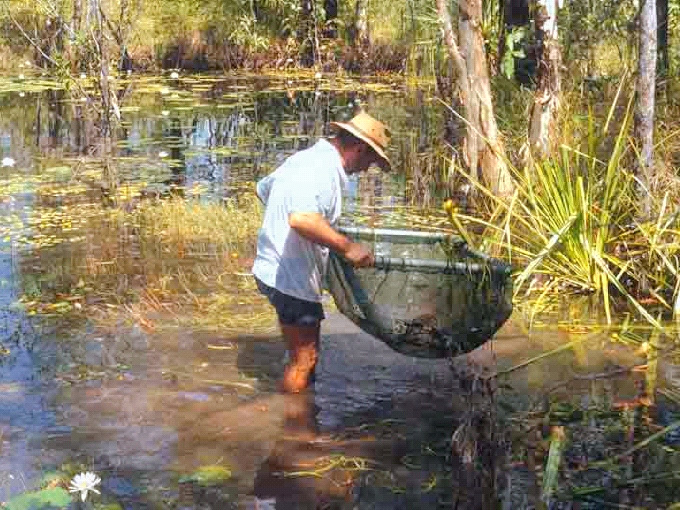
In New Guinea, Iriatherina werneri have been collected from several coastal rivers between the Merauke and the Fly Rivers. In the Fly River they have been collected in swampy lagoons along the mainstream of the river more than 500 km upstream from its mouth. In 1975 they were collected from Lake Bosset. Then in 2005, they were collected in 2 sites, Lake Bosset and Lake Kala. In Australia, the Jardine River swamps were believed to be the only place where they could be found. However, in 1985 (Hansen, 1987) they were found in the Edward River catchment on the western side of Cape York Peninsula. More recent surveys have found that they have a much wider distribution in a number of rivers both on the western and eastern sides of Cape York Peninsula. They have also been collected from the Arafura Swamps and a number of streams in the Northern Territory.
Iriatherina werneri are generally found in clear, slow flowing streams, grassy wetland swamps and lagoons that have abundant vegetation. They are most commonly found along the heavily vegetated margins of lagoons and small streams at depths of 0.5 to 1.25 metres, and usually in open water not far from clumps of vegetation. Small schools of females and juveniles can be seen moving slowly through the water while the more mature males display around them. A temperature range of 22° to 30°C and pH values of 5.2–7.5 have been recorded in their natural habitats.
Keeping & Caring
Very little is known about the natural life history and ecology of the Iriatherina werneri in the wild. Most information is mainly based on aquarium observations. They have been a popular aquarium fish with Australian native fish enthusiasts for many years and are easy to maintain under standard aquarium conditions. Although they are a fish that requires a little more attention than most other rainbowfishes. They should not be kept in aquaria less than 60 cm (55 litres) and are best kept in groups of 5 or more individuals. They can be maintained and bred in water conditions that are suitable for most aquarium species. Best results will be achieved if maintained at a temperature range of 23–28°C; pH 6.0–7.0; and water hardness of 10–70 ppm (mg/L). I did however, maintain this species for 16 years and successfully spawned and raised numerous generations under the following water conditions: Temperature 24–31°C, pH 5.9–8.2, Hardness 100 –220 ppm, Alkalinity 25–100 ppm and conductivity 390–820 µS/cm.
Iriatherina werneri is one of the most peaceful of all aquarium fishes, almost to the point of exclusion as a potential “community” tank fish. Their timidity, gentle manner, small size and dainty feeding habits put them at a disadvantage in an aquarium with most other types of tropical fishes. This is probably why they are not readily available in aquarium stores and are mostly maintained by rainbowfish enthusiasts.
Nevertheless, they can be kept in a mixed community aquarium containing other small native species such as Pseudomugil gertrudae. A breeding tank can be easily set up and the fish induced to spawn throughout the year.
In their natural environment they feed mainly on large quantities of unicellular, planktonic algae and diatoms. However, in captivity they seem to thrive on live brine shrimp nauplii, daphnia, copepods, mosquito larvae, and worms such as grindal and microworm. The challenge of attacking larger live foods is usually declined. Floating dry foods, such as small bite-sized pellets or flake foods are acceptable as their dorsally projected jaws are designed for surface feeding.
I first obtain this species in 1982. They were part of a collection of fishes from the Jardine River. No information was given regarding the water conditions of the collecting site. I set them up in a 55 litre breeding aquarium with subgravel filtration containing aged tap water with a pH 7.6 and a hardness of 140 ppm. Temperature varied between 24–27°C, a woollen spawning mop was added to complete the set-up. The spawning mop was checked daily and when eggs were found the mop was removed to a hatching tray and replaced with another. Getting them to spawn and hatch was the easy part, raising the fry was another story. The fry were fed infusoria and commercial fine powdered food. Mortalities were high; in fact it took almost two months before I was successful in raising any offspring.
High mortality rates can often occur, especially during the early feeding stages. The main reason for this is that the developing larvae are very small, extremely fragile, and generally not physiologically fully developed. For example, their small mouth size is a limiting factor in proper feed selection and use during the early first-feeding period. However, mortality can be the result of several factors including inferior water conditions and improper hatching conditions. I found old acidic water (water that is less frequently changed) to be detrimental to their long-term health. Good aquarium conditions with regular partial water changes are the most important requirement for successful maintenance and breeding.
In their natural environment spawning usually occurs during the warmer period of the year (Spring-Summer) when water temperatures are around 24–32°C. Spawning in captivity can be attempted in a number of ways. They can be placed in a specially set up breeding aquarium with a one male; two females combination. A bunch of aquatic moss or spawning mop is placed in the tank, on which the fish will readily spawn. The spawning medium, with attached eggs, can then be removed each day, and place in a special hatching container. Alternatively, in a permanent aquarium environment purposely set up for breeding I. werneri, a self-sustaining population can be maintained. In fact, this is probably the most reliable method of breeding for the general hobbyist. Such an aquarium need not be larger than 50 litres, although a 90x45x45 cm aquarium tastefully decorated with river stones, driftwood overgrown with aquatic mosses and some floating duckweed or water sprite can be very attractive. An aquarium designed accordingly and containing a school of displaying Iriatherina werneri, is a sight not easily forgotten.
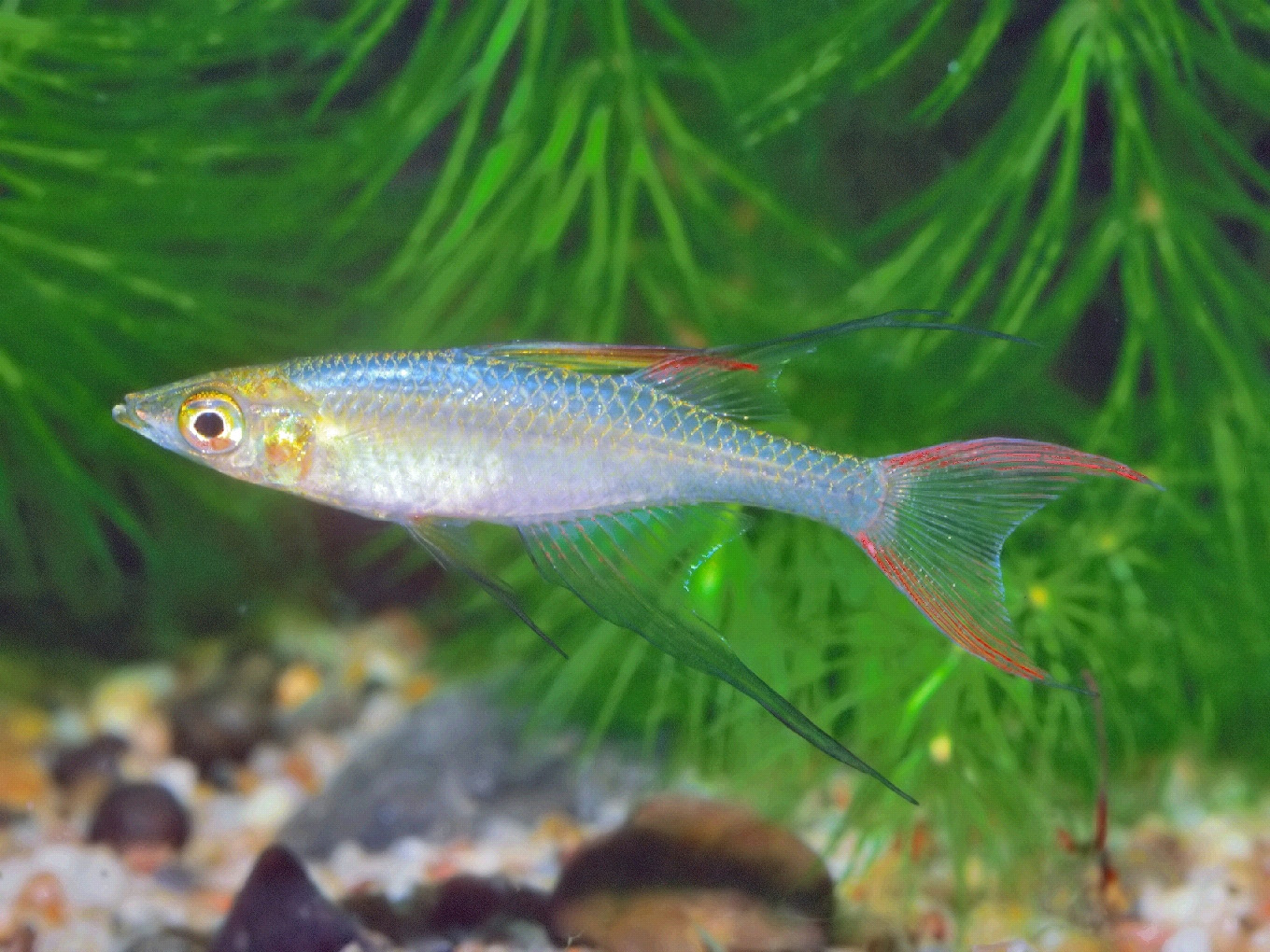
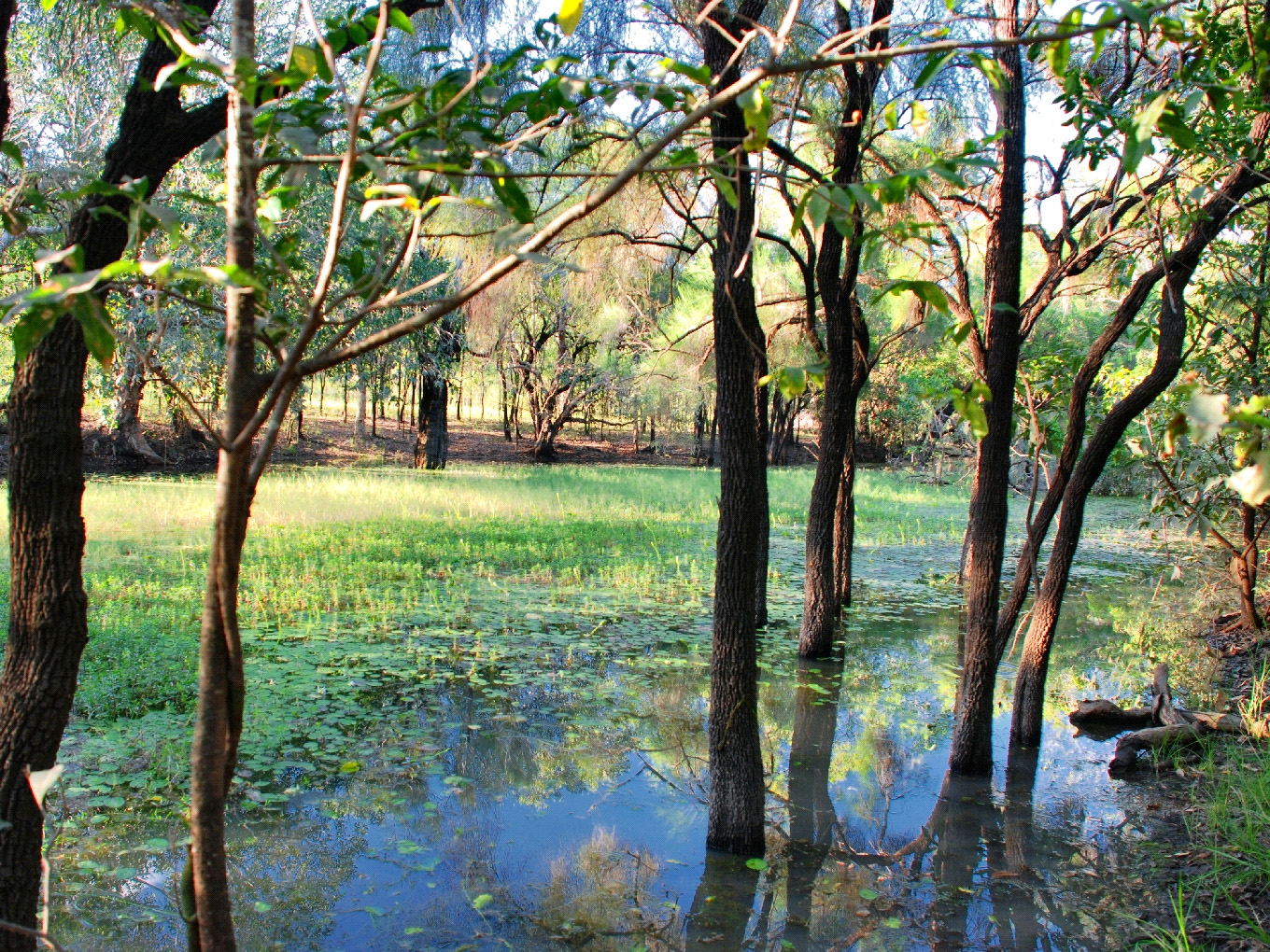
Iriatherina werneri will normally eat their own larvae (fry) if they are given the opportunity, but what generally will happen is that in a well-planted aquarium some of the fry will survive because the adults cannot get to them. Once they get to a certain size you will see them coming out of the aquatic moss and start swimming with the adults. They (fry) know when they can safely come out.
What happens is you end up with a lot of fry at different growth stages. This is also good because as the fry grow they need larger food and seeing that you are feeding the adults you don’t need to know when you need to feed them larger food as the food is already there. In a permanently established aquarium some of the fry will find sufficient edible particles or infusorians to survive. You will often see newly hatched larvae clinging to and obviously feeding from algae and other material growing on the sides of the aquarium.
I found that any of the aquatic mosses or similar plants provides a very fine cover and plenty of it. Normal aquatic plants do not always provide the hiding places. You need the “fern or moss” type plants. Aquatic mosses are also good where you don't have overhead lights as they seem to grow without bright lighting. After a while the moss usually takes over the whole tank and you have to start removing some of it. The fry are very small and remain at the water surface so the aquatic mosses need to be close to the surface of the water. Any of the aquatic mosses are a suitable spawning medium for egg laying. A floating type plant that has a lot of fine hairy roots would probable also be suitable.
In an aquarium when they are maintained in a small group the males will regularly display to each other and to females. The male appears to prefer a site under a floating plant where he extends his first dorsal fin like a sail, the second dorsal and anal fins are then “flicked” in rapid movement up and down, enticing the female to his side.
Incidentally, Pseudomugil gertrudae from the Jardine River also exhibits this flicking motion of the fins, whereas the east coast populations displays in similar fashion as rainbowfishes (fins held erect). The Jardine species of Pseudomugil gertrudae also have larger finnage than most of the east coast populations and exhibit different colours.
During this procedure the colour of the body and fins intensifies. If the female is responsive, she will look for a suitable site for egg laying. Once the female remains in the same spot, the male will follow and together they will swim among the spawning medium and leave behind a small cluster of eggs. Spawning will often continue throughout the day. Females produce a small number of eggs each day for several days. Eggs adhere to fine-leaved plants or among the roots of floating vegetation. Depending on water temperature, eggs will hatch in 7 to 10 days.
The requirement for successfully raising Iriatherina werneri is the implementation of a suitable feeding regimen for the larvae. The major difficulty for the aquarist is providing organisms appropriate to the size of the larvae at the first feeding stage and then supplying the large numbers of feed organisms necessary to maintain them.
The preferred size of prey for larval fish increases as mouth size and feeding competency increase and different types of live foods have to be cultured for the different stages in the larval development. For example, different species of microalgae (phytoplankton) range from 2 to 20 µm; rotifers from 50 to 200 µm, and brine shrimp nauplii 400 to 800 µm. Apart from these main groups, a few other live feeds are used on a more limited scale including microworm (Panagrellus redivivus), vinegar eels (Turbatrix aceti), Moina and Daphnia spp. Brine shrimp nauplii are used primarily because brineshrimp eggs are easy to acquire and hatch.
Apart from live foods you can also successfully raise the larvae using one or more of the commercially available fry foods. I have found OSI ‘Micro-Food’® an excellent first food for Iriatherina werneri larvae. Just use it dry and sprinkle it over the surface of the water. Other products such as ‘Sera Micron’® are also suitable as a first food. As the larvae grow it is important to increase the size of the food until they are large enough to take brine shrimp nauplii and microworm. When weaning fish to a new food, introduce 10% of the new food daily while reducing the same percentage of the initial food until 100% of the new food is accepted. Commence feeding adult foods as soon as the juveniles are big enough to eat it and feed them often (at least twice daily). However, care should be taken not to overfeed.
The growth rate of the Iriatherina werneri is generally slow, with little variation until around 14 days. After that time growth rates increased. Feeding live foods generally results in higher growth rates. At 14–21 days post hatching the fry should be around 14–15 mm in size. It should be noted that the hatching of eggs might vary, resulting in the presence of larvae at different stages of development. As the larvae increased in age, the variation in length between individuals also increased. If you wish to raise an entire spawning, you may have to sort the growing fish by size, as the larger ones will eat their smaller siblings or repress their growth rate. If you have a batch that differs greatly in size, you will often find that the smaller ones are females. Size grading separates the faster and slower growing fish. When these smaller fish are transferred to another tank, their growth rate is no longer negatively impacted by the faster growing individuals. They should increase their growth rates to compensate for the initial retarded growth rates that developed during the nursery phase.
The continued growth and development of the fish will vary from one hobbyist to another and is largely conditional upon aquarium conditions such as temperature, water quality, and feeding regime.
References
- Allen G.R. & D.F. Hoese (1980) A Collection of Fishes from the Jardine River, Cape York Peninsula, Australia. J. Roy. Soc. West. Aust. 63(2): 53-61.
- Hansen B. (1987) Werneri from the wild. Fishes of Sahul 4(2): 165-168.
- Meinken H. (1974) Mitteilung der Fischbestimmungsstelle des VDA, Nr. 77... Aquarium Aqua Terra v. 8 (no. 55). 9-11.