

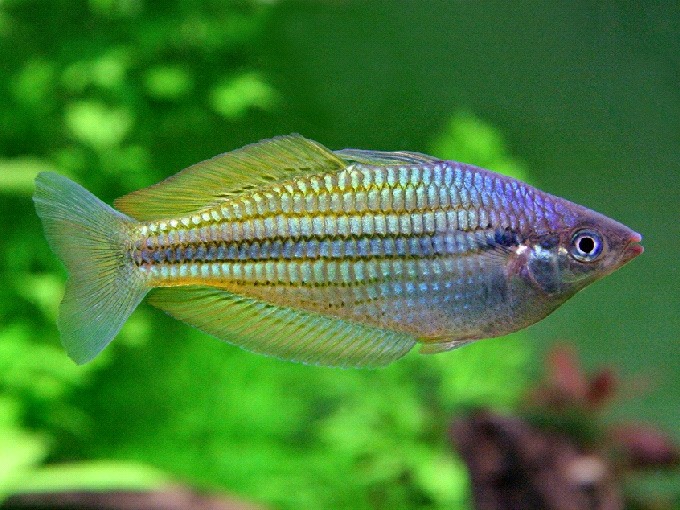
Melanotaenia sexlineata
Fly River Rainbowfish
Synonymy
- Nematocentris sexlineatus Munro, 1964
- Melanotaenia sexlineata Allen, 1980
Species Summary
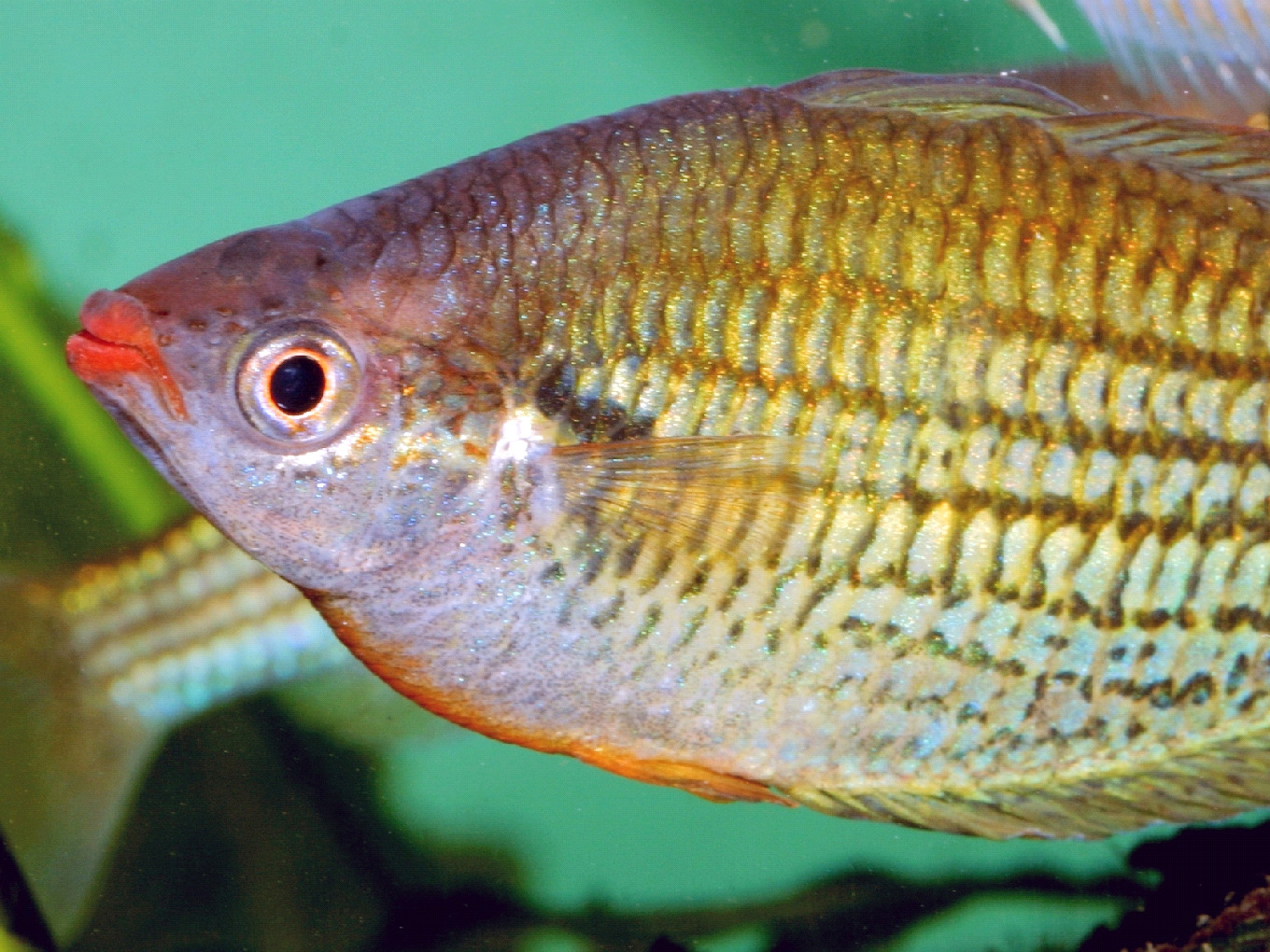
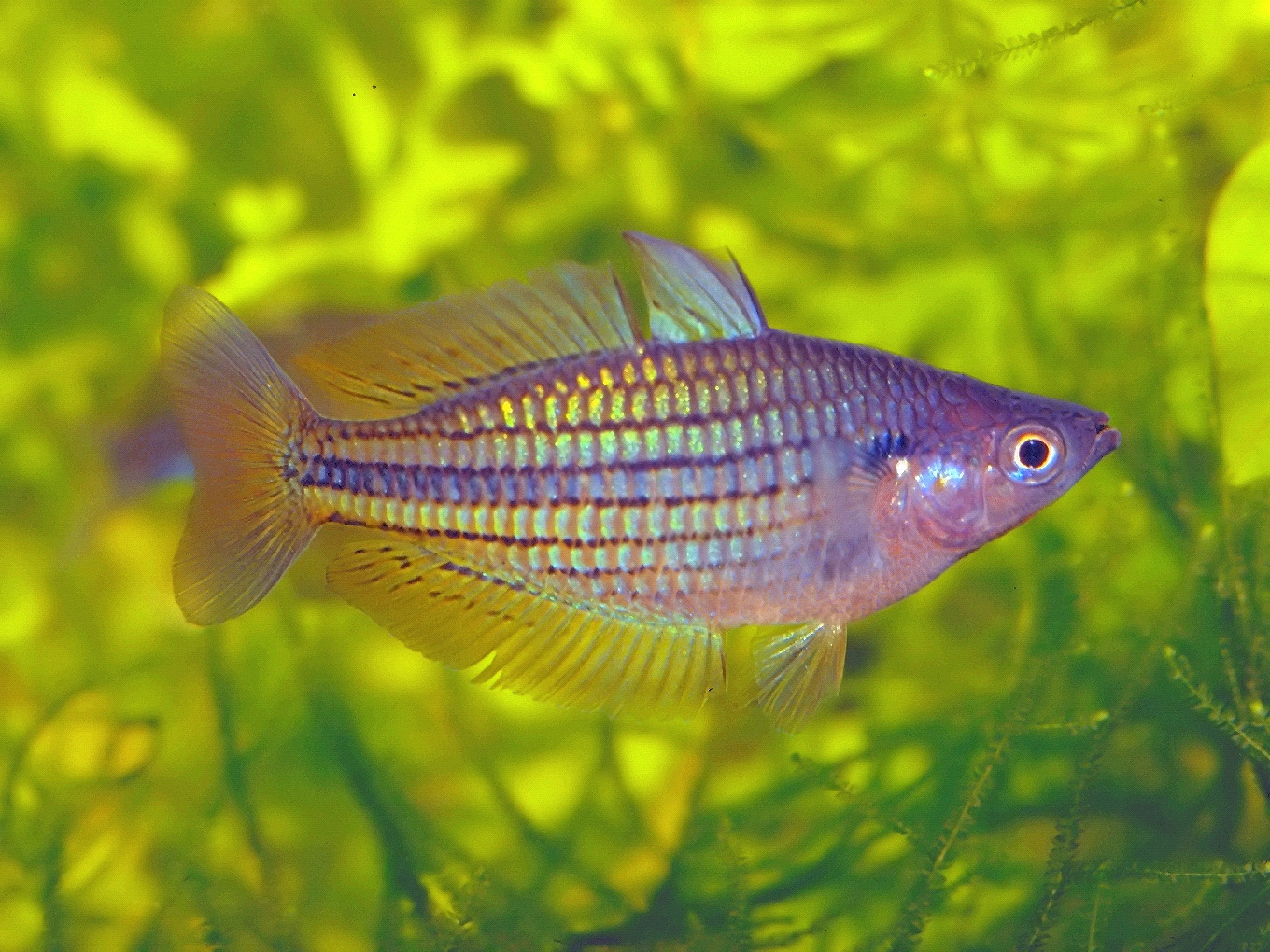
Melanotaenia sexlineata are a very attractive species. They have a lemon-greenish body colouration with 5-8 narrow black stripes, with a darker mid-lateral band. This species belongs to the “Maccullochi Species Group” of rainbowfishes. The main differences between this species and its nearest relatives, M. papuae, M. maccullochi, and M. ogilbyi are related to colour pattern. They have a deeper body than M. papuae or M. maccullochi and males often show red coloured lips giving the appearance that they are wearing lipstick. Females are a subdued version of the male with lesser-defined markings. There appears to be a number of different colour forms. Heiko Bleher collected a different colour variety with a blue coloured back and orange fins from the upper Fly River catchment, apparently somewhere along the Kiunga-Tabubil Road in 2003. In 2007, Mark Allen collected specimens with an iridescent turquoise and golden sheen. Melanotaenia sexlineata may reach a maximum size of 8 cm, but usually less than 7 cm SL.
Etymology
The species name sexlineata combines the Latin sex, six, and lineata, lined, referring to six well-defined longitudinal black stripes overlaying the junctions of the horizontal scale rows.
Etymology compiled from C. Scharpf (2022), “Fishes of Sahul: An Etymological Survey (Part 5), the rainbowfishes (continued)”, Fishes of Sahul 36(4): 1968–1992, and etyfish.org.
Distribution & Habitat
Melanotaenia sexlineata are presently only known from the Fly River and its tributaries. Most specimens have been collected from creeks immediately north of Kiunga along the Kiunga-Tabubil Road. The full extent of its distribution is unknown. They have been found in small, shallow tannic stained streams. Readings of pH 6.1–7.4 and 25°C have been reported from some collection sites.
In October-December 1975, Tyson R. Roberts in his fish survey of the Fly River in Papua New Guinea (Roberts, 1978) collected “M. sexlineata” from 2 locations:
(1) Small tributaries and mainstream upper Fly River 1-2 km upstream from mouth of Elevala River.
(2) Lake Herbert Hoover (Lake Bosset), Wam River (which drains Lake Herbert Hoover), and swampy lagoons along the main stream of the middle Fly River.
The eight specimens from (1) above, plus three additional ones comprise the type specimens (Munro, 1964). The seven additional specimens reported from Lake Bosset (2) were actually M. maccullochi. In addition, seven paratypes of M. sexlineata from the Port Moresby district were re-indentified as M. papuae.
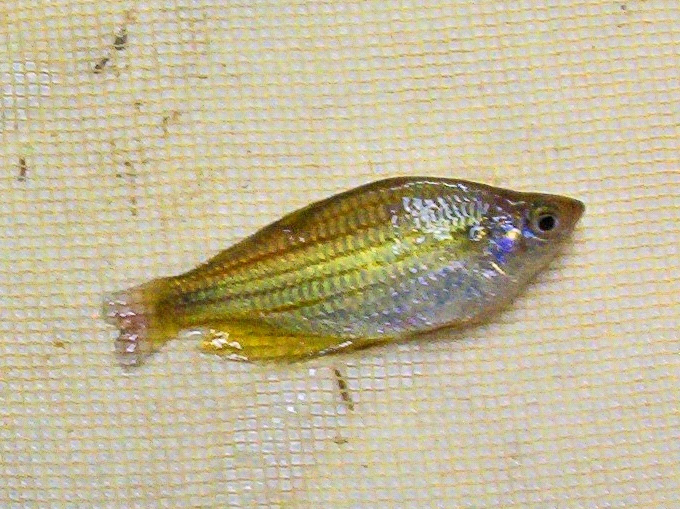
middle Fly River. Then in 2005, a fish survey by the Ok Tedi Mining Company collected them from 4 sites in the middle (2) and upper (2) Fly River.
Remarks
Melanotaenia sexlineata were initially discovered in 1937 by Stuart Campbell in an upper tributary of the Fly River, Papua New Guinea. However, they were not scientifically described until 1964 when Australian ichthyologist, Ian Munro named them Nematocentris sexlineatus. In a later review of the rainbowfish group (Allen, 1980) the name was changed to Melanotaenia sexlineata.
In October 1978, Gerald Allen and Brian Parkinson collected what they thought were M. sexlineata from a small creek at Mount Diamond, about 25 km west of Port Moresby. The stream consisted of a series of small disconnected pools only a few centimetres deep, due to the dry season. They collected about 30 specimens, which Allen found out later were actually M. papuae. They also collected more (M. papuae) in the Laloki River. These were initially distributed in the Australian hobby as Melanotaenia sexlineata. However, further research on these and newly collected specimens by Allen resulted in the recognition of the new species Melanotaenia papuae.
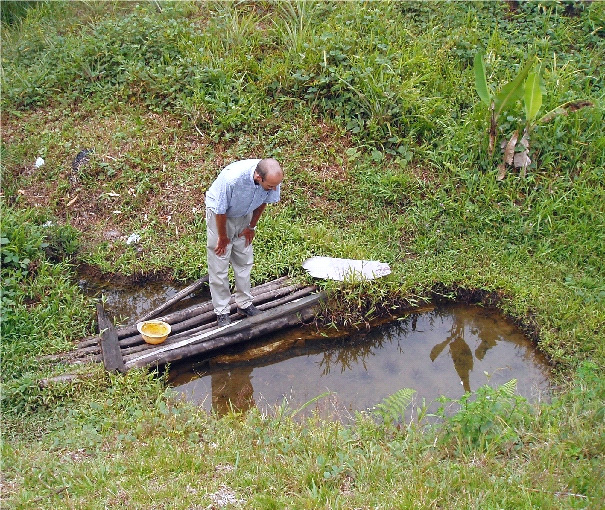
Then in 1982 Gerald Allen brought live specimens of M. sexlineata to Australia that he collected from the upper Fly River where they were subsequently bred and distributed in the Australian aquarium hobby. Heiko Bleher collected M. sexlineata in the early 1980s and took them to Europe. Since then there has been a number of live collections and M. sexlineata is relatively freely available in the aquarium hobby.
References
- Allen G.R. (1991) Field guide to the freshwater fishes of New Guinea. Christensen Research Institute, Madang, Papua New Guinea.
- Munro I.S.R. (1964) Additions to the fish fauna of New Guinea. Papua New Guinea Agricultural Journal 16(4): 141-186.