

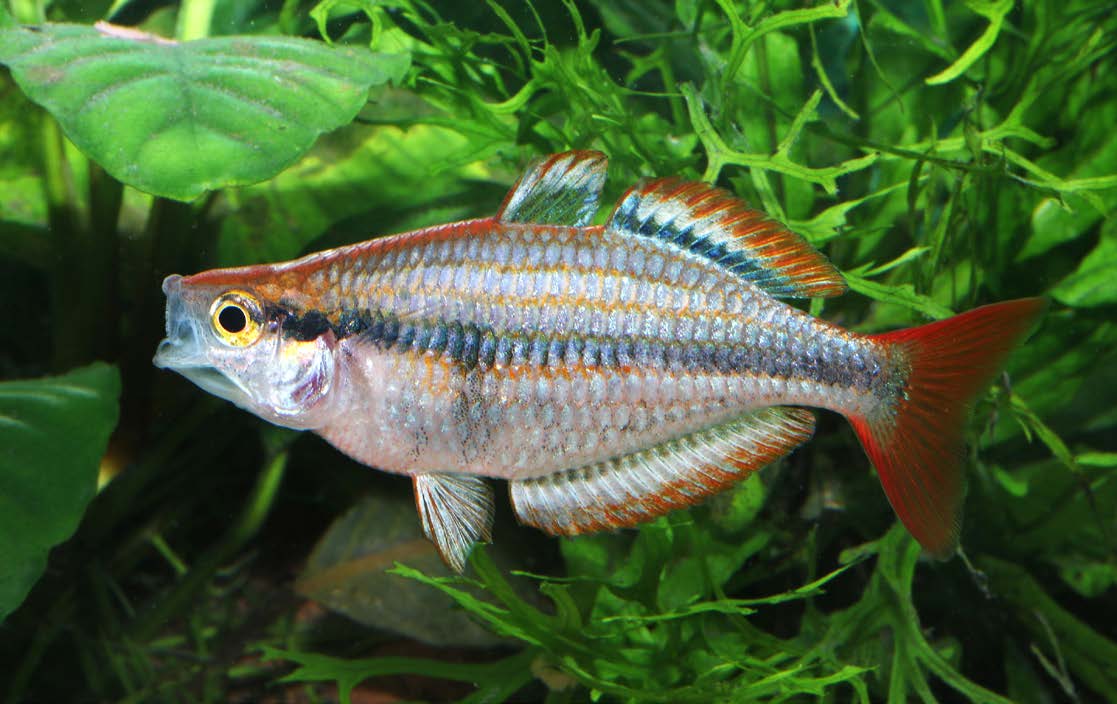
Melanotaenia mairasi
Lake Furnusu Rainbowfish
Species Summary
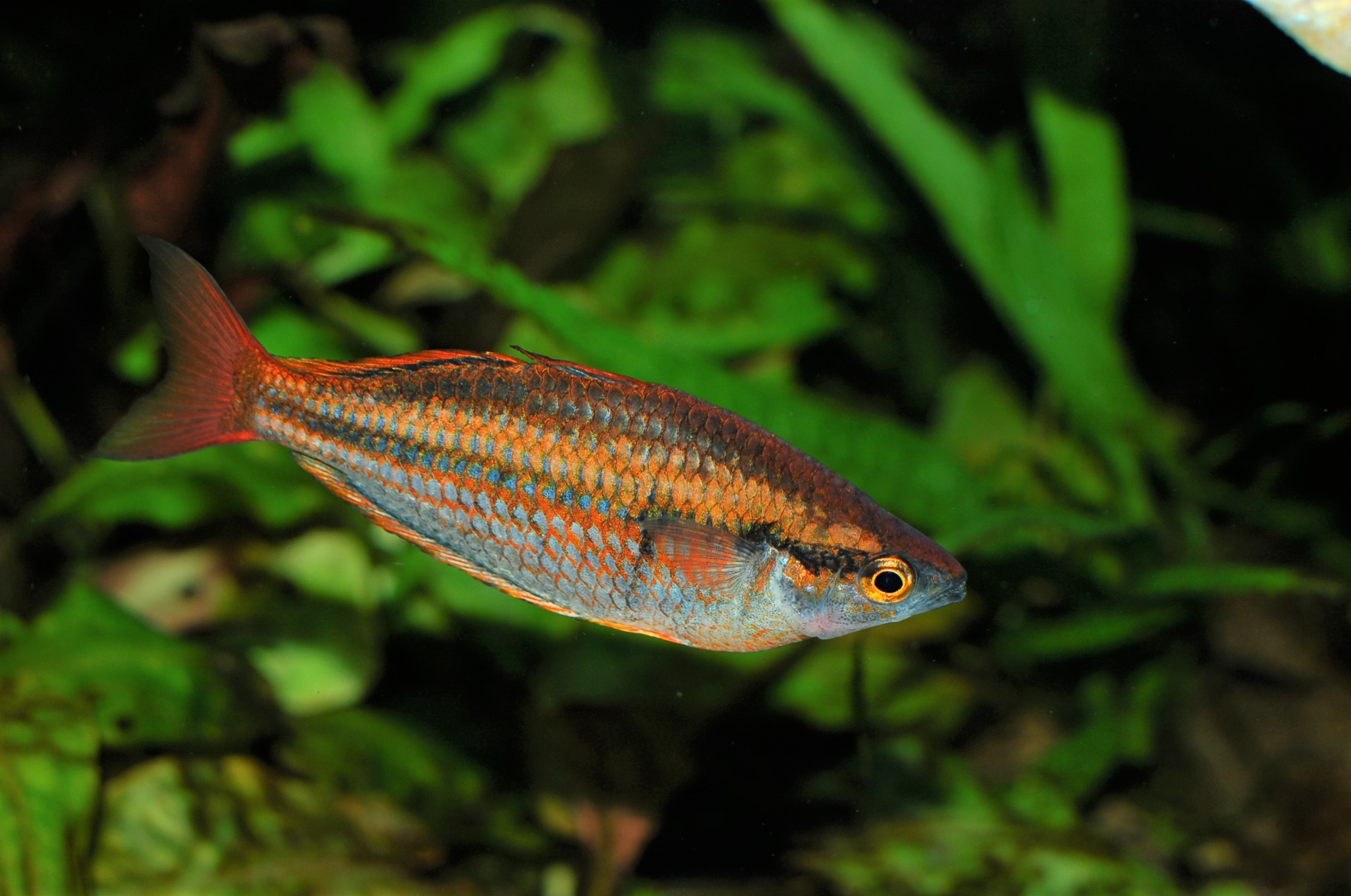
Melanotaenia mairasi was described on the basis of 22 specimens, 12.1-54.2 mm SL, collected in November 2010 at Lake Furnusu in the Bird's Neck region of Kaimana Regency, West Papua Province, Indonesia. It was previously thought to be closely related to M. ogilbyi from central-southern New Guinea (southeastern Papua Province, Indonesia), as the two species share similar meristic and morphological features as well as general colour patterns. However, more recent work has shown that M. mairasi form an own, very ancient lineage within Melanotaenia.
Etymology
The species name is the tribal name of the traditional landowners of the type locality, Lake Furnusu, West Papua, Indonesia, New Guinea.
Etymology compiled from C. Scharpf (2023), “Fishes of Sahul: An Etymological Survey (Part 6), the rainbowfishes (continued)”, Fishes of Sahul 37(1): 2006–2022, and etyfish.org.
Distribution & Habitat
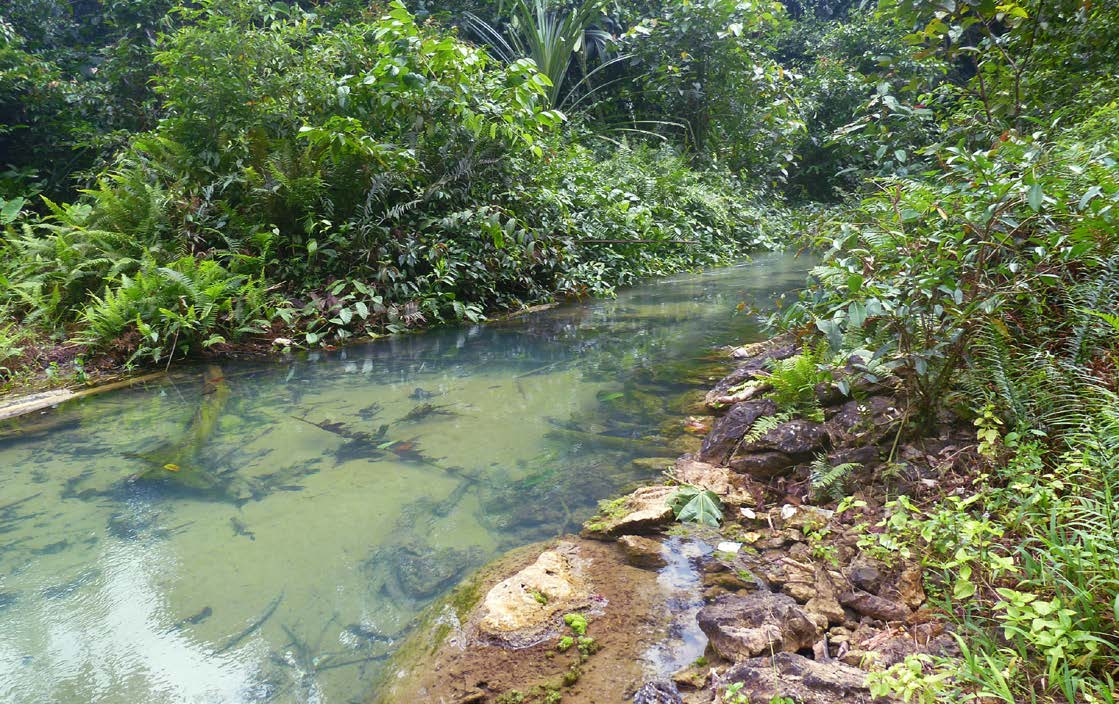
Melanotaenia mairasi is currently known only from the type locality, Lake Furnusu, which lies approximately 15 km northeast of Kaimana, West Papua Province. The lake is situated at an elevation of 15 m and is only about 1.5 km from the sea, but the two are separated from it by a steep ridge that rises to an altitude of about 500-550 m. The lake occupies a scenic basin that is approximately 5 km long and 1 to 2 km wide. It is completely surrounded by steep ridges without any connection to the nearby sea. Drainage appears to be subterranean, which is typical for other lakes in this
Remarks
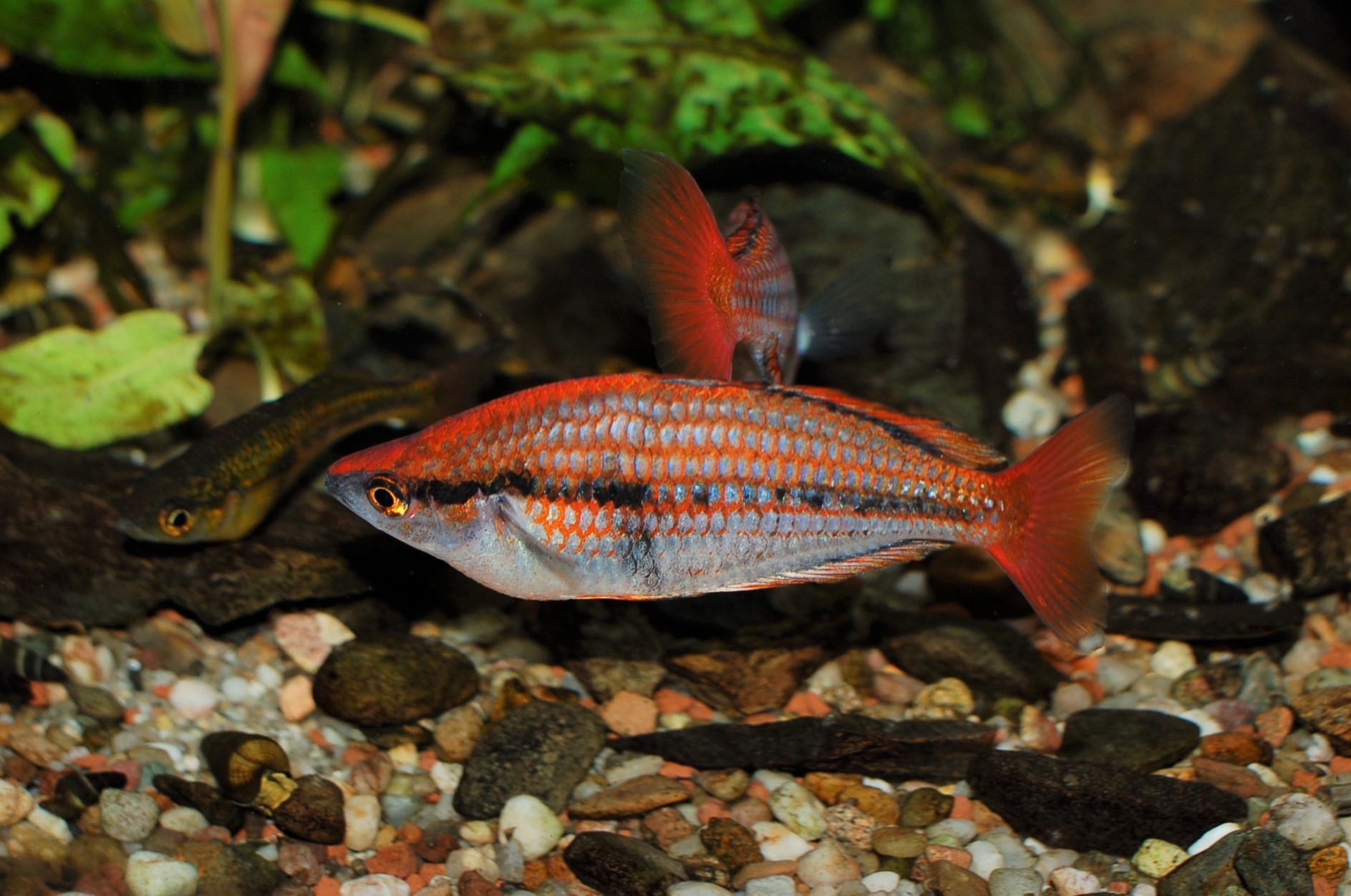
Based on the meristic analysis of the type specimen, Melanotaenia mairasi was originally believed to be closely related to Melanotaenia ogilbyi, whose nearest known population lies approximately 350 km southeast in the Timika region of Papua Province. Both species have similar meristic and morphometric features and similar colour patterns characterised by red stripes between the scale rows and a blackish midlateral stripe. However, there is a notable difference in the number of gill rakers on the lower limb of the first gill arch, 15-17 for M. mairasi and 10 or 11 for M. ogilbyi.
Melanotaenia mairasi have become available for the aquarium hobby in several countries, following a collection in 2019 by Graf, Heemskerk, Lange and Salossa. Mature males show notable differences to other rainbowfish, including a very striking pattern in dorsal and anal fins. Further genetic analysis has shown that M. mairasi do not belong to the “maccullochi”-group of species as originally thought, but effectively form an own, distinct and ancient lineage within Melanotaenia.
References
- Allen G.R. & R.K. Hadiaty (2011) A New Species of Rainbowfish (Melanotaeniidae) from western New Guinea (West Papua Province, Indonesia). Fishes of Sahul 25(1): 602-607.