
Melanotaenia fredericki
Sorong Rainbowfish
Synonymy
- Charisella fredericki Fowler, 1939
- Melanotaenia fredericki Allen, 1990
Species Summary
Melanotaenia fredericki was described in 1939 by Henry W. Fowler on the basis of very young specimens (22–28 mm) found in the vicinity of Sainkedoek, on the Vogelkop Peninsula. They were collected during the Denison-Crockett South Pacific Expedition in 1938 from a stream in the Samson River drainage.
Gerald Allen wasn’t certain whether M. fredericki represented a valid species. In his book “Rainbowfishes of Australia and New Guinea” in 1982, he treated Fowler’s Charisella fredericki, as it was originally named, as a synonym of Melanotaenia goldiei. However, in 1989, Gerald Allen participated in a conservation survey of the Bintuni Bay region, the large gulf that serves to isolate the Vogelkop Peninsula from the remainder of New Guinea. Although the work mainly involved brackish and marine fishes, he had the opportunity to make several freshwater collections there and also in the northeast and western region of the Vogelkop Peninsula. These collections resulted in the discovery of three new species, M. angfa, M. arfakensis and M. parva.
Etymology
The species is named in honour of physician Frederick E. Crockett (1907–1978), who, with his wife, anthropologist Charis Denison Crockett, organized the New Guinea expedition during which the holotype was collected. (Fowler originally placed this species in the genus Charisella, now a synonym of Melanotaenia, which he named in honour of Mrs. Crockett.)
Etymology compiled from C. Scharpf (2023), “Fishes of Sahul: An Etymological Survey (Part 6), the rainbowfishes (continued)”, Fishes of Sahul 37(1): 2006–2022, and etyfish.org.
Distribution & Habitat
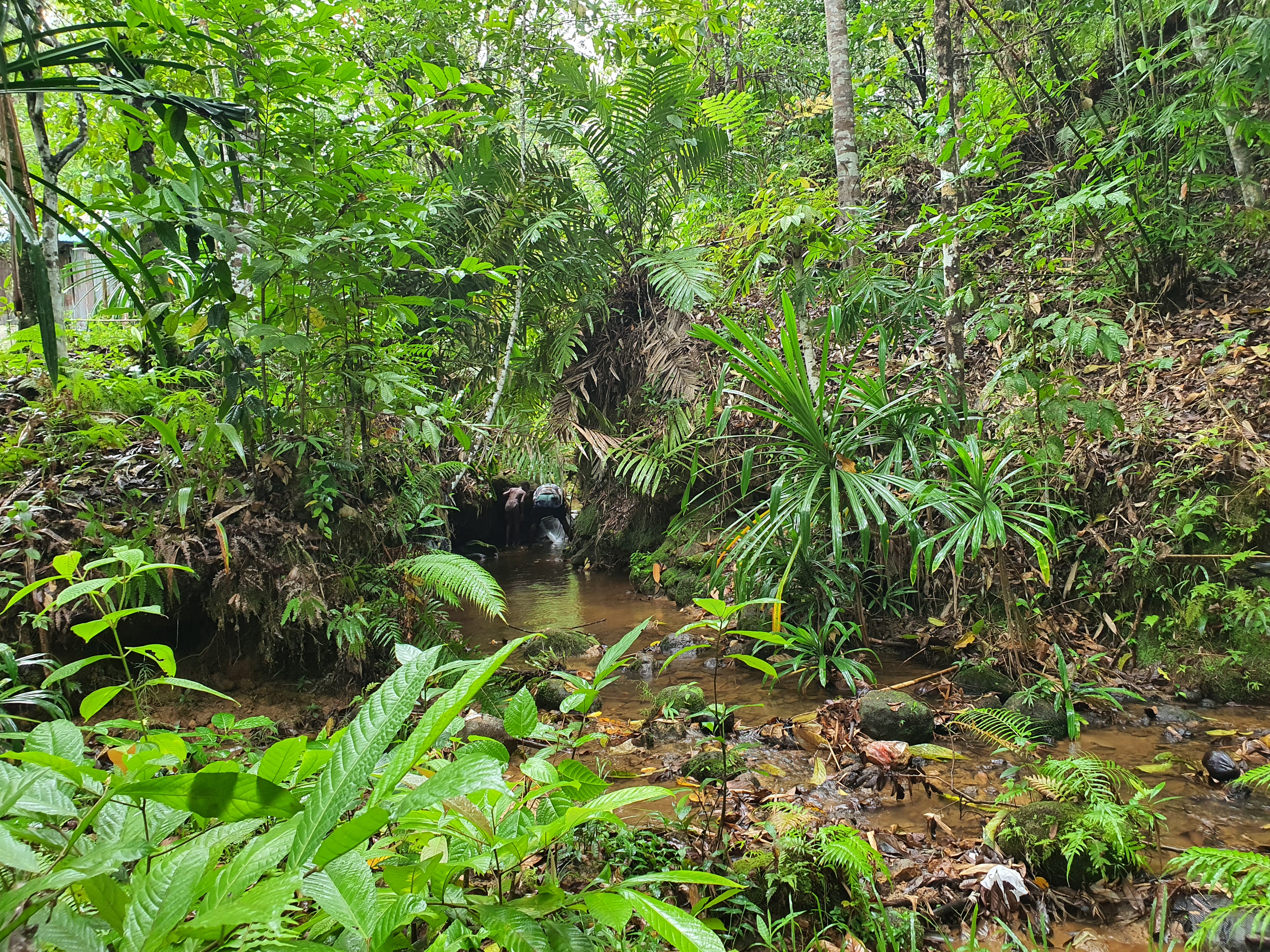
Melanotaenia fredericki have been found in the vicinity of Sorong at the western end of the Vogelkop Peninsula and Salawati Island. They have been collected from clear slowflowing streams in closed canopy rainforest — pH 6.5~7.5; Temperature 24~28°C. They are usually found around subsurface vegetation, submerged logs, or branches.
Remarks
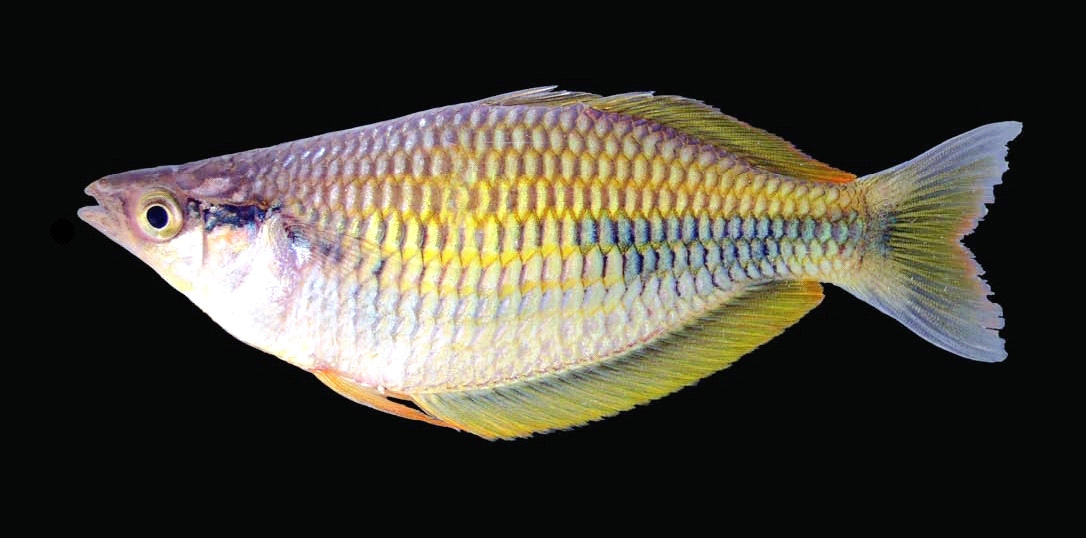
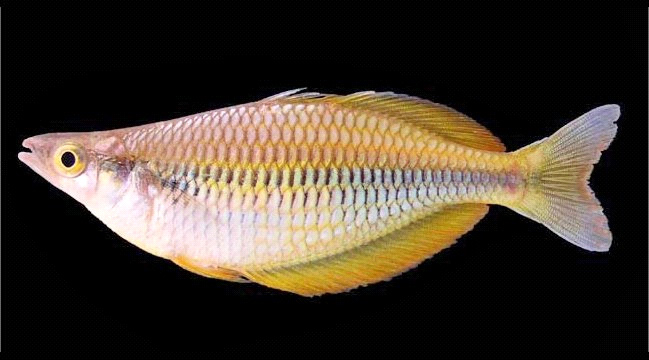
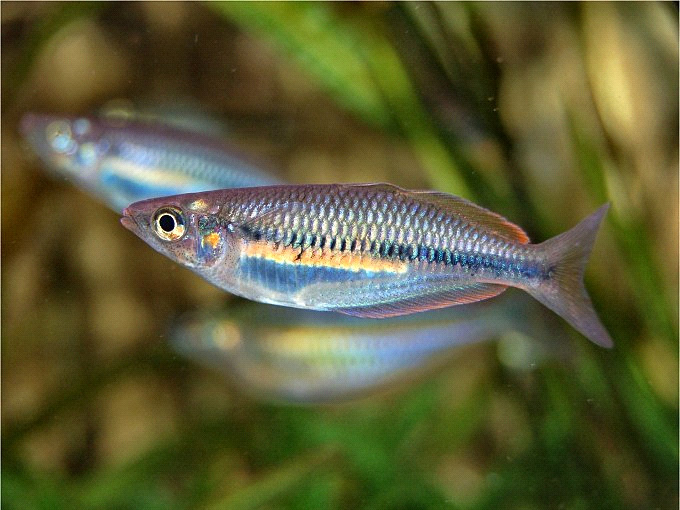
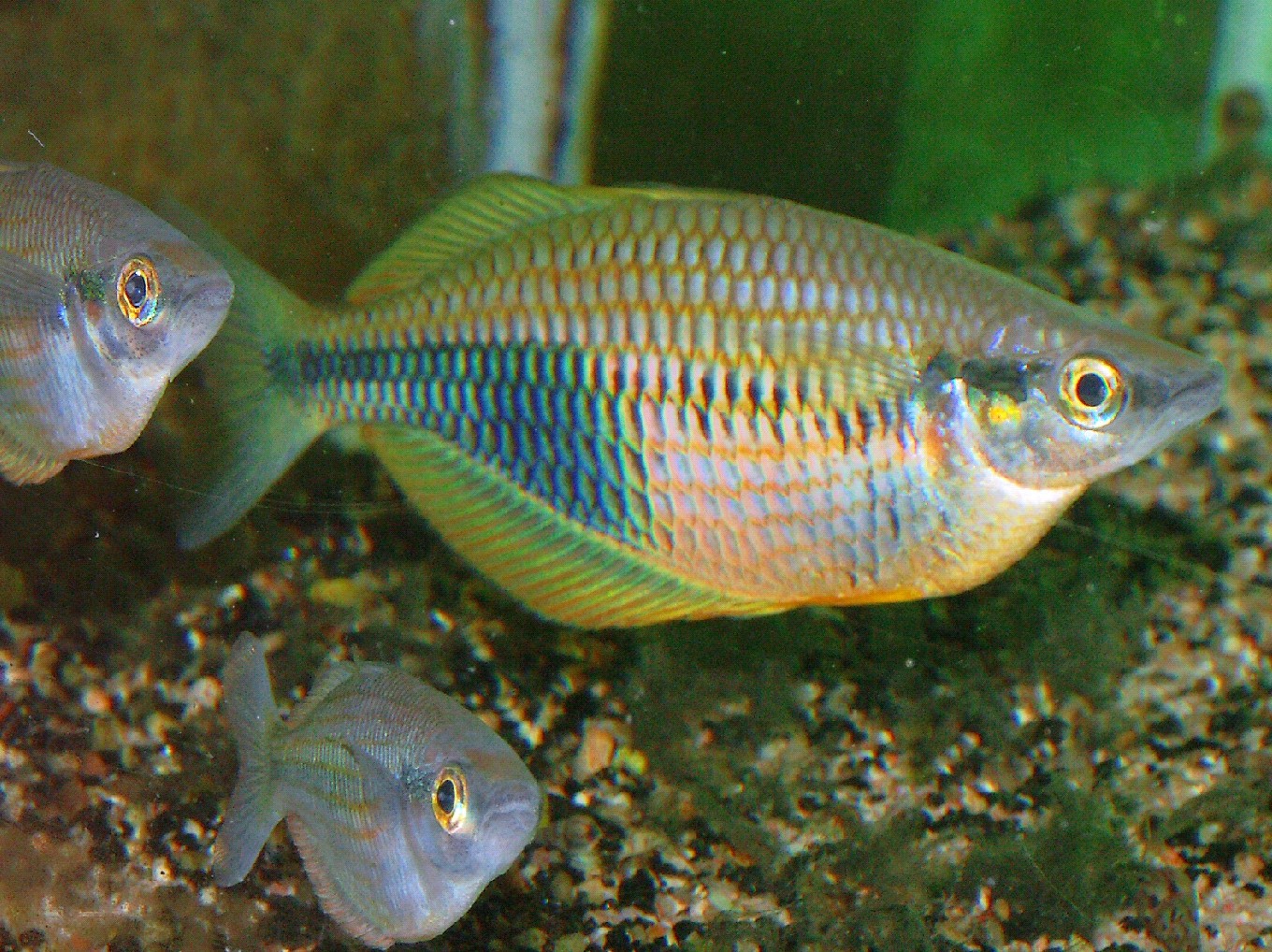
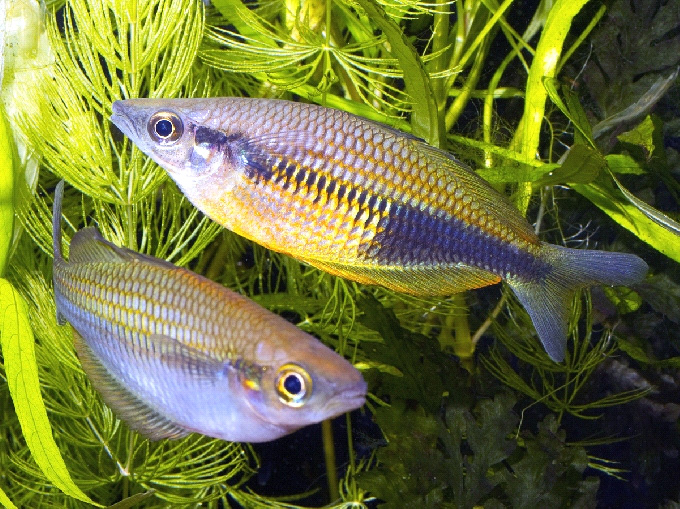
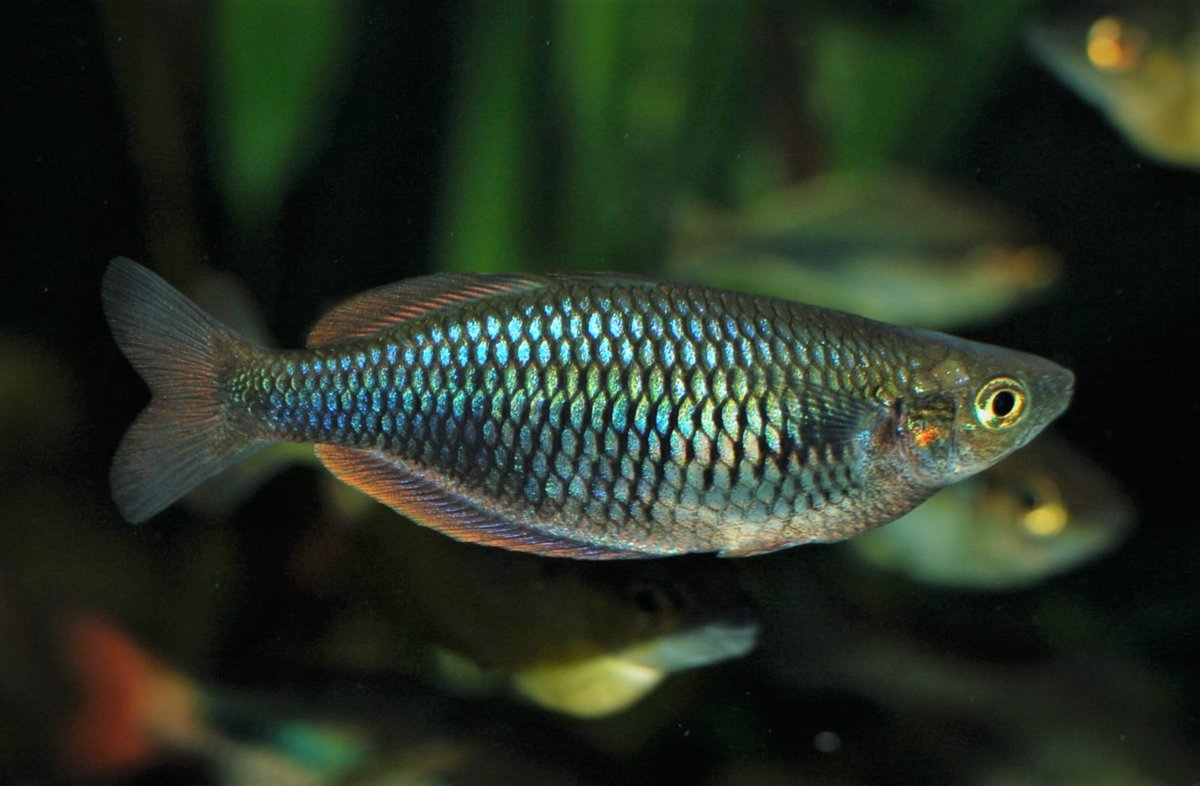
A number of live specimens were collected by Heiko Bleher in 1992 from a small unnamed creek about 35 km south of Sorong and distributed in the international aquarium hobby as Melanotaenia fredericki. This variety is still being maintained in the hobby today. In 2007, specimens believed to be Melanotaenia fredericki (see above images) were collected from the Samson River, about 25 km east of Sorong. Then in 2008 fish resembling this variety became available in the commercial aquarium trade from an unknown source in Indonesia. The origin of this form is unknown.
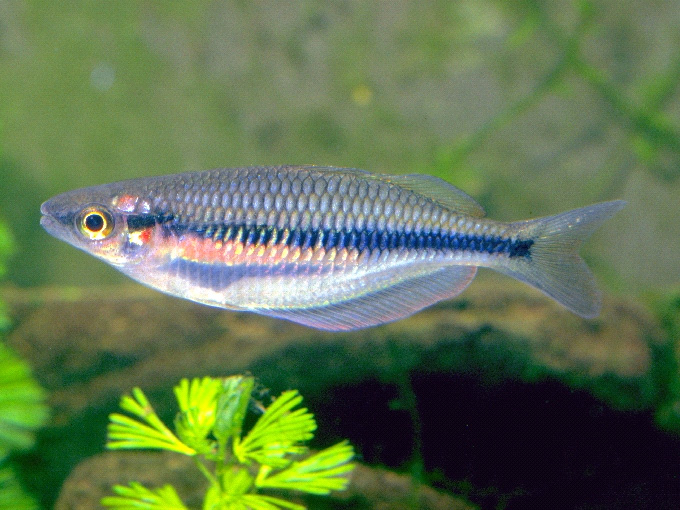
There is some doubt however, as to whether the specimens collected by Heiko Bleher near Sorong, and the Samson River forms are the same species. They look very much like Melanotaenia misoolensis—see photo comparisons on the corresponding page.
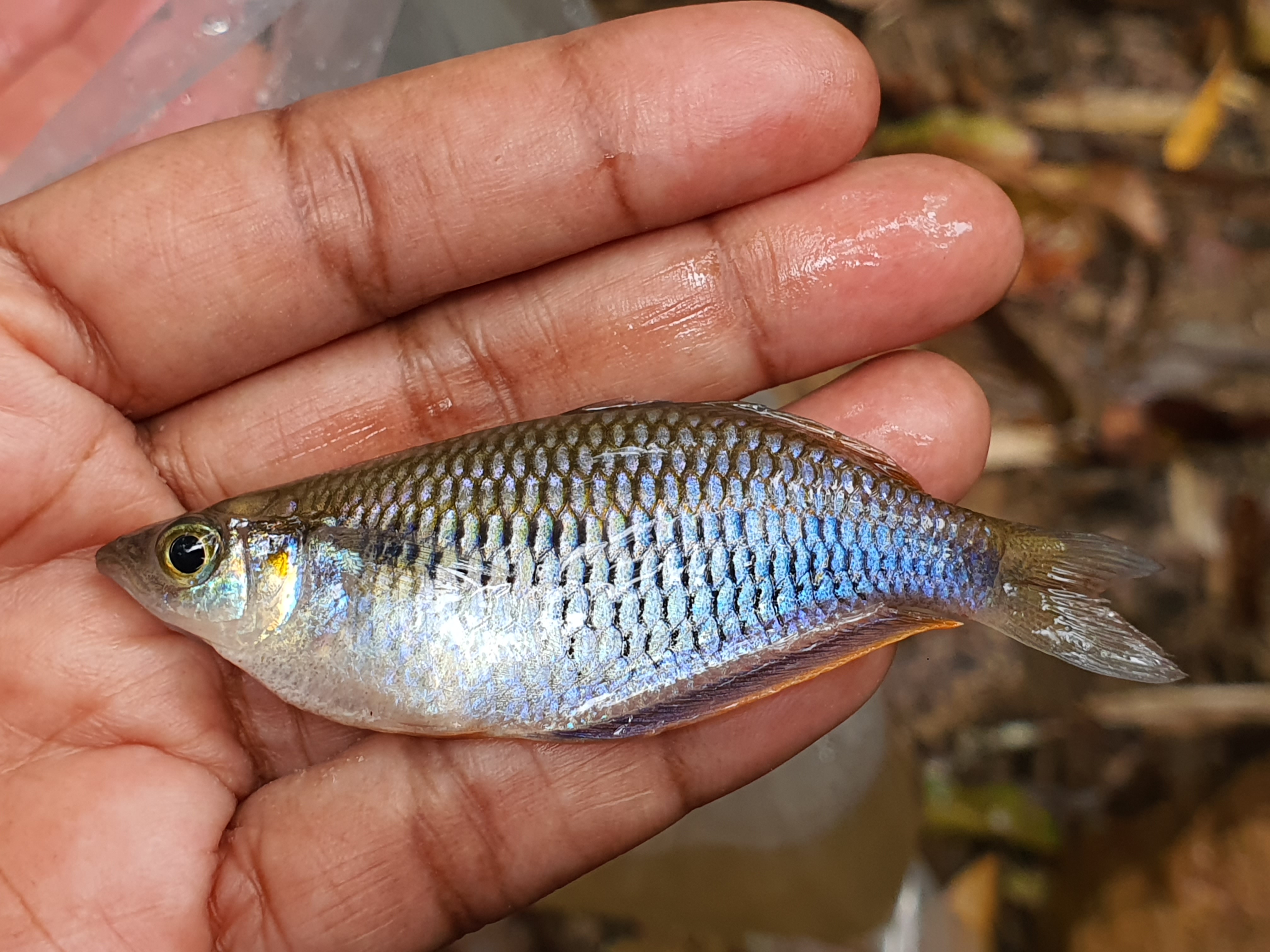
In 2019 a possible new variant of M. fredericki was caught by Graf, Heemskerk, Lange and Salossa in the former village of Worot, which is now a part of Sorong. This variant was caught again and successfully exported to Europe by Graf, Heemskerk and Mailliet in 2023. Adult fish are metallic blue with pinkish fins, and only occur in a very small stream named Kali Klademak, which flows between houses and gardens.
References
- Allen G.R. (1991) Field guide to the freshwater fishes of New Guinea. Christensen Research Institute, Madang, Papua New Guinea.
- Fowler H.W. (1939) Zoological results of the Denison-Crockett South Pacific Expedition for the Academy of Natural Sciences of Philadelphia, 1937-1938. Part III.--The fishes.