
Aquatic Plants
Planted aquariums are often referred to as “natural” aquaria. However, the “natural” aquarium is an unattainable ideal. It implies an aquarium in which all the inhabitants are interdependent on each other, as they are in a natural stretch of water, and it takes very little thought to understand that this result could not be achieved in an aquarium. Strictly speaking a natural aquarium would be one where we would not have to feed the fish, change water, learn water chemistry, provide lighting or any of the other things we have to do to maintain an aquarium successfully. No matter how much we may wish it, regrettably, there is no such thing as a natural aquarium. Keeping rainbowfishes in an aquarium cannot, even under the best conditions, be anything equal to their life in the wild. At best, an aquarium is an artificially controlled environment that is suitable for maintaining fishes, plants, and other aquatic life forms for an extended period of time.
In a loose sense, however, a “balanced” aquarium is attainable, by not overcrowding the fish, by stocking with plenty of plants, and in a way we are imitating Nature, even if we have to help her by feeding the fish, trimming the plants, and removing from time to time much of the sediment that collects on the bottom. A state of balance would occur if everything (food, lighting, fertiliser, etc.) that we supply the aquarium is taken up by the fishes, aquatic plants, algae and other life forms to the same degree as they are being supplied.
Many hobbyists are disturbed by the presence of algae and do their best to try and remove it. Perhaps this should be taken as evidence that a ‘state of balance’ is occurring. Maybe not the particular state of balance that you desire, but it is a biological balance all the same. However, the truth is that no matter how biologically balanced your aquarium is, over time water quality will deteriorate and must be changed on a regular timetable.
Australian & New Guinea Aquatic Plants
Many waterplants are unique to Australia, although some are also found elsewhere in the world, with the Australian populations representing local varieties rather than distinct species. However, the aquatic flora of Australia is not dissimilar to that found in most other tropical or subtropical regions of the world. Although some endemic species are found, most species are cosmopolitan. This relatively low degree of endemism and diversity in aquatic flora is probably because of the cosmopolitan nature of many aquatic plant species. A mixture of distance dispersal, barriers and local speciation, can explain the development of Australian aquatic flora. Climate is obviously the most significant barrier. However, very few comprehensive aquatic flora surveys have been conducted within Australian freshwaters.
The aquatic flora of New Guinea has not been studied to any significant degree neither. Many of the river mainstreams are turbid, which precludes the establishment of submerged aquatic macrophytes. The number of species is probably less than 200. However, species-level treatments exist for only a small portion of the flora. The vegetation of New Guinea is more closely allied to the flora of western Asia than to that of the Australian continent. For this reason it has been termed “Malesian”, part Asian and part Melanesian.
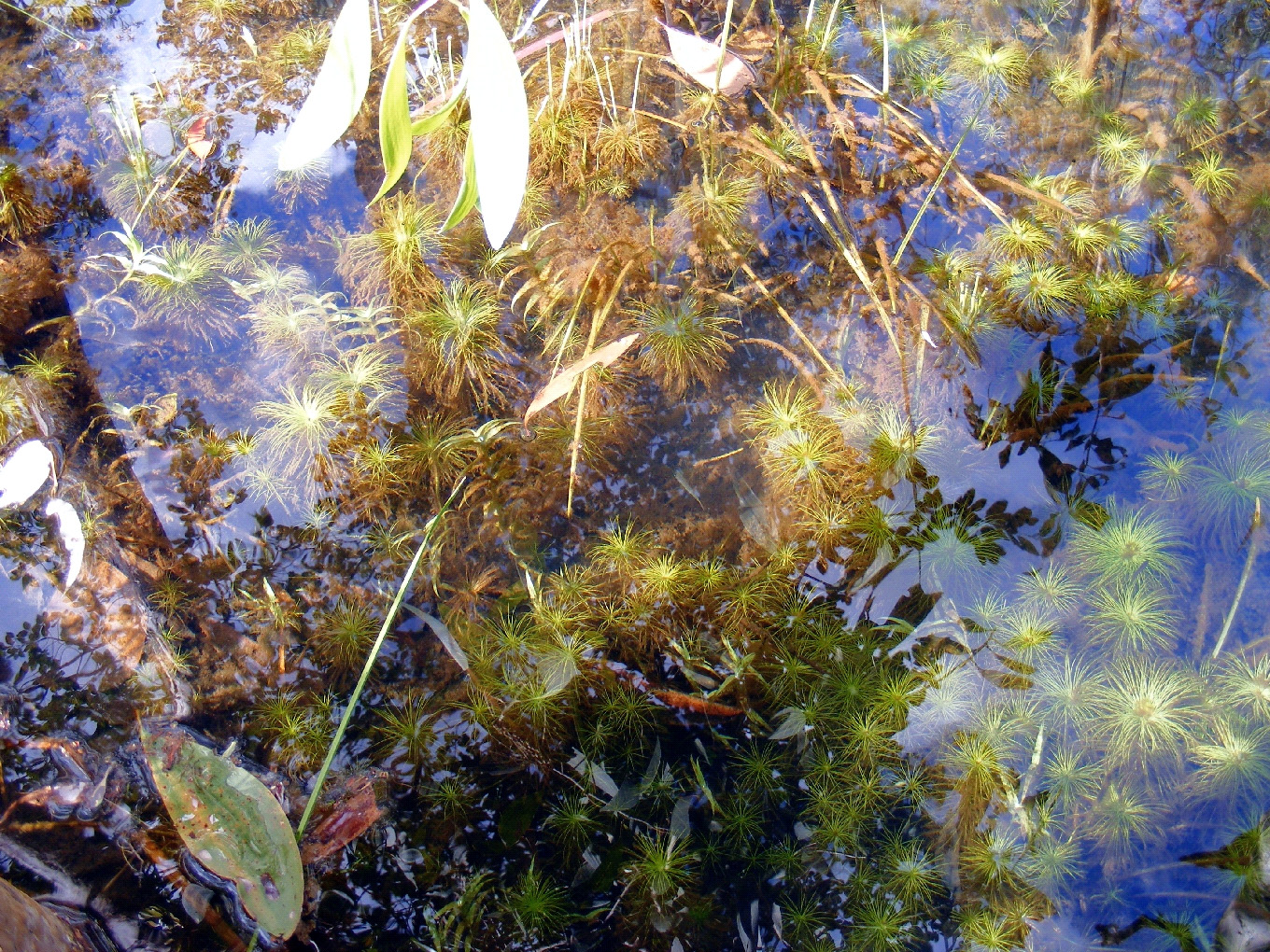
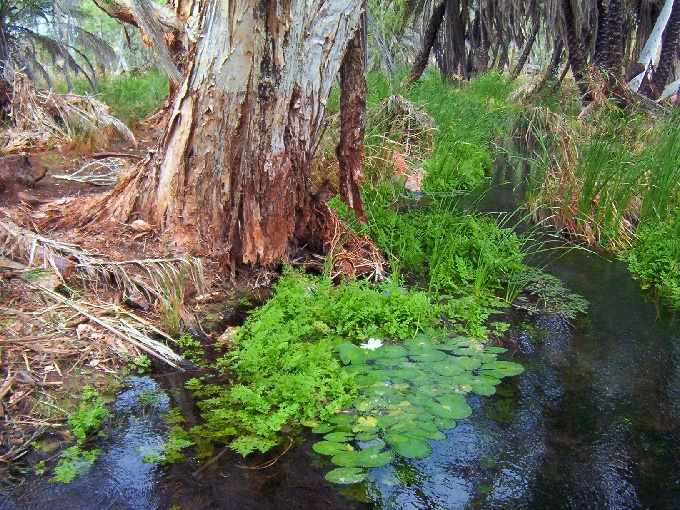
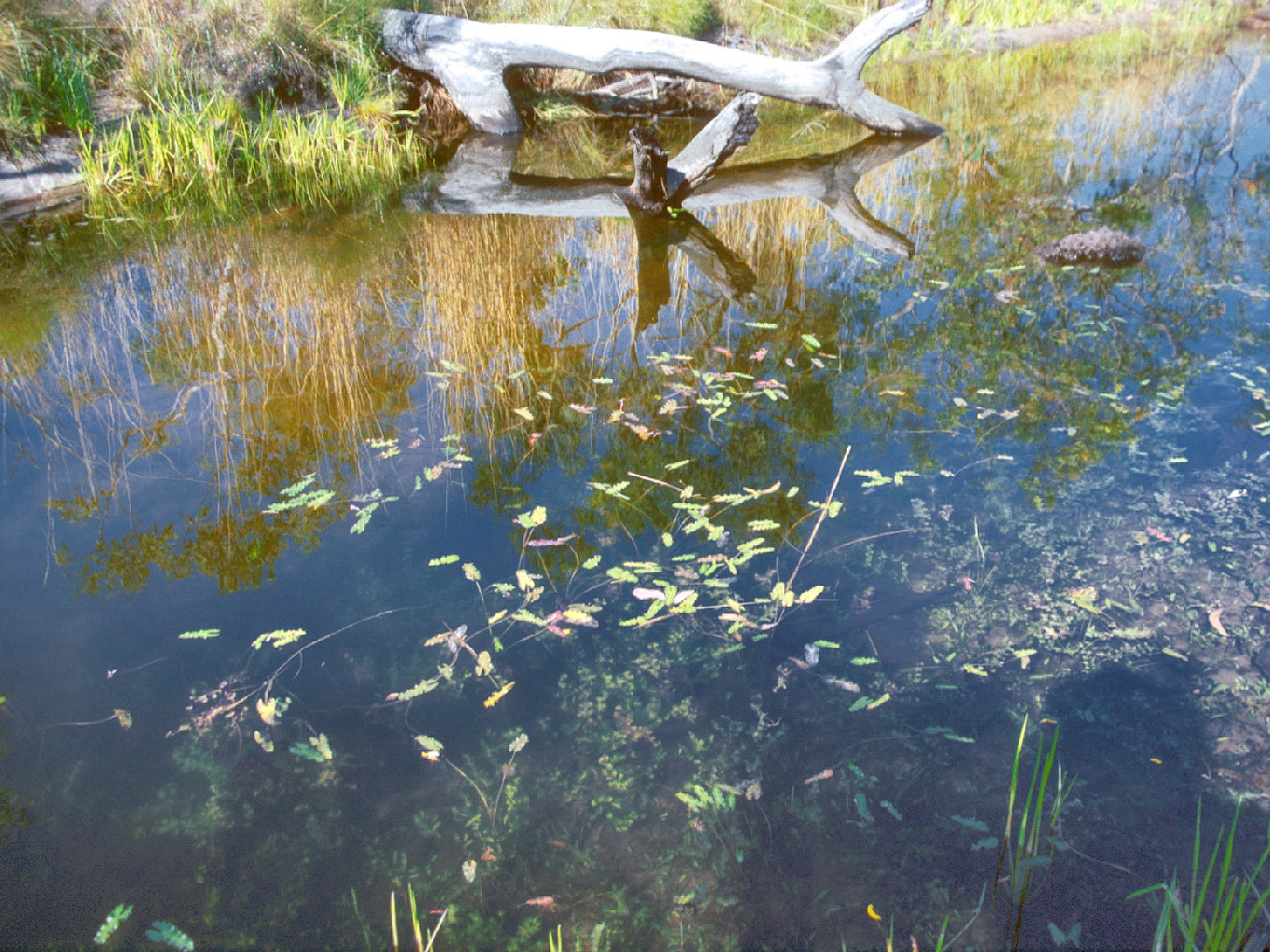
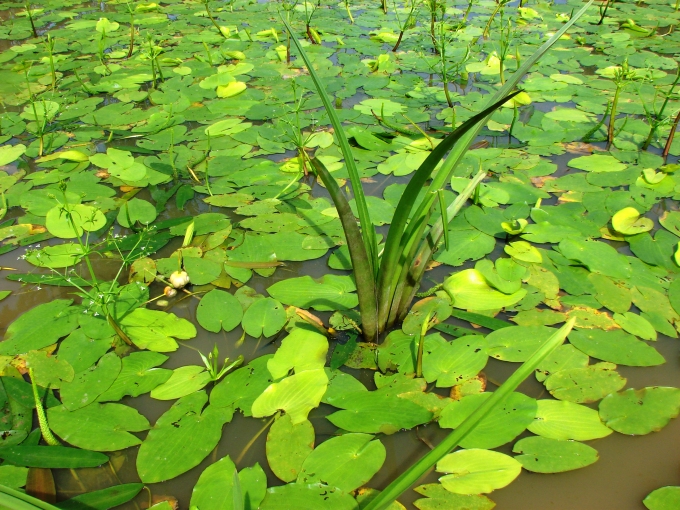
Authors inevitably differ in their concept of which species should be included in a taxonomic treatment of aquatic plants. Each has their own definition for the term “aquatic”. Virtually all authors recognise those plants with a submersed or floating growth habit as aquatic. Most also apply the term to the common emergent species. The definition is harder to apply consistently for (a) plants growing in marginal zones of wetlands, e.g., floodplains, swamps, streambanks, etc., and (b) plants displaying a wide-ranging ecological amplitude which enables them to grow in either wet or dry situations. Whether a plant is to be designated as aquatic or not is thus based upon the plants’ growth habit and the types of habitats in which it is found. How much weight is assigned to either of these criteria is a subjective decision which largely accounts for differences in the taxa treated by various aquatic plant manuals.
Algal and aquatic moss commonly comprise Charophyta (stoneworts) and Chlorophyta (green algae) which forms macroscopic mats either attached to plants or in open water. Floating vascular/leaved plants have part or all of the leaves at the waters surface. Examples include Azolla, Lemna, Spirodela and Wolffia and the genus Utricularia. Members from the family Potamogetonaceae (pondweeds) are also common floating plants and can be found in a variety of habitats. Rooted vascular plants are those rooted in the sediments with either a major proportion of material above water (reeds, rushes and sedges) or totally under water. Typical genera include Baumea, Bolboschoenus, Carex, Cyperus, Gahnia, Schoenus, Juncus, Triglochin, Blyxa, Myriophyllum and Vallisneria.
Floating and floating-leaved plants occur in permanent waters in most coastal rivers and wetlands across Australia. Typical northern assemblages include Nelumbo nucifera, Nymphaea gigantea, Nymphoides indica, Ottelia ovalifolia, Azolla, Ludwigia, Marsilea and Pseudoraphis species. These may be found in the river channels and pools in the tropical coastal plain. On the floodplains of the Northern Territory and the Kimberly, such assemblages may be fringed by Melaleuca swamp forests.
In coastal floodplain systems, species include Azolla filiculoides, Nymphaea gigantea, Potamogeton tricarinatus, Ottelia ovalifolia, Nymphoides indica and Lemna species. In wetland landscapes, species include Potamogeton tricarinatus, Azolla pinnata, A. filiculoides, Ottelia ovalifolia, Lemna trisulca and L. disperma. In south-western Australia, Najas marina, Myriophyllum propinquum, Lemna disperma, Azolla filiculoides, Spirodela oligorrhiza, Potamogeton tricarinatus, P. pectinatus, Nitella congesta, Chara baueri, and Ottelia ovalifolia dominate.
Floating and floating-leaved communities are associated with the inland Murray–Darling river system and include Azolla filiculoides, A. pinnata, Potamogeton tricarinatus, Spirodela oligorrhiza and Lemna disperma. While the water level maintaining such communities usually remains between one and two metres in depth, it may dry out completely for periods.
Coongie Lakes supports floating plants of Ludwigia peploides, Azolla filiculoides or Lemna disperma, while Goyder Lagoon supports a system dominated by Polygonum spp.; these plants may be entirely dependent on groundwater. The same holds for the Marsilea species in the river pools of the Pilbara.
Most of the above wetlands are fringed by submerged and emergent herblands in shallower waters. In northern Australia, species include Triglochin procera, Caldesia oligococca, Limnophila brownii, Ludwigia adscendens, Ceratophyllum demersum, Monochoria cyanea, Vallisneria nana, Utricularia, Myriophyllum, Eriocaulon and Chara species. Species associated with such communities on the east coast of Australia include Ludwigia peploides, Najas marina, Vallisneria australis, Triglochin procera, Myriophyllum propinquum, Potamogeton crispus, P. ochreatus, Nitella and Utricularia species.
In south-western Australia, communities including Halosarcia halocnemoides, Sarcocornia quinquefolia, Wilsonia humilis, Triglochin procera, Lepilaena preissii, Najas marina, Ruppia maritima, Potamogeton pectinatus, P. ochreatus, Villarsia albiflora, Persicaria decipiens, Chara baueri and Nitella species occur in coastal sand dune swamps and on the fringes of lakes. Equivalent emergent and submerged herblands exists in coastal and highland Tasmania, in the extreme southeast of South Australia, and on the tablelands of south-eastern Australia.
The genus Aponogeton is a group of freshwater aquatic plants occurring in Australia and New Guinea. Aponogeton are popular aquarium plants and for many years they were collected from the wild. However, conservation measures introduced by Australian Governments now restrict this practice. Members of the Aponogeton genus listed as threatened species include A. bullosus, A. prolifer, A. cuneatus, A. queenslandicus and A. elongatus subsp. elongatus.
Many specimens of Aponogeton from northern Australia were originally assigned to A. elongatus, but are now assigned to A. euryspermus, A. vanbruggenii or A. tofus. These species initially produce submerged leaves in flowing or clear water but later in the year plants often develop floating leaves. Species in this group can be separated by their seed shape and size; A. euryspermus has large broad seeds that can become very thick when mature, A. tofus has narrower almost cylindrical seeds, while A. vanbruggenii has even narrower seeds with a distinct knob at one end. All have seeds with an outer testa that is easily removed (thick in A. euryspermus and A. tofus – thin in A. vanbruggenii). All species are confined to the tropics with A. euryspermus more westerly in its distribution, A. vanbruggenii more easterly and A. tofus growing between the two but overlapping with A. vanbruggenii. Aponogeton tofus is closely related to A. euryspermus (as it had been previously identified); however, it is distinct and quite divergent at the molecular level from that and other species.
The genus Limnophila commonly known as Ambulia, has given the aquarium hobby some beautiful and well-known aquarium plants. Limnophila is a genus of aquatic or semiaquatic plants that are found in Australia and New Guinea.
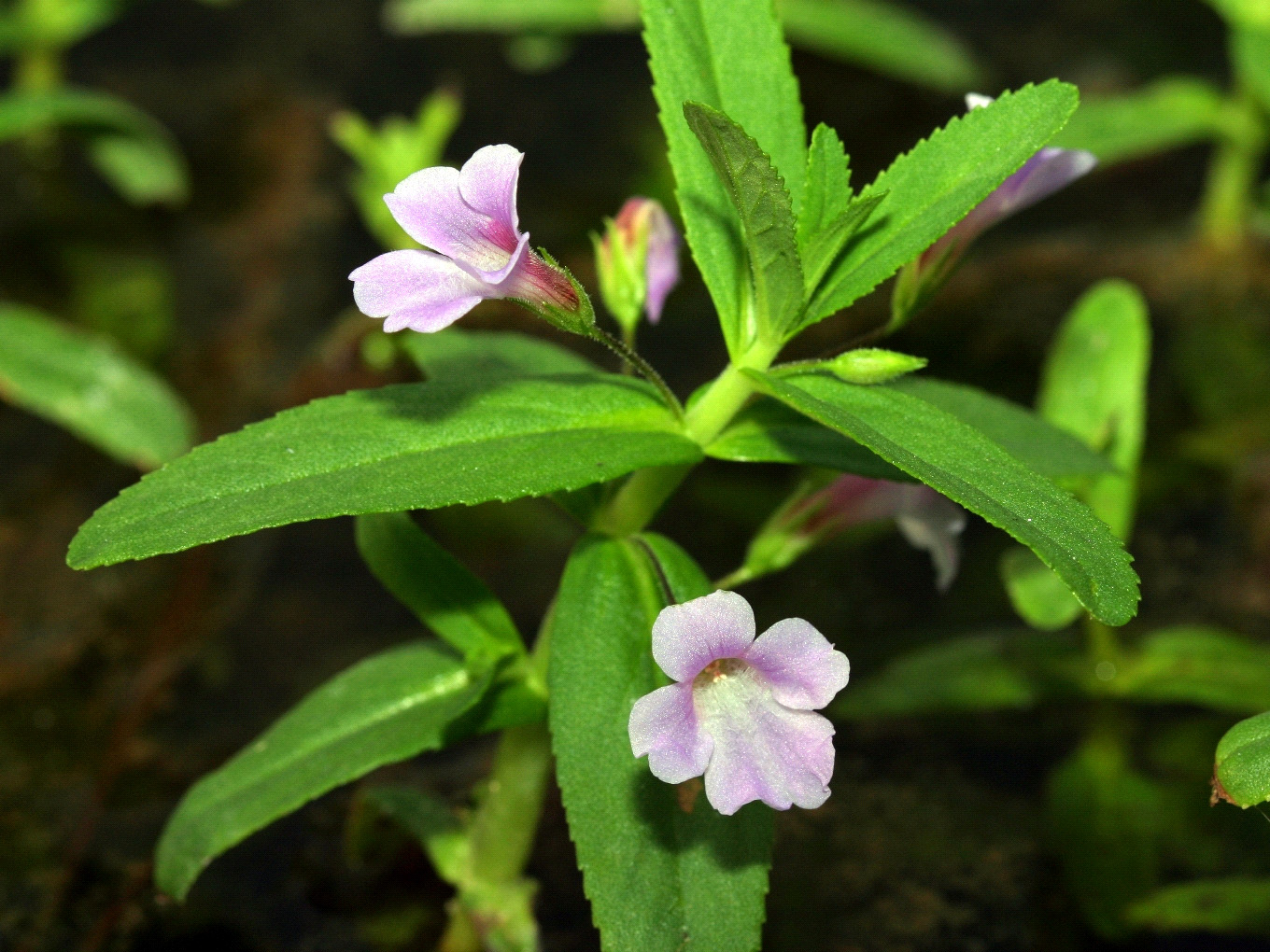
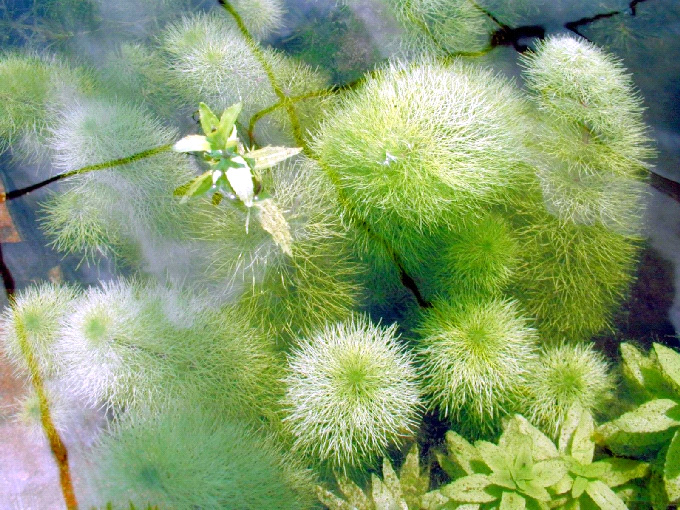
In Australia five Limnophila species are currently recognised: L. aromatica, L. australis, L. brownii, L. chinensis and L. fragrans. Reports of L. indica found growing naturally in Australia are L. brownii.
The genus Myriophyllum contains species of hardy and adaptable plants for both temperate or tropical aquariums and watergardens. They are amongst the best submerged aquatic plants for a pond where rainbowfishes are kept. With their finely divided foliage in dense swirling masses, they provide the perfect place for rainbowfishes to deposit their spawn and for the fry to start their early life. Species more suited to somewhat shallower waters includes M. papillosum, M. simulans and M. verrucosum. Other water milfoils remain mostly submerged at all times.
Potamogeton is a genus that is strictly aquatic, and is rooted in the substrate with either floating (P. tricarinatus) or submerged leaves. They produce flowers just above water level and a number have floating foliage for some part of the year. This is a small but cosmopolitan family, found almost anywhere permanent, still or flowing, fresh or slightly brackish waterbodies are found. Similarly, in Australia they can be found anywhere there is suitable habitat, including the arid inland.
Rotala species are typically found in damp soil adjacent to water and occasionally in shallow water. It is assumed that they germinate in response to inundation and reach maturity after water has receded. Six species have been recorded in Australia: R. diandra, R. mexicana, R. occultiflora, R. rosea, R. rotundifolia (naturalised) and R. tripartita.
The taxonomy of Vallisneria in the past has been confusing and inconclusive with numerous species being described and these names (often incorrectly) have been widely used in the aquarium hobby. The genus Vallisneria was reviewed in 1997 (Jacobs & Frank) with the addition of new species and some clarification of existing names. Recent phylogenetic analyses (Les et al. 2008) of Vallisneria material collected throughout Australia, Asia and North America has revealed considerably higher diversity in Vallisneria (11–13 species) than previously described with the addition of two new species and the transfer of Maidenia rubra to Vallisneria.
These studies have identified Australia as the centre of diversity for this genus. It is speculated that Vallisneria species were once considerably more abundant than is the case today. The depauperate riverine flora within the regulated inland rivers of south-eastern Australia suggests that their preferred habitat has suffered greatly from altered flow and water quality.
Confusion over names and identifications has been mainly resolved by detailed examination of specimens collected throughout Australia. Vallisneria nana was formally separated from V. americana. Vallisneria nana has over the years been described as V. spiralis and both V. nana and V. annua have been previously described as V. gracilis. Both V. nana and V. annua have basal leaves and tufted shoots. Vallisneria nana is usually perennial and from perennial habitats, whereas V. annua is mostly an annual from ephemeral habitats. Female shoots of V. nana only flower when several years old and have fewer flowers per plant. Vallisneria annua produces many flowers per shoot (>12) when the plant is still small and young. Reliable identification however, is only possible by examining floral structures. The two species also have distinct leaf characteristics.
Vallisneria caulescens and V. triptera are two closely related species from northern Australia that grow as stem plants, with leaves arranged alternately along the stems, rather than as compact, basal rosettes. Both are more closely related to other Vallisneria species than to species in any other genus. The only exclusive character they share within Vallisneria is the cauline leaf arrangement, a character also shared by the florally distinct Maidenia (Vallisneria) rubra (stamen 1, 3-locular) and Nechamandra (female flowers sessile with a long delicate hypanthium).
Marsilea species are semi-aquatic fern allies with distinctive fronds shaped like clover leaves, which may be emergent or floating during inundation. At least seven species are known in Australia. They are mainly distinguished from each other by their reproductive structures, which are called sporocarps and are located towards the base of the fronds. One species, Marsilea latzii, is moderately salt tolerant and is rare. Many of the species readily grow in highly temporary water bodies such as very small clay depressions; however, Marsilea mutica may favour longer term and more frequently inundated wetlands. Standing water is probably required for the spores of all species to germinate, and many or all species thrive in shallow water for extended periods of many months.
Isoëtes muelleri is a fern-like plant that is semi-aquatic or amphibious but has more of the appearance of a grass. It may not require free water to complete its life cycle. Hygrophila species occur in tropical regions in Australia and New Guinea. They are common on floodplains, swamps and waterholes with apparently three species in Australia. Hygrophila angustifolia is the most common.
Pond plants can include the Australian water lilies which include at least 9 species, all of which are much more coldsensitive than the exotic tropical hybrids available through water garden nurseries. Many of these Australian species have been lumped together under N. gigantea. The true N. gigantea has round petals, and varies from blue to white to pink, fading with age. Nymphaea violacea is sharper-petalled, blue to mauve or sometimes white to pink. White species include N. elleniae, and N. pubescens which is usually tinged pink. Nymphaea immutabilis may be blue or white, always with a blue tinge. The sacred lotus (Nelumbo nucifera) is one of our largest aquatic plants.
In cooler climates other plants can be used in place of water lilies, including the related Brasenia schreberi with its unusual elliptical leaves and purple flowers. Nymphoides species are occasionally referred to as water lilies due to a general resemblance to Nymphaea species. Many Nymphoides species have very waterlily-like leaves, but the flowers are much smaller and often heavily fringed. Nymphoides indica is white-flowered with a yellow centre. Nymphoides crenata has serrated leaf edges in most forms. Ottelia ovalifolia is also very decorative but not easy to maintain.
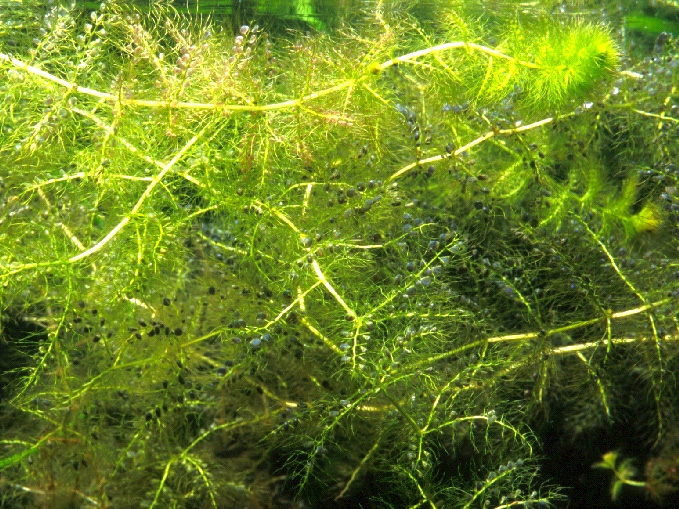
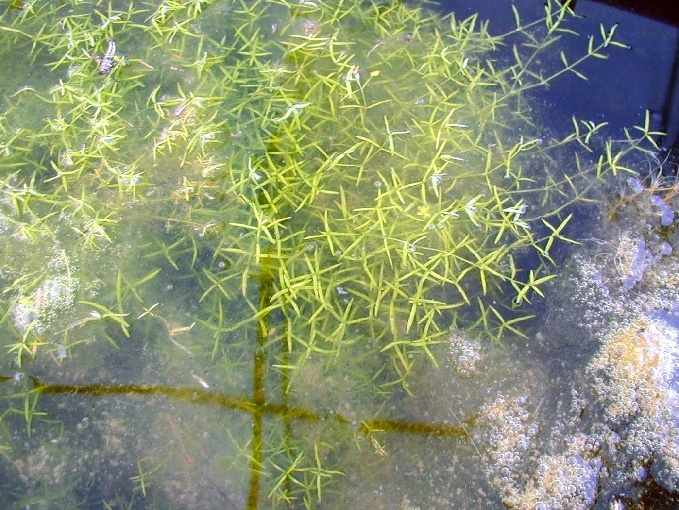
Other shallow waterplants can be suitable, particularly Alisma plantago-aquatica with rather heart-shaped leaves held high, although the shivering masses of tiny white flowers are also very decorative. Mimulus gracilis produces carpets of bluish, yellow-centred flowers for months on end in a good season. Mimulus occurs worldwide, but most of the ~160 species are part of two large radiations centered in western North America and Australia. The Australian genera Peplidium (14 species), Glossostigma (seven or eight species), Microcarpaea (two species) and Elacholoma (two species) are considered to be members of Mimuleae. However, the systematic placement of the genus and the relationships among species within it remain unresolved.
There are many aquatic and wetland plants found in Australia and New Guinea that are suitable for the rainbowfish aquarium or watergarden. They are not restricted in variety—its just that they are poorly known!
Most aquatic plant species lack the mobility necessary to travel directly from one catchment to another, to colonise new areas and to disperse to neighbouring water bodies in different catchments. Despite this apparent isolation of freshwater habitats, many of these aquatic species have widespread distributions consistent with the frequent dispersal by migratory waterbirds.
Many aquatic plants can survive intervening drought periods as dormant stages, or recolonise temporary dry wetlands via hydrological connections, especially via floodwaters entering from rivers.
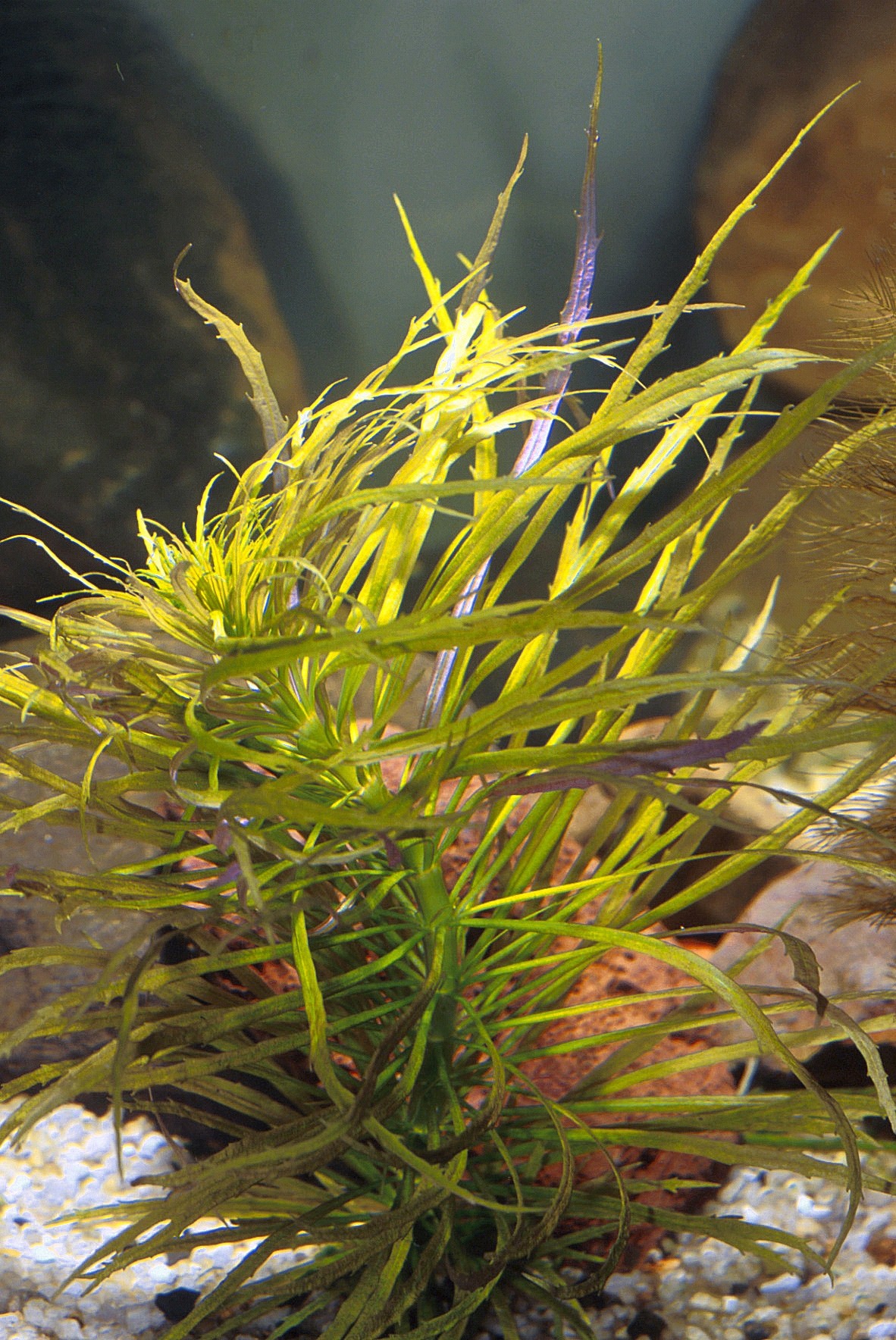
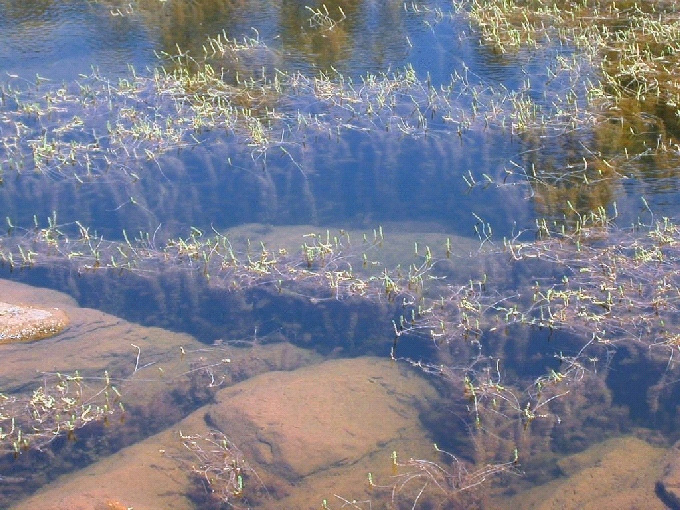
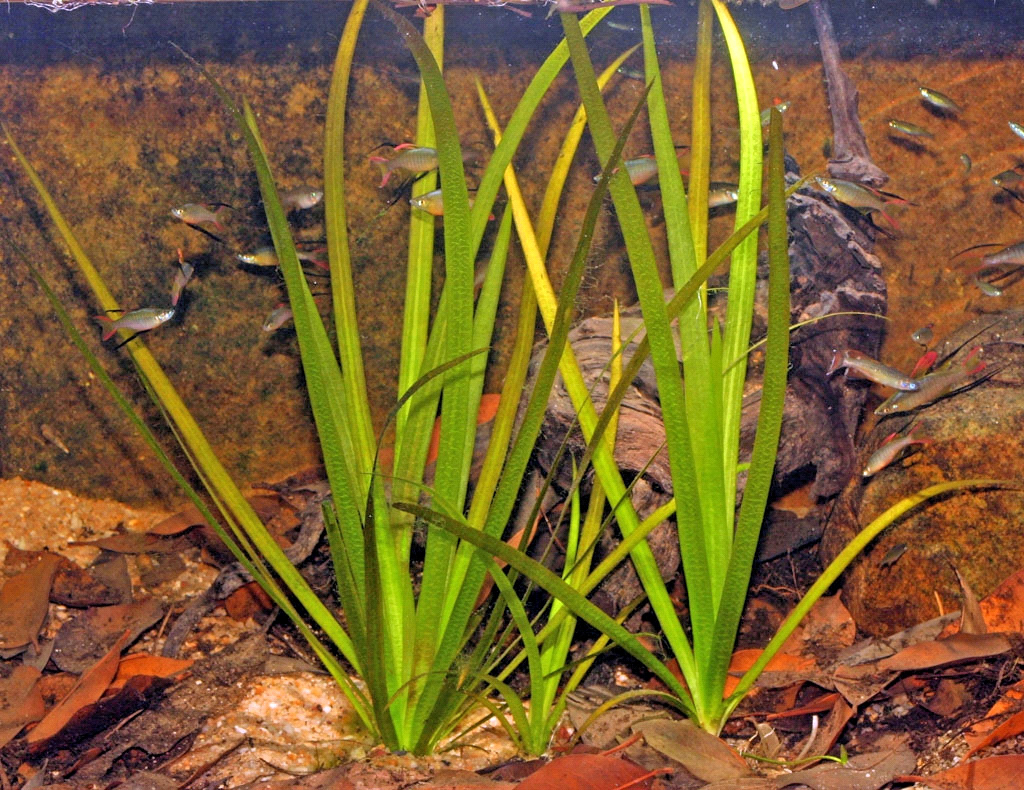
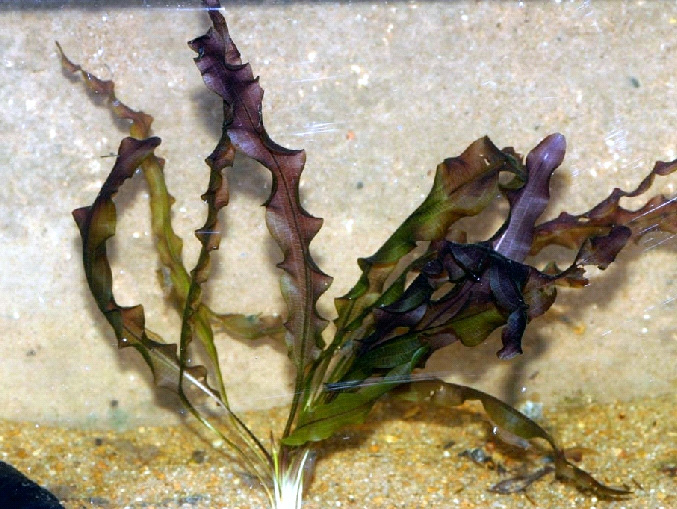
Cryptocoryne is a genus of perennial aquatic plants found growing in a variety of tropical riverine or swamp habitats, adapted to fluctuating water levels during seasonal flooding and drought. Leaves are attached at the crown by sheathed petioles as long as or longer than the leaf. Leaves ovate to lanceolate, tapering at the tips and rounded at the bases. Leaf surfaces smooth, margins entire, commonly wavy. Submersed leaves 4–10 cm long, 1–4 cm wide. Upper surfaces to green to brown often marbled in darker brown or patterned with prominent venation. Lower surfaces nearly green to brown and tinted with a glistening violet. Inflorescence enclosed within a spathe, a fleshy ornate bract. Immature spathes are sometimes present on submersed plants and appear as tightly rolled tubes. Mature spathes will unfold only when emersed from the water. Several features of mature spathes, specifically the colour of the collar and the twist of the terminal limb, are used in species identification.
There are no Cryptocoryne species found growing naturally in Australia. In New Guinea however, there are at least three species that have been reported. Cryptocoryne versteegii have been found in the Lorentz and Kikori River systems. Cryptocoryne ciliata are reported from the Merauke and Kikori River systems, and Cryptocoryne dewitii has been collected from the Kiunga region in the Fly River. Unidentified specimens of Cryptocoryne have also been reported from the Wapoga River.
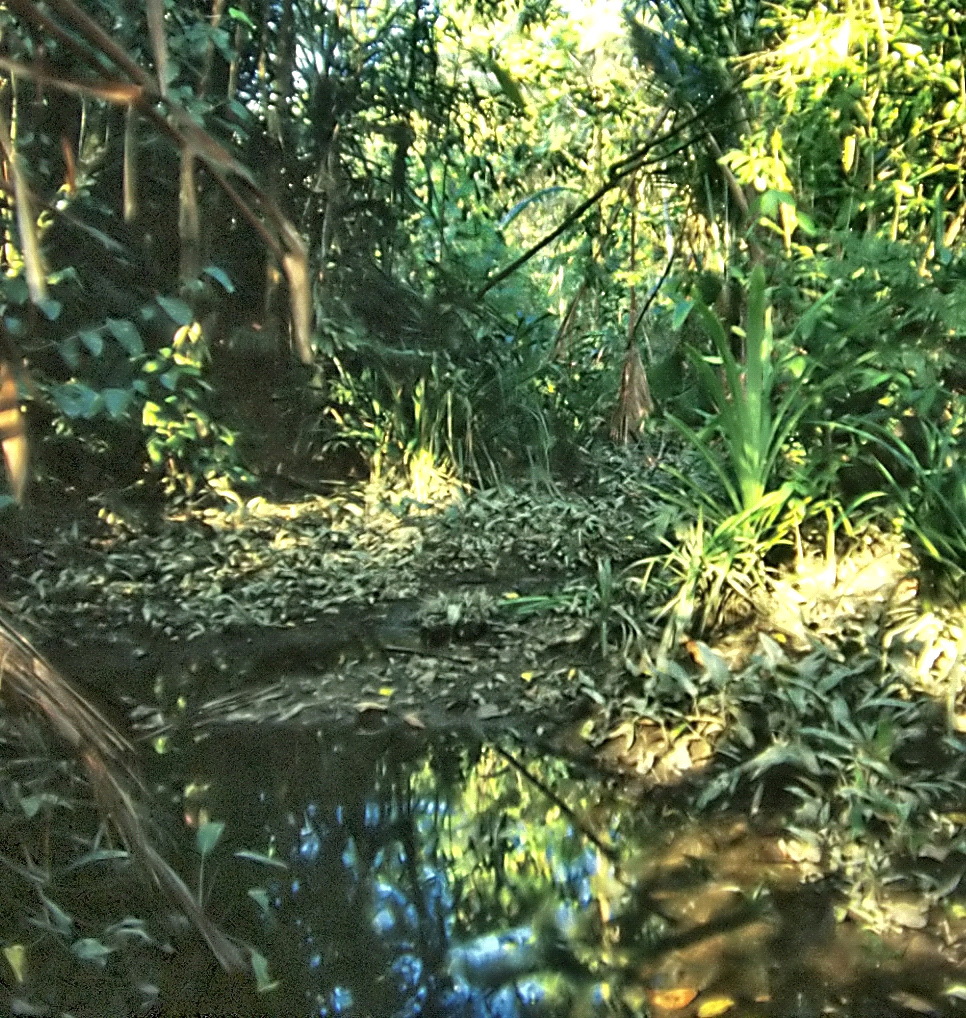
The typical habitats of Cryptocoryne are mostly streams and rivers with slow-flowing water in the lowland forests. They also live in seasonally inundated forest pools or on river banks submerged only at high water.
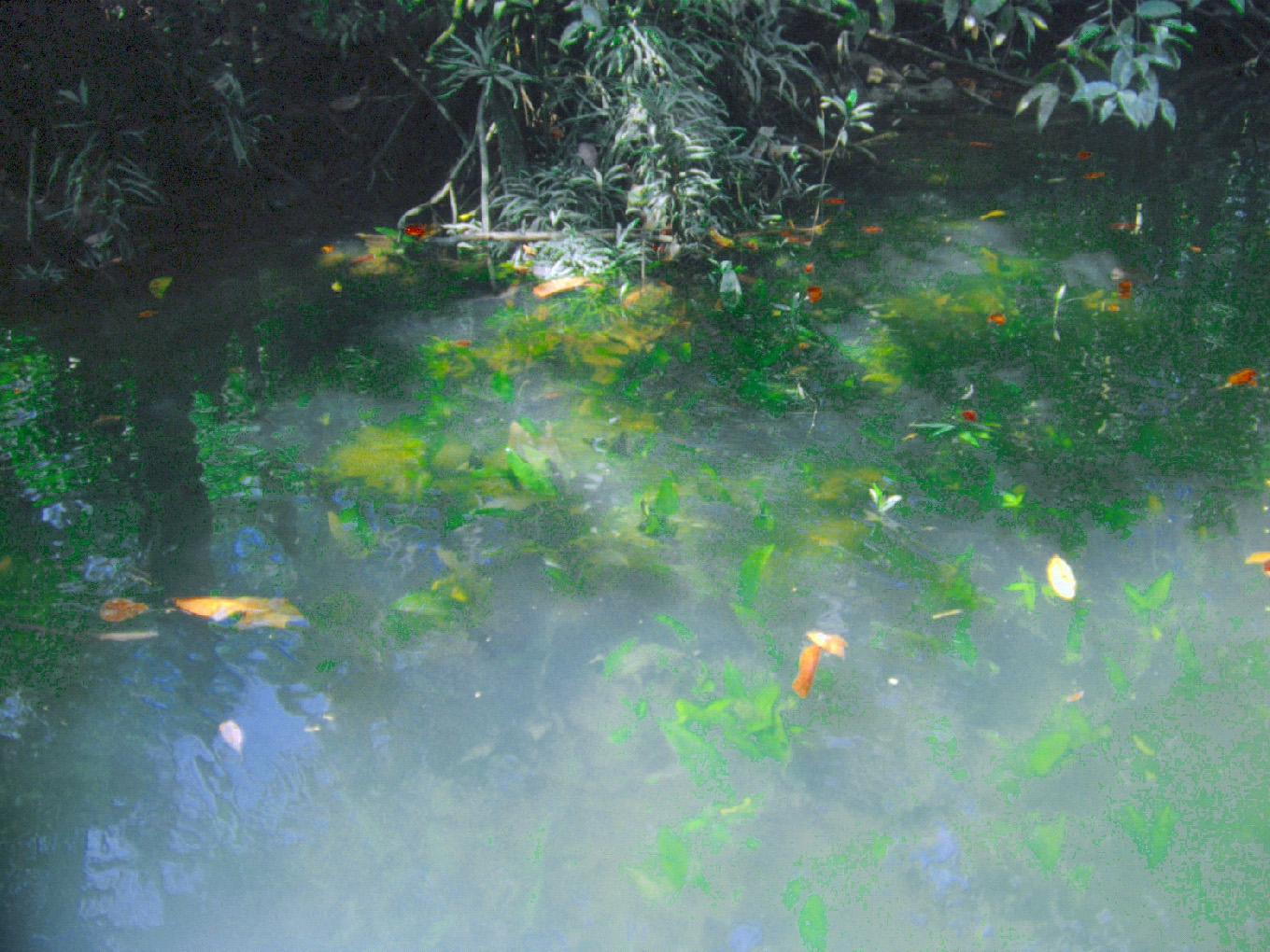
Rainbowfishes have often been reported in the aquarium literature as being suitable for brackish water aquariums. However, all rainbowfishes are permanent inhabitants of freshwaters. There are, in fact, few recorded observations of rainbowfishes in brackish waters and they can generally be considered as a species most intolerant to salinity. Where rainbowfishes have been collected in “brackish” water conditions it is probably due to stratification of the freshwater flow (lens) above a saltwater wedge caused by substantial freshwater runoff. Surface water sampling does not provide any information on the flow stratification nor on the fresh/ brackish interface characteristics.
Rainbowfishes are therefore not a suitable candidate for a brackish aquarium. However, brackish conditions are the preferred environment for a number of Pseudomugil (blue-eye) species. Pseudomugil cyanodorsalis, P. inconspicuus, P. majusculus, and P. signifer are regularly found in brackish mangrove estuaries. They are found in estuarine and coastal freshwater habitats across northern Australia and southern New Guinea. Although P. cyanodorsalis are mostly found in brackish mangrove areas, I successfully bred and raised them in freshwater over a period of three years. Many hobbyists, however, report that they will live longer, breed more freely, and produce more offspring if maintained in brackish water.
The various species of fish found in oceans, lakes, rivers and streams have evolved over millions of years and have adapted to their preferred environments over long periods of time. Fish that can tolerate only very narrow ranges of salinity are known as stenohaline species. These fish die in waters having a salinity that differs from that in their natural environments. Fish that can tolerate a wide range of salinity at some phase in their life-cycle are called euryhaline species. These fish can live or survive in wide ranges of salinity, varying from fresh to brackish to marine waters. A period of gradual adjustment or acclimation, though, may be needed for euryhaline fish to tolerate large changes in salinity. Ultimately, fish adapted to or inhabited marine, fresh or brackish water because each environment offered some competitive advantage to the different species.
Pseudomugil cyanodorsalis have been collected from around Broome and Wyndham in northwestern Australia and from the vicinity of Darwin, Northern Territory. They have also been collected from coastal areas around the Gulf of Carpentaria in Queensland. I have no doubt that this species will eventually be found in southern New Guinea. Pseudomugil inconspicuus has been found at the mouth of the Fly River, southwestern Papua New Guinea, the Aru Islands and Bintuni Bay in West Papua. They can also be found in scattered localities around northern Australia. Pseudomugil majusculus have been collected from brackish water on the northern coast of New Guinea, near Cape Ward Hunt. Pseudomugil signifer are widely distributed along the eastern coast of Australia and are usually abundant in brackish mangrove estuaries.